The Philosopher Who Said Stones Could Think
Can a Statue Really Become a Mind?
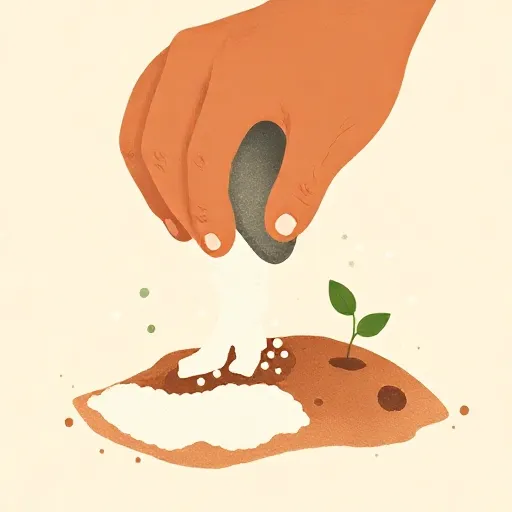
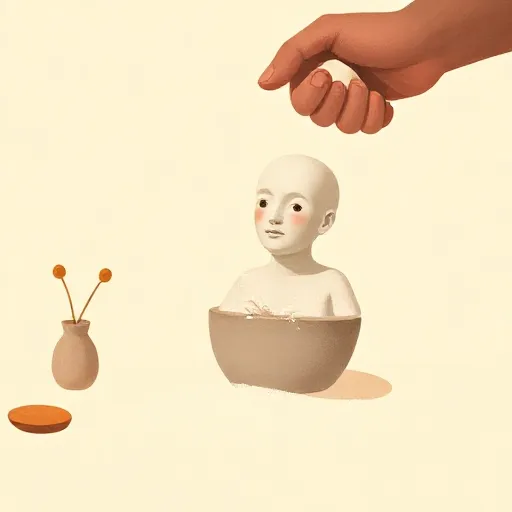
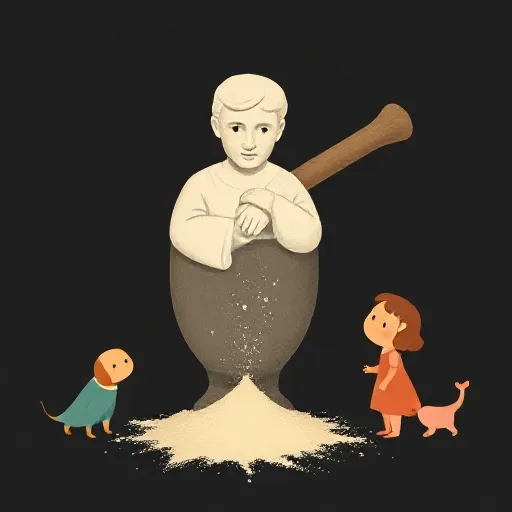
Imagine a beautiful marble statue. Now grind it into fine dust. Mix that dust with soil, let a plant grow from it, feed the plant to an animal, and then eat that animal. Could that marble eventually become part of a thinking, feeling person? For most of us, the answer is no — a stone and a mind seem utterly different. But Denis Diderot, one of the boldest thinkers of the 1700s, thought the answer might actually be yes.
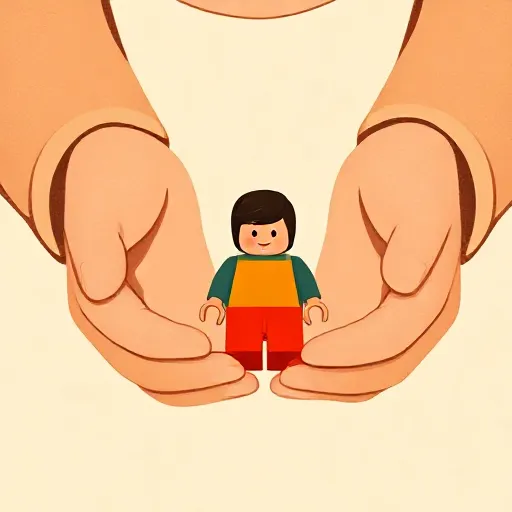
Diderot believed that the entire universe is made of just one thing: matter. But his matter is not the dead, cold stuff we imagine. For Diderot, matter is alive, sensitive, and constantly changing. Dreams, laughter, and even your most private thoughts are, in the end, just matter in motion. He spent his life working out what that really means for how we live, create art, and treat one another.
The Encyclopedia Rebel
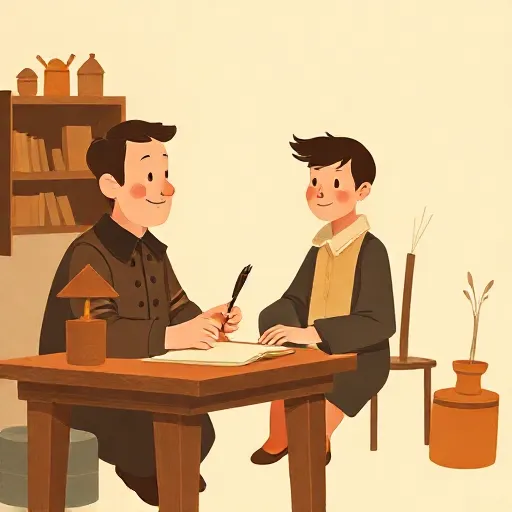
Diderot was born in 1713 in the French town of Langres, the son of a cutler. A clever student educated by Jesuit priests, he moved to Paris as a teenager and scraped by as a writer. His early books were so radical — attacking religion, questioning the design of the universe — that the authorities burned one publicly. In 1749, after publishing a daring work about blindness and the nature of perception, he was thrown into the prison at Vincennes for three months.
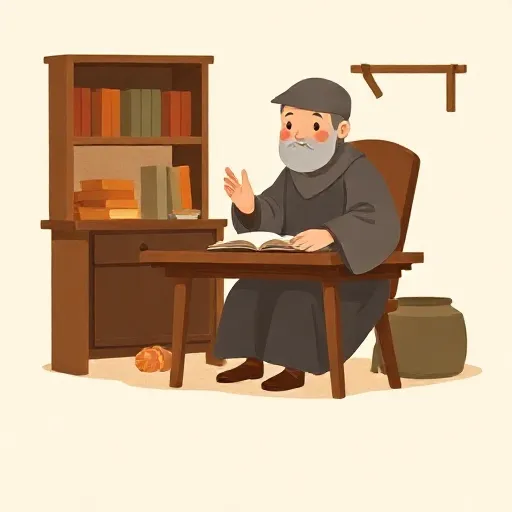
When he got out, he threw himself into a project that would shake the world. Together with the mathematician D’Alembert, Diderot turned a planned translation of an English encyclopedia into a vast new creation: the Encyclopédie, a multi-volume work that aimed to collect all human knowledge. More than that, it was an engine for changing ideas, mixing philosophy with detailed articles on the mechanical arts — weaving, metalwork, glassmaking — and advancing radical views in religion, politics, and science. The church and the royal court repeatedly tried to ban it, but Diderot pressed on, editing and writing nearly six thousand articles himself. The Encyclopédie became the intellectual heart of the French Enlightenment.
Matter That Feels: Touch, Eggs, and God
Even before the Encyclopédie was finished, Diderot was pushing his ideas about matter further. In the dialogue D’Alembert’s Dream, written but never published during his lifetime, a character asks whether a stone can feel. Diderot’s reply: if you crush the stone, let it become soil, nourish plants, and feed animals until its molecules are woven into a living brain — then yes, it can. He called this the animalization of matter.
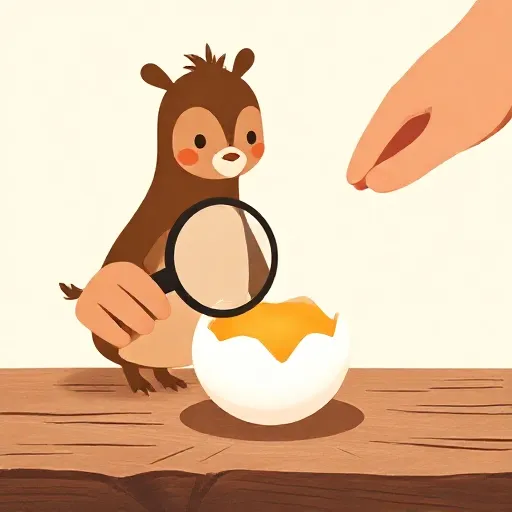
The real challenge was whether matter could ever think. Diderot pointed to an egg. “Do you see this egg?” he wrote. “With this you can overthrow all the schools of theology, all the churches of the world.” An unsensing, inert fluid, given only heat and motion, transforms into a living, breathing, chick — no soul needed. For Diderot, sensitivity was a property of matter itself. He even described himself as a “modern Spinozist,” blending Baruch Spinoza’s (1632–1677) idea of a single substance with the new biology of epigenesis, the theory that an embryo grows by adding layers of purely material substance.
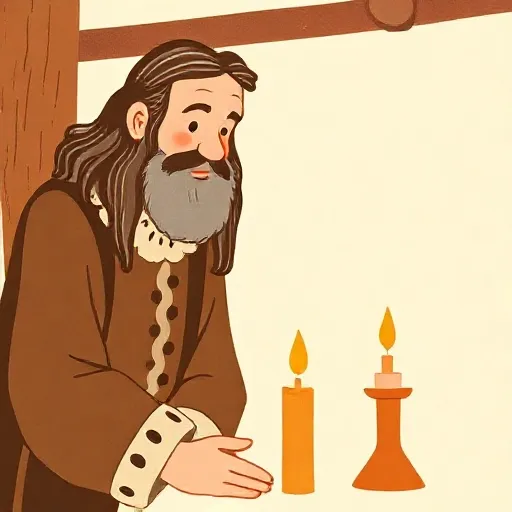
Perhaps his most defiant image appears in an earlier work. The blind mathematician Nicholas Saunderson, on his deathbed, tells a priest, “If you want me to believe in God, you will have to make me touch him.” For Diderot, touch was the deepest, most philosophical sense — the one that anchors us in a material world that needs no divine spark.
The Book That Reads Itself
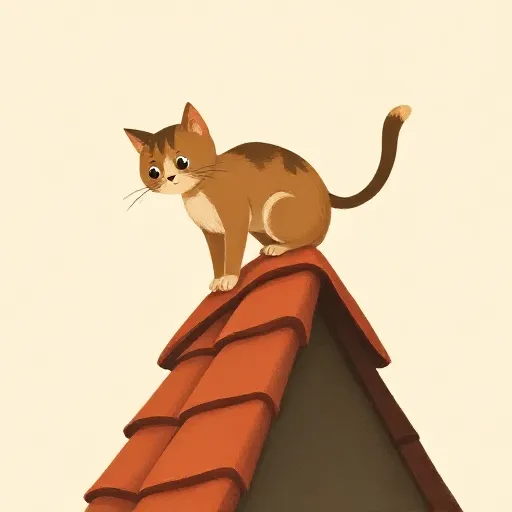
If everything is matter in motion, are we just machines? Diderot was a determinist: every event has a cause, and your entire life is a chain of necessary effects. But he didn’t think that turned you into a predictable robot. Each person is a unique causal knot. He illustrated this with a story about two cats that fell from a roof. One died; the other, bruised and bleeding, told itself it would never climb up again. But as soon as it healed, back it went. That is its nature — and, Diderot said, “I am a man, and I require causes proper to man.”
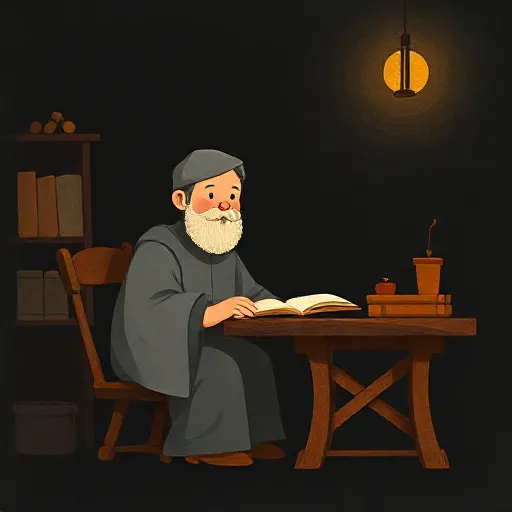
Your brain, he thought, is a soft, sensitive wax that records everything you experience, a book that writes itself. “There is the book,” he wrote. “But where is the reader? The reader is the book itself.” Your self is not a ghost inside your skull; it is your living body’s own ongoing story, constantly changing — a process, not a thing. Every part of you is in vicissitude, a state of perpetual change, so that after many years you share not a single molecule with the baby you once were.
The Stage, the Painting, and the Fourth Wall
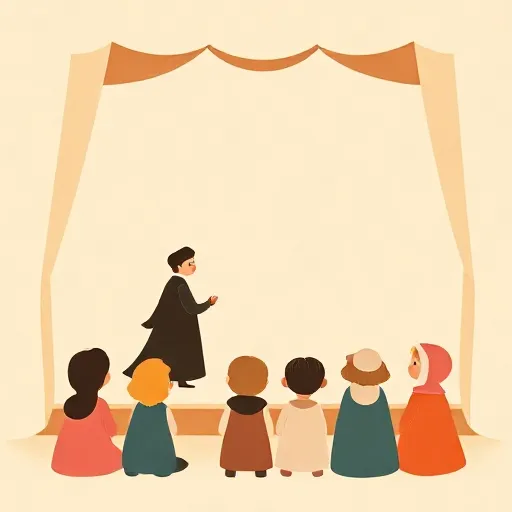
If we are nothing but matter, why do art and stories matter so much? Diderot found that question irresistible. He became Europe’s first great art critic, writing about the paintings displayed at Paris’s biennial Salon. Standing before a landscape by Claude-Joseph Vernet, he explored how a flat canvas can pull you into a natural world so real you almost forget you’re in a gallery. Art, for Diderot, was a bridge between isolated material selves.
He also revolutionized theater by introducing the idea of the fourth wall — an invisible barrier between actors and audience. Keep it intact, and you sit back and judge the drama. Let it dissolve, and you become part of the story, feeling what the characters feel. He believed that performance, like all true art, could teach empathy and moral insight without preaching a single word.
That same blend of fiction and philosophy shaped his masterpiece, Rameau’s Nephew, a dialogue between characters named “Me” and “Him” that slowly reveals them to be two sides of a single self — a living example of the internal struggle that, for Diderot, defines being human.
Why Diderot Still Haunts Us
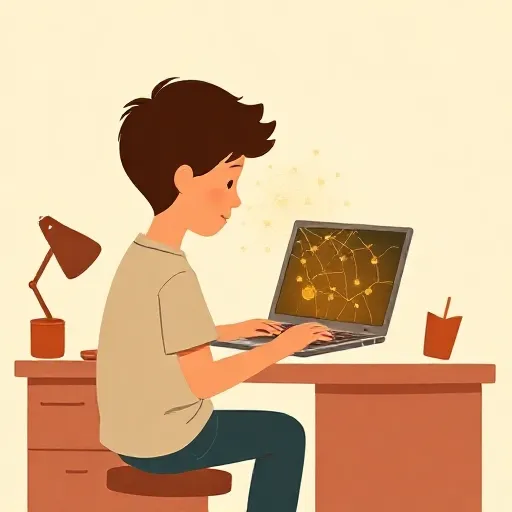
Today, scientists and philosophers wrestle with questions Diderot raised nearly three hundred years ago. Can a sufficiently complex artificial intelligence ever truly feel? Diderot would likely say yes — because matter itself can feel, given the right organization. Neuroscience now describes the brain as a self-organizing network, eerily like Diderot’s book that reads itself.
Yet Diderot also insisted that the human observer is irreplaceable. He wrote, “It is the presence of man that makes the existence of beings interesting.” Science may explain how matter produces thought, but it cannot exhaust what it is like to be a person who loves, creates, and mourns. Diderot never pretended to have all the answers. But he gave us a startling new way to see ourselves: not as ghosts trapped in machines, but as matter that has woken up and begun to ask its own questions.
Think about it
- If all your thoughts and feelings are just material processes in your brain, does that make love any less real? Why or why not?
- Diderot believed an egg becomes a chick entirely through physical changes, with no extra soul added. Do you think there is something non‑physical that makes a living being different from a non‑living thing? What could it be?
- Diderot said the brain is a book that reads itself. If your personality is just a story your brain tells, can you ever really change who you are, or are you stuck like the cat on the roof?