Do Your Thoughts Boil Down to Brain Chemistry?
The Lego Test: Is a Castle Just Bricks?
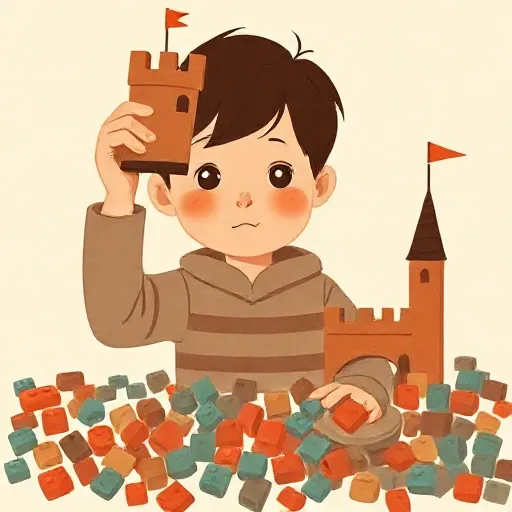
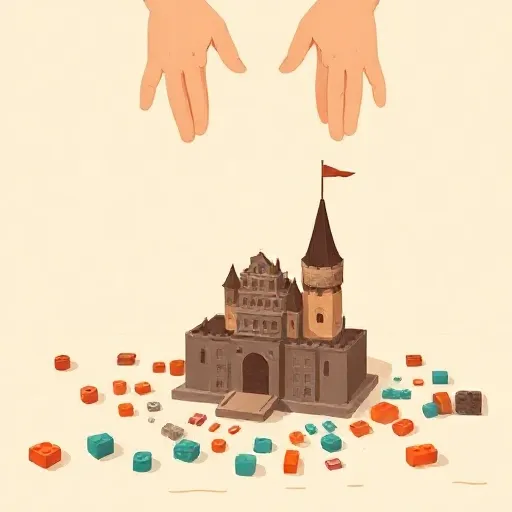
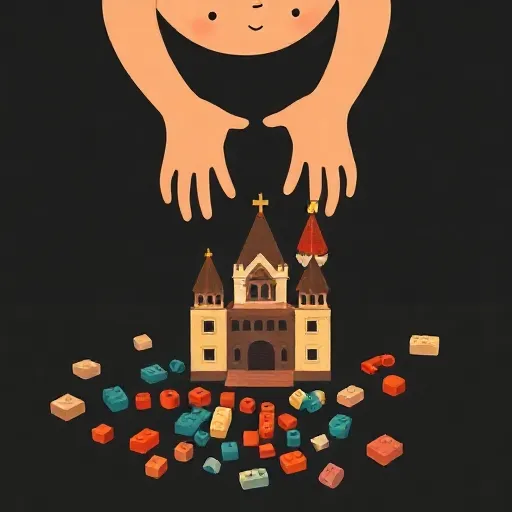
You dump a bucket of LEGO® bricks onto the floor and start building a castle. When it’s finished, a friend says, “That’s just a pile of bricks.” You stare at the castle. Is it really nothing but bricks? Sure, it’s made of them — but the castle has towers, a drawbridge, and a story. Yet everything about it boils down to the bricks and how they’re arranged.
Philosophers have a name for this kind of thinking: reductionism. Reductionism is the idea that something complicated can be completely understood by breaking it down into its simplest parts. The real question gets personal: does this apply to you? Are your feelings, dreams, and choices nothing more than the atoms and brain cells that make you up? Could everything about your mind be reduced to chemistry and electricity?
A lot of philosophers have believed that answer is yes. They are physicalists — people who think that only physical stuff exists, and that everything, including your mind, can be explained by the physical world. Others have pushed back, arguing that when tiny parts come together in just the right way, something genuinely new appears that can’t be captured by just listing the parts. That debate is what we’re going to explore.
Two Worlds, One You: Descartes’ Bet
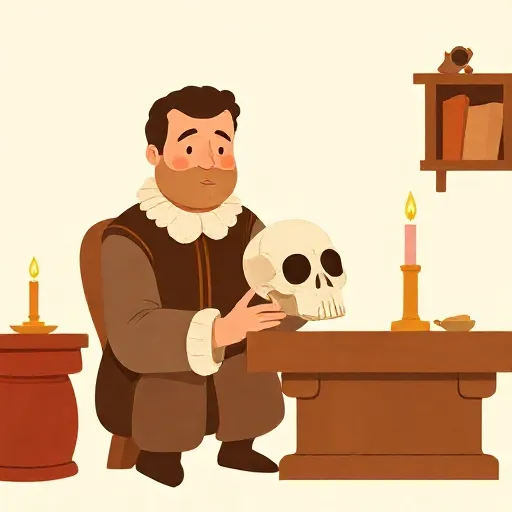
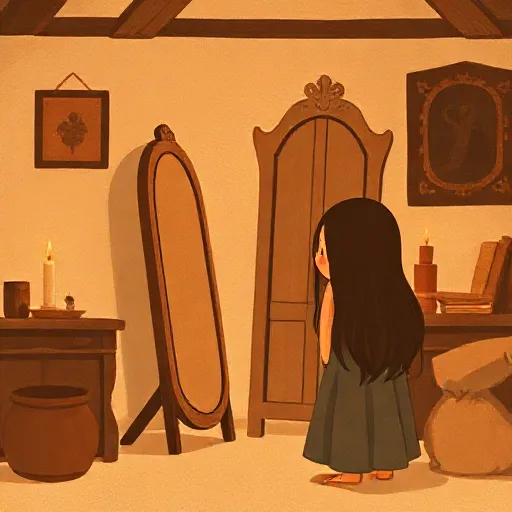
In the 1600s, the French thinker René Descartes (1596–1650) sat in a room staring at a piece of wax melting by the fire. He noticed that although the wax changed shape, smell, and texture, his mind could still understand it as the same wax. That led him to a huge idea: the mind is something entirely different from the physical world. He called this view substance dualism. According to Descartes, you are made of two separate substances: a thinking mind (not made of matter) and a physical body (made of meat and bone). The mind doesn’t reduce to the body — they are two different kinds of real things.
For centuries, many thinkers agreed. But as science advanced, a rival view gathered strength. By the mid‑20th century, philosophers like U. T. Place (1924–2000), Herbert Feigl (1902–1988), and J. J. C. Smart (1920–2012) proposed that mental states are nothing over and above brain states. This is called the identity theory: the claim that every type of mental state — like being in pain, seeing red, or believing it’s Tuesday — is literally the same thing as some specific pattern of neurons firing in your brain. Smart argued that we should accept identity theory because it’s simpler. Why add a spooky non‑physical mind when a physical brain already does the job? He invoked a principle known as Ockham’s razor: don’t multiply things beyond what you need. A brain alone can explain the mind, so why invent an extra invisible substance?
For many, this was a powerful reductionist argument. If the physical world is all there is, then the mind must reduce to the brain. But soon, a new puzzle threatened to topple identity theory.
If a Martian Feels Pain: The Puzzle of Many Brains
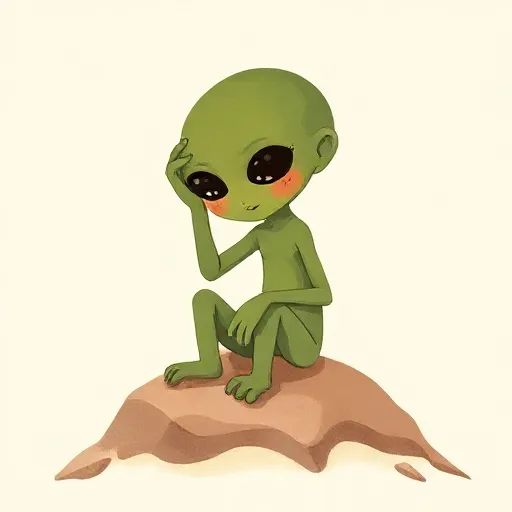
Imagine a creature from another planet: a Martian with a brain made of green slime instead of neurons. It winces when it stubs a toe, avoids harmful things, and seems to feel pain just like you. Now imagine a future computer with a silicon brain that cries out when damaged. Do these beings feel pain? Most of us would say yes. But if pain can be realized by completely different physical stuff — neurons, green slime, or silicon chips — then the mental kind “pain” cannot be identical to any one specific physical kind.
This argument, called multiple realizability, was pushed by Hilary Putnam (1926–2016) and Jerry Fodor (1935–2017). They argued that identity theory fails because mental kinds can show up in wildly different physical forms. So strong reductionism — the claim that mental types are physical types — is false.
However, many philosophers still held onto a weaker, but still reductive, position. They accepted token-identity: every single occurrence of a mental state (this particular pain right now) is a physical event — something happening in some physical system. The type “pain” might not be a single physical type, but every token of pain is physical. This is a version of non-reductive physicalism: the mind depends entirely on the physical but isn’t reduced in the strongest sense.
Some reductionists fought back by suggesting a more careful mapping. Maybe pain in humans is identical to one brain pattern, pain in Martians to another, and pain in silicon robots to a third. This is called local reduction. You give up on a one‑size‑fits‑all reduction and instead reduce mental kinds piece by piece in each specific kind of creature. The debate was far from over.
The Job of a Thought: Functional Roles
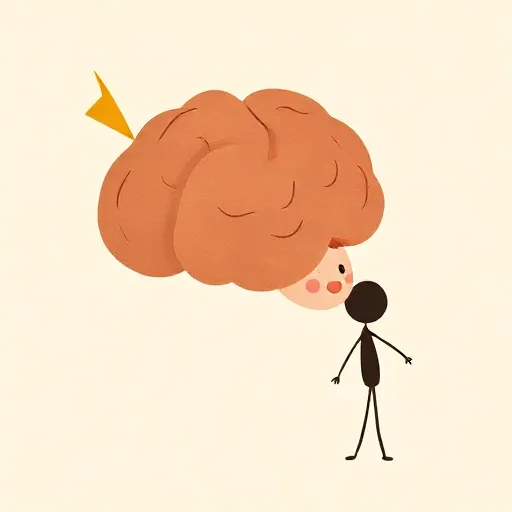
What if we define mental states not by what they are made of, but by what they do? That’s the heart of functionalism. A functionalist says: pain is whatever state is typically caused by tissue damage and typically leads to avoidance and distress — no matter whether it’s made of neurons, slime, or circuits. This view exploded in the mid‑20th century.
Functionalism, at first glance, seems friendly to non‑reductive physicalism: if pain is a role, then many different fillers can play that role, so mental kinds aren’t identical to physical kinds. But some forms of functionalism still allow for reduction. According to occupant-functionalism, the term “pain” refers to whatever physical state actually plays the pain role in a given type of creature. For humans, that physical state is a specific brain state. So in humans, pain reduces to that brain state — that’s a kind of reduction, even if across species it’s different physical states. Some philosophers proposed that pain reduces to a disjunctive kind: it’s identical to (brain state A or green slime state B or silicon state C). While that might sound like a cheat, it keeps the reductionist spirit alive.
The takeaway: reductionism isn’t a simple either/or. There’s a whole spectrum from strong identity to total non‑reduction. The real question is how much reduction holds and how much new structure emerges when parts combine.
Why It Still Matters: Are You More Than Your Wiring?

So where does this leave you? If your mind turns out to be nothing but brain chemistry, does that make your choices any less free? Does it make love, friendship, or the feeling of hearing your favorite song any less real? The reductionism debate is not just an abstract puzzle; it touches on who you think you are.
Some philosophers believe that a full scientific description of your brain could, in principle, explain everything about your mind — and that this wouldn’t rob life of meaning. Others worry that if we are just complex machines, then concepts like responsibility and creativity start to look shaky. Could we still blame someone for stealing a cookie if their brain chemistry made it inevitable? These questions don’t have settled answers.
Reductionism remains a live debate because it forces us to ask: when you build a castle out of bricks, does something new spring into existence — something not in the bricks themselves? And when trillions of cells organize into a human being, does the same magic happen? Philosophers continue to argue, and the answer will shape how you understand yourself and the universe.
Think about it
- If a scientist could predict every choice you’ll ever make by scanning your brain, would it still be fair to punish someone for a bad choice?
- Imagine a computer that feels pain exactly like you, but it’s made of metal and wire. Would it deserve not to be hurt, even though it’s not biological?
- If your thoughts are nothing but brain signals, does that make love or friendship any less real? Why or why not?