
Is There a Hidden "Blueness" in Every Blue Thing?
What Makes Two Blue Things Both “Blue”?

You see a blue mug on the table. You glance at the sky, and it’s blue too. If someone asked, you’d say both are blue. But what makes them “blue” in the same way? Is there a single thing — blueness — that travels from the sky to the mug and somehow sticks to both?
Around the fifth or sixth century, an Indian Buddhist philosopher named Dignāga gave a startling answer: no. There is no real, hidden blueness floating around. About a century later, Dharmakīrti sharpened this answer into a full-blown theory of reality, arguing that only particular moments exist and that common properties like blueness are just mental fictions. This idea — nominalism — shook up philosophy in India and left a powerful blueprint for thinking about language, knowledge, and the world.
Real or Made-Up: The Two Kinds of Things

For Dignāga and Dharmakīrti, whatever exists divides cleanly into two baskets. In the first basket are particulars (they used the term svalakṣaṇa) — concrete, individual things or moments like this blue mug, this flash of heat, this patch of colour right now. Particulars are fully real. In the second basket are universals (sāmānyalakṣaṇa) — general, repeatable features like “blueness,” “cowness,” or “squareness.” According to Dignāga and Dharmakīrti, universals are completely unreal; they are convenient fictions we invent to think and speak.
How do they tell the difference? The test is causal power. Real things do something — they produce effects. A particlar blue mug causes you to see blue, holds water, and cools your hand. A so-called universal “blueness” never does anything at all. You can’t touch it, it never changes anything, and it doesn’t make anything happen. Because universals lack causal power, Dharmakīrti insisted, they have no place in the true furniture of the world.
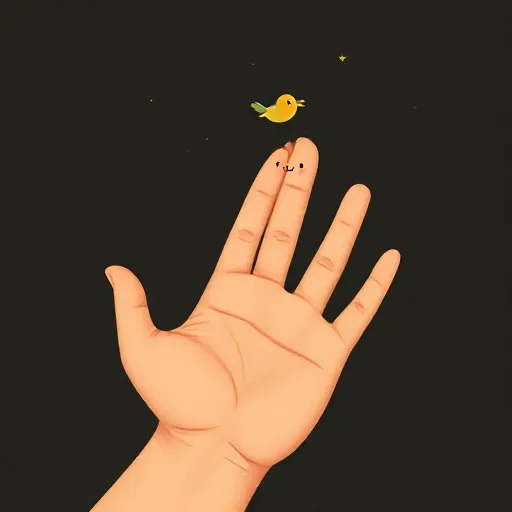
There was a deeper problem too. If a universal like blueness were real, it would have to be fully present in every single blue particular at once — in the sky, your jeans, the mug. It would need to be one thing spread into many different places, sharing the many natures of all those particulars. Dharmakīrti thought this was absurd, like claiming your five fingers are accompanied by a sixth ghost-finger called “fingerhood.” Later Buddhist writers joked that believing in real universals is like believing you have horns on your head.
Everything Is a Flash: The World of Moments

If universals aren’t real, what about the particulars themselves? Dharmakīrti had another surprise: every particular lasts only an instant. He called this momentariness (kṣaṇikatva). A blue mug isn’t a stable object sitting on the table — it’s a cascade of brand-new mug-moments appearing one after another, so fast that we mistake them for a single thing.
One of Dharmakīrti’s main arguments for momentariness starts from causal power again. Anything that exists is always doing something, always producing some effect. But, he reasoned, a thing that stays exactly the same cannot suddenly start producing a new effect or stop producing an old one. Imagine a candle flame that is truly unchanging. If it stayed identical from moment to moment, how could it first give off light and then later give off smoke? It would need to change, however slightly. If the flame itself remained static, then the new effect would have to come from something else — the surrounding circumstances — and then those circumstances would be the real cause, not the flame. So anything that produces effects must itself be changing. And because real things are always producing effects, they must be fresh, different entities at every instant. A river, a rock, your own body — all are just flickers in a chain of momentary particulars.
How Words Point Without Common Properties

This moment-by-moment, particular-only world leads to a puzzle. If there is no real blueness anywhere, how does the word “blue” manage to latch onto blue things at all? Why doesn’t language just float off into make-believe?
Dignāga’s first move was the theory of exclusion (apoha). When you think “blue,” you aren’t picking out a real property. Instead, you are mentally excluding everything that isn’t blue — the thought is more like “not non-blue.” That double negation creates a mental fence around a group of particulars without committing you to an invisible universal. But critics quickly objected: to know what counts as non-blue, you already need to understand “blue.” The explanation seemed to go in circles.
Dharmakīrti stepped in with a powerful causal twist. The link between a word and the world isn’t built on definitions or invisible sameness. It’s built on causal chains. Long ago, someone pointed to a sample — say, a particular blue thing — and announced, “I choose to call this blue.” That moment of reference-fixing was a simple causal event. Later, other blue things cause similar perceptions in people’s minds, and those perceptions cause the same judgment: “That’s blue.” The word “blue” thus inherits its grip on the world from the causal pathway that runs from blue particulars, through the senses, to the mind and the mouth.
The mental grouping into a kind — the sense that many things are “the same” — is handled by the exclusion trick, but the exclusion itself is less important than the causal connection. It’s the chain of causes that keeps the word tied to real, particular things. Different blue objects don’t share a secret ingredient; they simply each have the power to produce the “blue” judgment in us, even if they do so in slightly different ways, just as different plants might all lower a fever without sharing the same chemical recipe.
Why This Still Matters for You

Next time you say “that’s a game” or “that’s fair,” you’re using a concept as if it captures something real. Dharmakīrti’s challenge is to ask: does it? His philosophy suggests that the groupings we live by — apple, sport, friend — might not rest on hidden essences in the world, but on causal regularities and the mental shortcuts we carry. Words are tools that work because of the causal chains that trained us to use them, not because they photograph reality.
This isn’t just ancient history. Modern philosophers of language and cognitive scientists still wrestle with how categories form and whether any “sameness” really exists outside our minds. Dignāga and Dharmakīrti gave one of the first rigorous answers — and they did it with nothing but careful arguments and a determination to take the world exactly as they found it: a dazzling, rushing stream of unique moments.
Think about it
- If you were the first person to name a colour, could you point to a leaf and say “this is zolp” and make it stick? What would have to happen for others to use “zolp” for the same colour?
- You call a smartphone, a board game, and hide-and-seek all “games.” Do they share a single common game-ness, or are they grouped together because of how they make you think and act?
- Everything in your life keeps changing — your body, your thoughts, your feelings. If there’s no solid, unchanging “you,” are you still the same person who started reading this sentence? Why or why not?