Is a Gang of Thieves Really Free? Dewey’s Radical Democracy
Why a gang of thieves is not really free
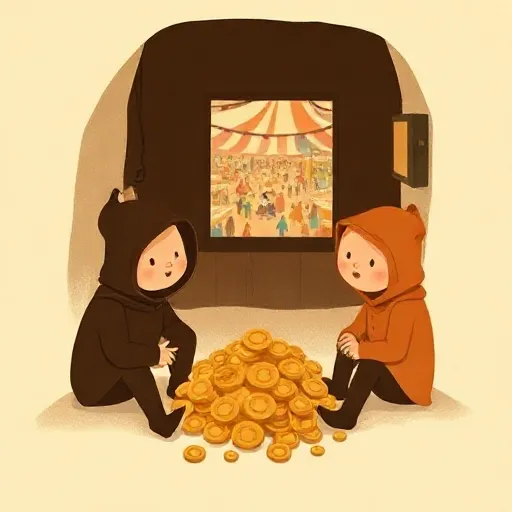
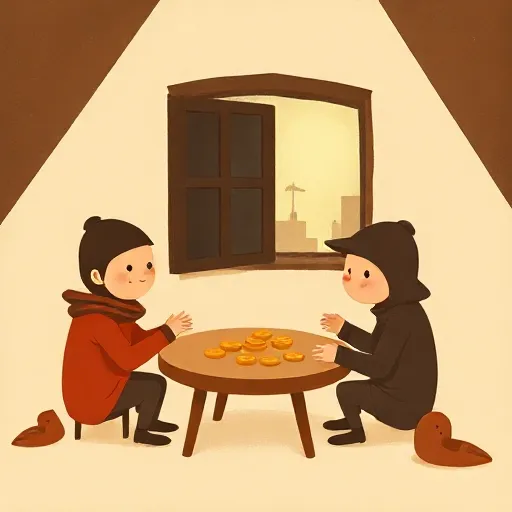
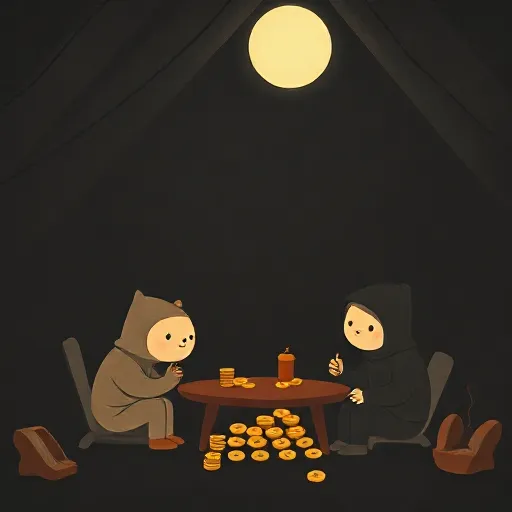
Picture a gang of thieves. They share a goal — plunder — and they feel loyalty to one another. On the surface they seem free to do as they please, outside the law. But the American philosopher John Dewey (1859–1952) would have looked at that gang and shaken his head. In his view, their way of living shuts down the very thing that makes us free.
Dewey proposed a simple two‑part test for any social group. First: how many different kinds of interests do its members genuinely share? Second: how openly does the group interact with other groups? Apply those questions to the thieves. The only thing they consciously share is the business of stealing. Their ties are so narrow that they cut themselves off from the rest of society — from friendships, sports, art, learning, political life. Because of that isolation, Dewey said, the group gives its members a “partial and distorted” education in what it means to be a human being. Their potential stays locked up. That is not freedom; it is a cage built out of a single shared habit.
Once you start thinking this way, the old picture of freedom that much of modern politics inherited starts to crack. For centuries, many liberals had imagined the individual as a self‑contained atom — a tiny independent unit who arrives in the world already fully formed, with rights built in and a natural drive to compete. On that story, society is just a referee that stops your atoms from banging into each other too hard. Dewey thought that story got the individual exactly backwards.
The individual: made, not given
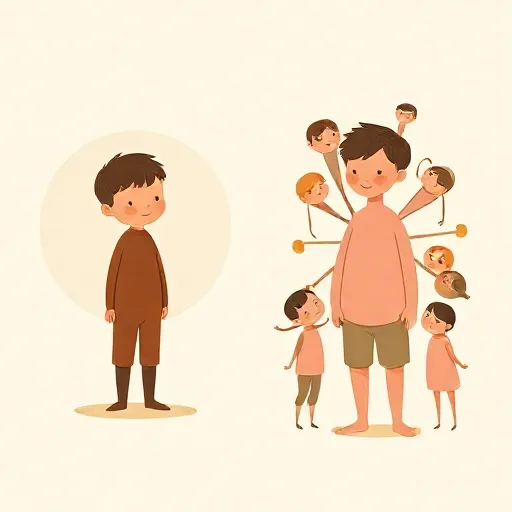
Dewey called the old picture absolutism — the belief that there is a fixed, timeless human nature you can use as a one‑size‑fits‑all foundation for politics. He wanted to throw that belief out. In its place he put experimentalism: the idea that our knowledge, our values, and even our very selves are hammered out in real-life problem‑solving. You become an individual not by being left alone, but by being shaped — and reshaping yourself — inside families, schools, workplaces, and neighborhoods. Social institutions, he said, are “means for creating individuals.”
If the self is always being formed by its surroundings, then what hurts or helps that formation becomes a political question. Dewey therefore drew a sharp line between two kinds of liberty. Negative liberty means nobody is actively stopping you — no prison bars, no censorship. That matters, but it is only the starting point. Positive liberty is the actual power to be an individualized self. It is the capacity to reflect on your choices, to weigh alternatives intelligently, and to make a life that is truly your own. That kind of power does not grow in a vacuum. It requires a rich social world — plenty of different activities, ideas, and relationships to draw on. It also requires education that teaches you to think, not to obey.
This shift changed how Dewey judged everyday social arrangements. Classical liberals often said: the less government, the more freedom. That made sense when the main threat was a despot. But in an industrial society, Dewey argued, the threats to liberty are often economic. A worker who has no say over her job and no security if she loses it may suffer no less constraint than a prisoner — just constraint of a quieter kind. So Dewey insisted that protecting positive liberty might demand strong unions, workplace democracy, and a welfare state. In the 1930s he even argued that a partly socialized economy was necessary to keep the liberal value of freedom alive. Unsurprisingly, believers in purely negative liberty, like F. A. Hayek, saw that as a betrayal. Dewey replied that clinging to an old‑fashioned picture of freedom in a new world only served the powerful.
Notice that Dewey never wanted to scrap individual rights. Free speech, free thought, free assembly — he thought those were part of positive liberty itself. The difference was that he refused to treat them as a magical fence that solves every problem. Instead, he asked: what concrete conditions allow this actual person, right here, to grow into a thinking, choosing, contributing self?
Democracy as a way of life
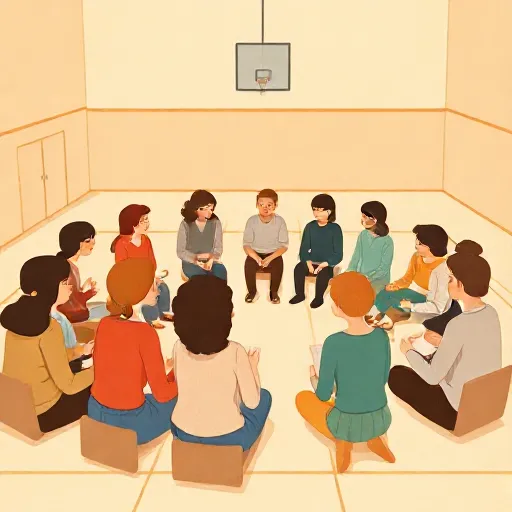
For Dewey, the most important word was “democracy,” and he meant something much bigger than elections. In his book Democracy and Education he called it “more than a form of government; it is primarily a mode of associated living, of conjoint communicated experience.” Later he simply said democracy is a “way of life.”
What does that mean? It means that the same two‑part test he used on the gang of thieves also sets a goal for the whole society. From the standpoint of the individual, democracy means having a responsible share in shaping the groups you belong to and in enjoying the goods they create. From the standpoint of the group, it means liberating the potential of every member so that each person’s growth feeds the common good. Dewey did not pretend this was easy or finished. He called it a problem that democratic communities constantly have to work on — harmonizing personal development with a shared life that does not crush anybody.
Because your individuality is shaped in a church, a family, a workplace, and a neighborhood just as much as in a voting booth, Dewey thought it was a mistake to fence democracy into a single political box. Power and domination show up everywhere, so democratic questioning belongs everywhere.
He also gave a surprisingly modern account of where private life ends and public life begins. The line, he said, depends on consequences. If an action affects only the people directly involved, it is private. But when its effects ripple outward and start to shape the lives of others in serious ways, the transaction becomes public — and the people who are affected form a public that may need to step in. What counts as a relevant consequence or an important enough ripple is itself something we have to argue about. That openness keeps the public‑private boundary flexible and experimental, not frozen.
Crucially, Dewey tied democracy to intelligence. For him, democracy is a giant, society‑wide version of his experimental method. You face a problem, you throw ideas into the open, you test them through discussion and experience, and you keep revising. He wrote that “the very heart of political democracy is adjudication of social differences by discussion and exchange of views.” That sounds polite, but he wasn’t pretending conflict would melt away. He expected sharp disagreements over policy and values. The point was to pull those disagreements into daylight, where they could be weighed against interests broader than any single group’s.
For this process to work, no one’s experience can be shut out ahead of time. Hierarchy poisons thinking. Dewey saw that the rich, the powerful, and the highly educated tend to be “one‑sided” — they rationalize their own position and stay ignorant of other people’s lives. The remedy is not to replace voters with a wise elite. It is to make sure that every person affected has a voice.
The expert who ignores the pinching shoe

In the 1920s, a sharp critic named Walter Lippmann (1889–1974) argued that modern society was far too complex for ordinary citizens to understand. The old democratic dream of the “omnicompetent” citizen, Lippmann said, was a fairy tale. Real governing should be left to trained experts.
Dewey took this challenge seriously, partly because Lippmann was using a version of Dewey’s own diagnosis — that our inherited political ideas had not kept pace with the modern world — to reach a conclusion Dewey hated. His reply goes straight to the shoe leather. Experts, he pointed out, have their own biases, and they are cut off from knowledge of the needs they are supposed to serve. He gave a homely metaphor that still stings: if the people who wear the shoes never get to speak, the best‑trained shoemakers in the world will keep designing shoes that pinch. Even the basic machinery of elections, voting, and public argument forces rulers to listen — at least a little — to where it hurts.
That might sound like a thin, instrumental defense of democracy: let the masses speak just enough to give the elite useful feedback. But Dewey’s point was deeper. When a society takes the risk of genuinely open discussion, it doesn’t just get better policy; it also develops the capacities of the people doing the discussing. You learn to think, to weigh evidence, to imagine other lives. That is the growth that counts as freedom. So Dewey was never satisfied with merely protecting a minimal voting right. He wanted democratic habits to spread into workplaces, schools, and families — anywhere people are governed by rules they did not make.
Why this still matters
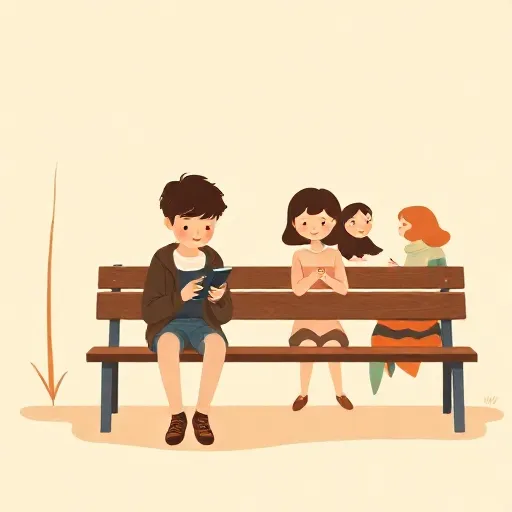
You can run Dewey’s test on your own life today. Think about a circle of friends. How many different kinds of things do you share beyond just liking the same music or the same jokes? And how often do you connect with people who think differently — not as enemies, but as partners in figuring something out? Dewey would say that a group that only ever talks about one thing and keeps outsiders away is a little like the gang of thieves, even if nobody is breaking the law. It stunts you over time.
His challenge applies well beyond friendship. Schools can be run like factories, with all the decisions made by adults, or they can be places where students help shape the rules and the learning. A family can be a top‑down chain of command, or it can be a small democracy where everyone’s experience counts. Digital spaces can be open public squares or narrow feedback loops. Dewey’s philosophy doesn’t hand out a final answer — it hands out a method: face the problem together, listen to every voice, and stay willing to revise. That is what he meant by democracy as a way of life, and it is still a choice we get to make every day.
Think about it
- If a group of friends only ever talks about one shared hobby and shuts out everyone else, is that group a good community in Dewey’s sense? Why might someone argue it is still a real community?
- Should students have a genuine say in shaping school rules, or should the principal decide alone? What would Dewey’s response probably be, and what would you say to someone who disagrees?
- Can a person ever be completely free if most of her ideas and values come from the people around her? What would count as “freedom” in such a situation?