Is a Sunset Just as Much Art as a Painting?
The Painting and the Perfect Day

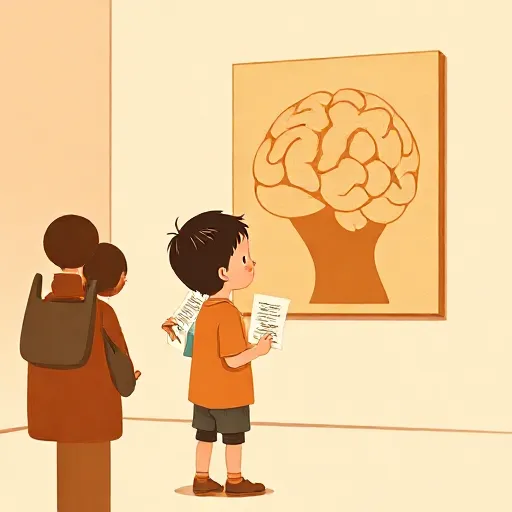
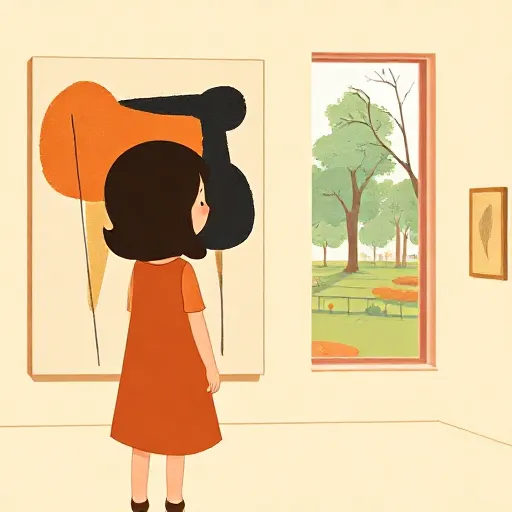
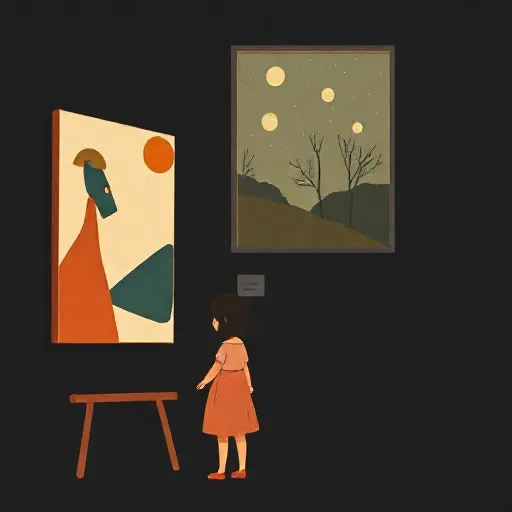
Imagine two moments. In the first, you’re in a grand art museum. You stop in front of a huge oil painting full of swirling colors. You don’t quite know why, but the painting holds you — you feel something shift in your chest. In the second moment, it’s a summer evening. You and your friends have just finished a long, hilarious dinner outside. The sky turns orange, someone is telling a story that makes everyone lean in, and you think: I don’t want this day to end.
Which one is “art”? The painting, certainly. But what about the dinner? Most people would say the dinner was nice, but not art. John Dewey (1859–1952) would disagree. He thought both could offer the same kind of aesthetic experience — a moment so whole and alive that it stands out from ordinary time. Dewey’s big idea, developed in his 1934 book Art as Experience, is that art is not a special category of objects. It is a quality of experience, one that can happen in front of a masterpiece, but also while listening to a friend, watching a bird, or even fixing a bicycle. The art museum has tricked us, Dewey argued, into thinking otherwise.
Art Locked in a Museum? Dewey’s Complaint
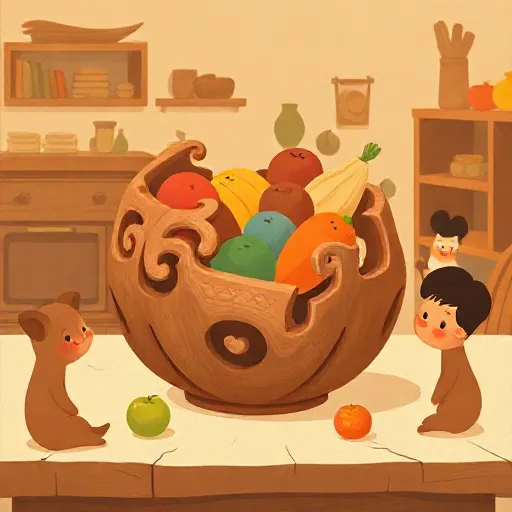
Dewey had a name for the trick: the museum conception of art. Around the 1700s, European thinkers began to separate the “fine arts” — painting, sculpture, music, poetry — from practical crafts like weaving or shoemaking. The fine arts were supposed to be for their own sake, free from everyday worries. Over time, special buildings (museums, concert halls) were built to display them. Paintings were hung on walls, away from kitchens and workshops. Art became something you visited on a Saturday afternoon, not something that lived in your home.
Dewey believed this separation was a disaster. Art had been wrapped in a “holier-than-thou” aura, as he put it, and ordinary life began to seem un-aesthetic by comparison. He traced the split partly to the rise of nationalism and the new rich, who collected art to show off status rather than to engage with it deeply. The result? People started to think that having a genuine aesthetic experience required leaving everyday life behind and entering the quiet, guarded rooms of an art institution. That, Dewey said, made the experience of art poorer, not richer.
To prove his point, he often pointed to non-Western cultures. In many places, beautifully decorated bowls, woven mats, carved spears, and ceremonial masks were essential parts of daily rituals — cooking, hunting, worship, storytelling. These objects were not locked away. They lived in the rhythm of the community. For Dewey, this showed that art is ancient and human, not a recent invention of museums. Art began when people gathered to celebrate, mourn, and make sense of the seasons. It was continuous with life, not fenced off from it.
What Makes an Experience “Aesthetic”?

If art isn’t just objects, what sort of experience counts as aesthetic? Dewey’s answer is one of the most careful parts of his theory. He singled out a type of experience he called “an experience” — note the “an” — to mean an experience that feels complete and unified, with a clear beginning, development, and satisfying close.
Think of reading a gripping short story from start to finish. The opening sentences pull you in. Tension builds. Details from early on return with new meaning. When the story ends, it feels like the final note of a song — not a random stop. That’s “an experience.” So is a conversation that deepens and rounds out naturally, or a basketball game where every pass and shot seems to belong to a larger unfolding pattern. In contrast, a morning where you scroll through your phone, half-eat breakfast, and can’t remember what you did ten minutes ago is not “an experience.” It’s what Dewey called “inchoate” or “anesthetic” experience — scattered, slack, full of gaps.
Aesthetic experience, Dewey argued, has a special structure. It takes time and involves accumulation: later parts build on earlier ones, so the whole feels like it’s gaining momentum. It contains resistance — moments of difficulty or surprise that are not obstacles, but fuel that pushes the experience forward. And it is filled with rhythm, a pulsing sense of movement that carries you from one phase to the next. When these qualities line up, the experience “fulfills” itself, releasing the energy that has gathered along the way. Afterward, things feel resolved.
The crucial point: none of this depends on being in a gallery. Dewey insisted that the practical and the intellectual are not enemies of the aesthetic. A surgeon concentrating deeply on a procedure, or a mechanic who listens to an engine and adjusts it with the feel of an artist, can be having an aesthetic experience. The real enemies, he wrote, are “the humdrum; slackness of loose ends; submission to convention in practice and intellectual procedure.”
Doing and Undergoing: The Secret of Making and Enjoying Art
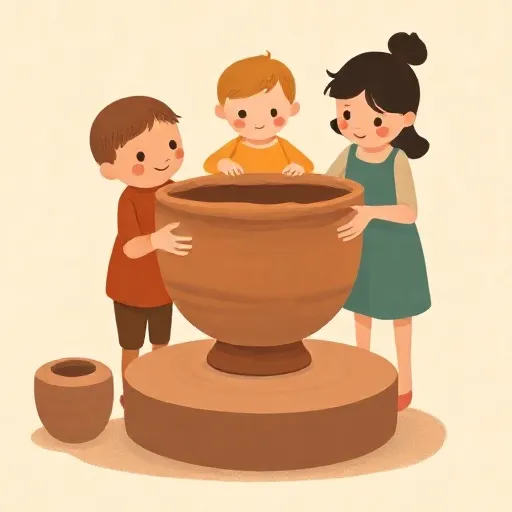
Dewey believed that in aesthetic experience, you are both active and passive — doing and undergoing. Doing is the outgoing energy: you focus, ask questions, imagine possibilities. Undergoing is the receptive phase: you let the sunset hit you, let the melody wash over you, let the meal’s taste hold your attention. A good experience balances the two. If you just aggressively snap photos of a landscape without letting it sink in, you’re all doing, no undergoing. If you slump on a couch and let images flash past without really noticing them, you’re all undergoing, no doing.
This idea also explains how an artist works. The artist starts with an impulsion — a whole-body urge to restore balance, like thirst that demands water, not just a reflex. The impulsion gathers emotional energy, but that energy is vague at first. Through working with a medium — paint, clay, words, notes — the artist shapes that energy into something that can be shared. This is not simply “pouring out” feeling. A screaming toddler discharges emotion, but that’s not expression, Dewey said. Expression means staying with the emotion, working it through material until it finds a form that makes sense to others. When van Gogh painted a desolate landscape, he didn’t just splatter his sadness on canvas; he organized color and line to make the viewer feel a kind of loneliness that has shape and depth.
And the audience? Dewey thought that truly experiencing an artwork also involves doing and undergoing. You don’t just receive what’s finished. You recreate the object in your own mind — sensing the decisions the artist might have faced, the tensions she worked through. In that way, the audience’s experience becomes a kind of mirror of the artist’s. Art, then, isn’t a one-way broadcast of emotion; it’s a process that two people can enter.
Art That Crosses Borders and Builds a World
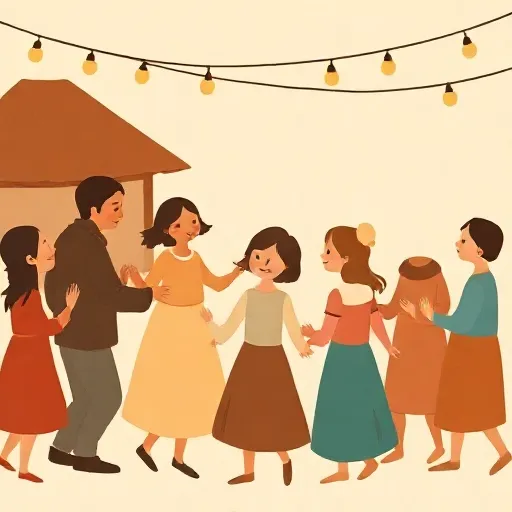
Dewey’s naturalism — his belief that art grows out of natural life processes — didn’t make him disregard culture. He thought humans are both biological and cultural creatures. Over time, the rhythms of nature (day and night, seasons, birth and death) gave rise to rituals: dances, songs, ceremonies that communities performed together. Those rituals carried emotional power. They connected people to their ancestors and to the land. And they were, Dewey said, already aesthetic through and through — “more than aesthetic,” in fact, because they united the practical, the social, and the spiritual.
This is why Dewey believed that art can serve as a bridge between people who seem wildly different. When you enter the spirit of a carved mask from West Africa or a song from Polynesia, barriers can “melt away,” he wrote. Artworks are “the most intimate and energetic means of aiding individuals to share in the arts of living.” They let us learn to “hear with other ears and see with other eyes.” In a world full of walls — between nations, classes, and cultures — Dewey thought art was one of the few things that could genuinely communicate across them.
He also rejected the idea that art’s value must be either purely useful or purely useless. An umbrella has a narrow use. An artwork, Dewey said, “serves life” by refreshing our attitude toward ordinary challenges. Even after the immediate thrill fades, it works in indirect channels, helping us notice things we’d otherwise miss. In that sense, art is a tool for growing — learning from one experience so you can meet the next one more wisely.
Why a 1934 Idea Still Rattles Your Day

You may not be thinking about John Dewey when you butter your toast or kick a soccer ball, but his ideas have crept into debates happening right now. A whole movement called everyday aesthetics has taken up Dewey’s hint: that the quality of our daily routines — the way light falls across a kitchen table, the sound of rain on a window, the feel of a well-made handle — can be aesthetically rich. This challenges the old habit of separating “real” art from mere “bodily” pleasure. Some philosophers protest that scratching an itch or luxuriating in a bath shouldn’t count as aesthetic. Others reply that Dewey never said everything feels like a symphony; he said that when an ordinary experience really comes together, it shares the same deep structure as an art encounter.
This matters because it shifts how you pay attention. If aesthetic experience isn’t locked in a museum, you can find it while solving a tough math problem, shooting hoops until the rhythm takes over, or simply listening to a friend describe a dream so vividly that the world outside seems to pause for a few minutes. Dewey’s vision encourages you to treat experience as something you can shape — to look for accumulation, resistance, rhythm, and closure in the activities that fill your days. The goal isn’t to turn everything into a painting. It’s to notice when your life, for a moment, becomes as complete and charged as a work of art.
Think about it
- Think of a moment in the past week that felt especially whole and alive — not necessarily happy, but complete. What made it different from the scattered moments around it? Would Dewey call it “an experience”?
- If ordinary experiences like a great conversation or a perfectly timed joke can be aesthetic, does that mean anything can be art? Or is there something that still separates a painting from a meal?
- Dewey worried that museums separate art from life. Do you think museums help more people experience art, or do they make art feel distant and untouchable? What would a museum look like if it were designed to close that gap?