Are You Missing the Art in Your Own Kitchen?
Have you ever really looked at your cereal?

You’re sitting at the table, spoon in hand. The milk swirls into your cereal, and for just a second you notice the pattern. It’s not a painting. It’s not music. But it gave you a tiny flicker of something — warmth, pleasure, or maybe just “that looks nice.” That flicker is the start of a whole branch of philosophy called everyday aesthetics.
For a long time, philosophers who studied aesthetics — the big questions about sensory experience, beauty, and taste — spent almost all their time on fine art: oil paintings, symphonies, marble statues. But in the twentieth century, some thinkers started asking: is beauty really locked inside museums? Or is it hiding in your cereal bowl, your messy bedroom, and the smell of toast?
John Dewey (1859–1952) opened the door in 1934. He said that an aesthetic experience doesn’t need a frame and a gallery. It can happen when you eat a meal, solve a math problem, or get lost in scrubbing the floor. What matters is that the experience feels whole, absorbing, and satisfying — like everything clicks. Dewey’s word for that completeness was “an experience” — something that stands out from the usual humdrum. He believed that if you pay attention, even ordinary moments can deliver this charge.
Arnold Berleant (born 1932) pushed the idea further. He said that aesthetic experience isn’t about standing back and staring at an object. It’s about engagement: you and the thing you’re experiencing — say, the wooden spoon in your hand or the scent of cinnamon — become partners. You’re in the middle of it, feeling the weight, the texture, the emotion. That insight helped launch a whole movement: everyday aesthetics, the study of sensory meaning in daily life.
Do you have to make the ordinary strange to see it?

Here’s a problem. You walk down your hallway every single day. It’s so familiar that you stop noticing it at all — it’s just background. If everyday life is that automatic, how can it ever feel aesthetic? Many philosophers answer with a word: defamiliarization — making the familiar strange again.
Thomas Leddy (born 1947) argues that when you turn off your daily autopilot and really look, a dusty windowsill or a crack in the pavement can suddenly shimmer with meaning. A plain mug can gain a kind of “aura,” like something precious. In that moment, you’re treating the ordinary almost like art. That’s one way everyday aesthetics works: you borrow the attention you’d give a painting and point it at your own kitchen.
But Yuriko Saito (born 1953), one of the most important voices in the field, raises a worry. If we always need to see the ordinary as extraordinary, we might miss the whole point: the gentle, quiet comfort of things that don’t demand our excitement. She and others point to the value of hominess — the calm of a familiar chair, a predictable routine, a soft blanket. Those things aren’t intense. They feel good because they’re exactly what they are, day after day. The challenge for everyday aesthetics is to appreciate the ordinary as ordinary, not force it into being a masterpiece.
When the ugly, boring, and disgusting matter

Not everything in daily life makes you smile. Some things make you cringe: a sticky floor, the blare of a car horn outside your window, the smell of sour milk. In standard aesthetics, ugliness often has a point — a disturbing painting can make you think. But in everyday life, ugly, boring, and repulsive moments often have no redeeming artistic message. Still, everyday aesthetics insists they are part of your aesthetic life too.
Katya Mandoki (born 1947) called these negative aesthetics — experiences of aesthetic violence, poisoning, or assault. A clutter of gaudy billboards, a factory stench, a room so drab it drains your energy. When you face these things, you rarely sit and reflect; you act. You scrub the stain, close the window, organize the mess. Everyday aesthetics, unlike gallery art, pushes you to improve your world immediately. That’s its activist side: negative aesthetic reactions can be an alarm bell telling you something needs to change, whether it’s your unwashed shirt or a neighborhood eyesore.
Are “cute” and “messy” real aesthetic terms?

Philosophers sometimes worry that everyday qualities — “pretty,” “cute,” “messy,” “shabby” — are too lightweight. Real aesthetic judging, they say, takes training: understanding a symphony or a novel takes work. A mass-produced sock with a heart pattern? That’s just a quick knee-jerk reaction, not a deep aesthetic experience.
Leddy responded that aesthetic qualities exist on a sliding scale from minor league to major league. A cute sticker isn’t the same as a cathedral, but both involve your senses and your feeling of rightness or wrongness. They’re both in the aesthetic family — and they matter hugely in daily life because they steer your choices constantly. Advertisers know this. A product’s shiny color or gentle curve can nudge you far more than a lecture.
Then there’s the problem of bodily sensations. Can an itch, a massage, or the taste of tea count as aesthetic at all? Critics worry that these feelings are too private to discuss — you can’t argue about my back scratch the way you can debate a movie. But everyday aestheticians reply that taste and touch never happen in isolation. The warmth of a mug is tied to its smooth ceramic, the quiet room, the memory of who you’re drinking tea with. So a “private” sensation is really part of a whole ambiance — and ambiance is something people can recognize, describe, and share.
How your sock drawer shapes the planet
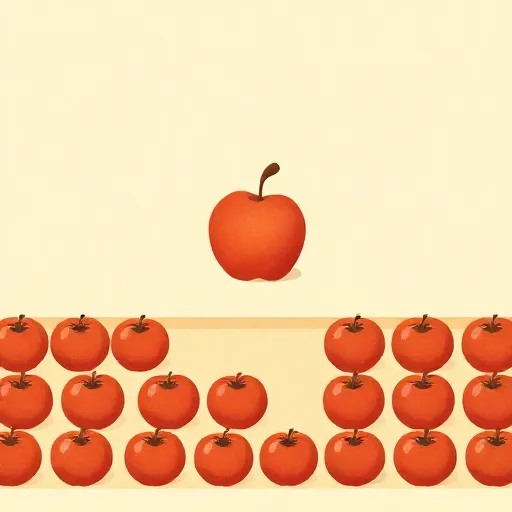
Your everyday aesthetic choices ripple far beyond your room. That preference for a perfectly smooth apple? Supermarkets throw away tons of “ugly” fruit, which rots and creates methane. The love of a neon-green lawn? It drives overuse of water and chemicals. That craving for a new phone because it looks sleeker fuels mining, pollution, and mountains of discarded gadgets.
Sherri Irvin (born 1970) points out that many of our negative aesthetic judgments — about scarred skin, differently-shaped bodies, or worn-out shoes — can become aesthetic blight, a kind of unfair seeing that leads to real harm. When a society decides that only certain bodies or objects look “right,” it discriminates against people and creates wasteful cycles.
But everyday aesthetics isn’t all doom. It also offers a positive toolkit. When you arrange a shelf so it feels friendly to others, you’re practicing social aesthetics. When a city designs a park that invites people to gather, it’s using aesthetic thought to build community. Saito calls this an aesthetics of care — paying attention to how things look, feel, and work as a way of showing respect for others and the world. An old repaired sweater can become a statement of value rather than an eyesore. A garden full of native wildflowers can replace the thirsty lawn — and your sense of what counts as beautiful can grow along with it.
So what do you see when you look at your own hallway?

Everyday aesthetics began as a rebellion: against the idea that art is the only place where beauty and meaning live. Now it’s a thriving conversation, and you’re already in it. When you pick out a shirt, wipe down a dusty shelf, or scrunch your nose at a bad smell, you’re making tiny aesthetic judgments that add up to the feel of your life.
The field still has open questions. How much can we trust those quick “ugh” feelings? Is there a difference between genuine aesthetic experience and just being manipulated by a shiny ad? And can we train ourselves to see the charm in a crooked carrot or a patched jacket without pretending reality is always pretty? No one has a final answer, but everyday aesthetics keeps asking you to notice more — not to escape ordinary life, but to wake up inside it.
Think about it
- If a beautiful painting was printed on a piece of trash you found, would the trash become art? What is the line between everyday object and artwork — and can the line move?
- You see a messy room and think it’s ugly. Is that judgment a statement about the room, or about you? Could a mess ever be experienced as beautiful, and if so, what would have to change?
- When your choice of a backpack is partly about how it looks, are you expressing your personal taste or being nudged by companies? Who is really shaping your idea of “cool” — and does it matter?