
Can an Idea Be a Work of Art? The Conceptual Art Puzzle
Why Is That Messy Bed Art?

In 1999, a British artist named Tracey Emin put her own unmade bed into a gallery. The sheets were stained and twisted, empty vodka bottles lay beside the mattress, and cigarette butts littered the floor. When people saw it, they were furious — or thrilled. How could a messy bed be art? But Emin said the bed was her confession, a snapshot of her life. The idea was the art, not the object itself.
That’s the heart of conceptual art, an art movement that says the most important part of an artwork is the idea or concept behind it, not how it looks or how skillfully it’s made. Many conceptual artists think the physical object is just a container for the idea. This turns ordinary thinking about art upside down. For centuries, art was about beauty and craft. But starting in the 1960s, a group of artists — including Joseph Kosuth, Sol LeWitt, and Joseph Beuys — decided that art should make you think, not just please your eye. They wanted to ask big questions: What can be art? And what is an artist’s job?
What Counts as Art?

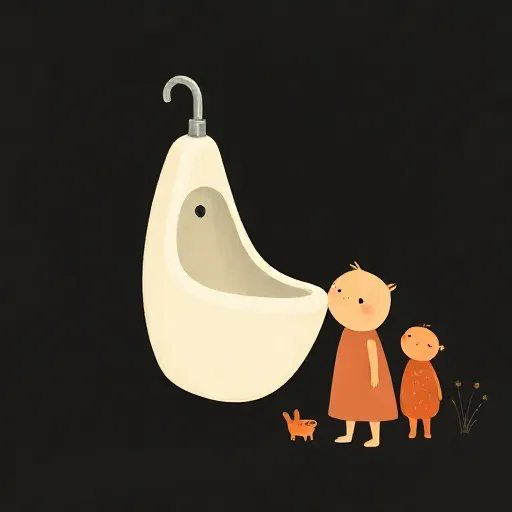
It’s easy to tell a painting from a chair. But what if someone puts a chair in a gallery and calls it art? That’s exactly what happened in 1917 when Marcel Duchamp (1887–1968) submitted a urinal, turned on its back and signed “R. Mutt,” to an art exhibition. He called it Fountain. It was a readymade — an ordinary object chosen by the artist and labeled as art. Duchamp’s idea was that the artist’s choice and declaration turn the object into art.
Conceptual artists loved this. They began to make works that looked exactly like everyday things: a stack of cardboard boxes, a line of bricks, a pile of candy. But if a Brillo box in a supermarket is not art, why is Andy Warhol’s Brillo Boxes (from the 1960s) in a museum considered a masterpiece?
Philosophers noticed a puzzle: you can’t tell whether something is art just by looking at it. The difference isn’t visible — it lies in something non-manifest. The philosopher Arthur Danto (1924–2013) argued that artworks get their status from their relation to the artworld — the whole social and historical context of art, including gallery systems, critics, and art history. In that view, being art depends on the meaning the artist invests in the object and the way the artworld interprets it. That means you can’t use simple rules like “if it’s beautiful, it’s art.” Conceptual art forces us to see that art is not just about appearances; it’s about ideas, intentions, and context.
The Art Object Disappears
Conceptual artists often say art is de-materialized. That means they think the physical thing you see isn’t the real artwork. The real artwork is the idea. In 1967, the artist Sol LeWitt wrote that “the idea or concept is the most important aspect of the work.” Joseph Kosuth went further: “The actual works of art are ideas.” If that’s true, what happens to the canvas or the bronze? It becomes a vehicle — a medium for transmitting the idea, not the art itself.
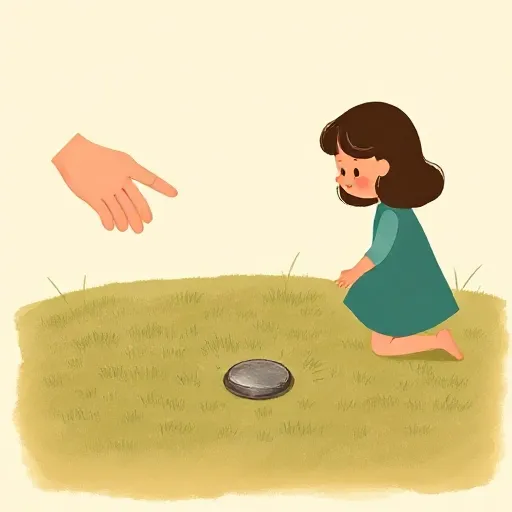
This raises mind-bending questions. Suppose an artist buries a kilometer-long brass rod vertically in the ground, so only its flat top is visible — like Walter De Maria’s Vertical Earth Kilometer (1977). Can you see the artwork? You can’t see the rod. You have to imagine it. The artist forces you to think about the idea, not just look. But then, is there anything you need to see, hear, or touch to appreciate the art? Philosopher Frank Sibley once argued that true appreciation of art requires a direct first-hand experience of the work’s aesthetic qualities — you have to see the grace or hear the frenzy. But what if the artwork’s quality is its idea, not its visible grace? Then perhaps you don’t need a perceptual experience at all; you need an intellectual one. This challenges the traditional belief that art must be experienced through the senses.
Does Art Have to Be Beautiful?

Most people expect art to be beautiful or at least pleasing to the eye. Conceptual artists reject that. They claim art’s value is cognitive rather than aesthetic. Cognitive value means the artwork helps you understand something — an idea, a feeling, a situation — rather than just provide a pleasurable experience. For example, Tom Marioni’s 1970 piece The Act of Drinking Beer with One’s Friends is the Highest Form of Art involved the artist literally drinking beer with his friends in a gallery. The point was to make you think about what counts as highest art, not to craft a pretty object. Some philosophers, like Timothy Binkley, argued that art can choose to operate in a semantic space (a space of meaning) instead of an aesthetic one. So conceptual art need not be beautiful to be good art.
But not everyone agrees. Critics say that if art abandons beauty and aesthetic experience, what distinguishes it from ordinary objects or random activities? And does conceptual art even deliver deep understanding? Philosopher James Young argues that the statements conceptual artworks make are often just truisms — obvious claims like “friendship is valuable” — so their cognitive value is trivial. If a work just tells you something you already know, is it really valuable? Defenders reply that conceptual art can guide you to imagine a situation in a personal and vivid way, teaching you something that plain propositions cannot. You might not learn new facts, but you might gain a new perspective or feel what an experience is like. That kind of knowledge — knowledge by acquaintance, or imaginative understanding — could be more meaningful than a simple fact.
Who Decides What It Means?

If the artwork is the idea, then interpreting the work should mean discovering the artist’s intended idea. Many conceptual artists, however, tell the audience that the work’s meaning is whatever they make of it. “It means whatever you want it to mean” is a common instruction. But that seems contradictory. If the artwork is an idea, and you get to replace it with your own interpretation, then the original idea is lost. Or is there room for multiple correct interpretations?
Philosophers debate this. Some think the artist’s intention must be the final word, especially when the work is just an idea, because otherwise there is no stable content — you’re just fantasizing. For instance, Robert Barry’s 1969 work All the things I know but of which I am not at the moment thinking is just a statement on a wall. If you interpret it to be about puppies, you’d be ignoring the artist’s intent entirely. Yet others argue that artworks can legitimately support many interpretations, and that the artist’s intention is only one among many. The audience’s creative engagement is part of the point. So conceptual art forces a choice: either the artwork is the specific idea the artist intended (and interpretation is limited), or the artwork is a shared meaning-making process (and the artist doesn’t fully control it). There’s no easy answer.
Why It Still Matters — Your Turn to Decide

Every time you look at a strange poster, a splash of paint, or a video art challenge online, you’re bumping into the same questions conceptual artists raised. Is it art because someone says so? Do you need to understand it, or just feel it? You don’t need a philosophy degree to have an opinion. Next time you see something puzzling in a museum — or even a random object in your room — ask yourself: could this be art? What idea would it share? Conceptual art handed you the power to define art for yourself, but it also asks you to be a thinker, not just a looker. The debate continues, and you’re now part of it.
Think about it
- If your best friend drew a stick figure and called it a masterpiece, would it be art? Why or why not?
- Can an idea alone, without any object, be a complete artwork? If you describe an artwork in your head but never make it, does it exist as art?
- Is it more important for art to teach you something or to be beautiful? Can you have a favorite piece of art that isn’t beautiful?