Your Mind Isn’t a Box — It’s a Tool: John Dewey
The Boy Who Wanted to Fix Philosophy

In the 1870s, a teenager in Vermont felt torn apart. John Dewey (1859–1952) grew up in a world that seemed split in two. On one side were matter, bodies, and science; on the other were spirit, meaning, and religion. It felt like a painful wall inside him. Then he read a dense book by the German philosopher Georg Wilhelm Friedrich Hegel (1770–1831). Hegel argued that those opposites — subject and object, matter and spirit — didn’t have to fight. They could be parts of one living whole. Dewey later said it was “an immense release, a liberation.” That moment set him on a lifelong quest: to rebuild philosophy so it would stop dividing us and start helping us live better.
Dewey drew on two other big influences as he developed his ideas. From Charles Darwin (1809–1882) he took the notion that nature is not a fixed machine but a tangle of changing processes without a final stop. From the psychologist William James (1842–1910) he learned to start with how experience actually feels — messy, shifting, full of purpose — instead of with tidy theories. Dewey combined these insights to argue that experience is not a private movie inside your head. It’s the whole doing-and-undergoing of an organism in its environment. Thinking, feeling, and acting aren’t separate things. They are different phases of the same active, living process.
Why You Aren’t Just a Reaction Machine
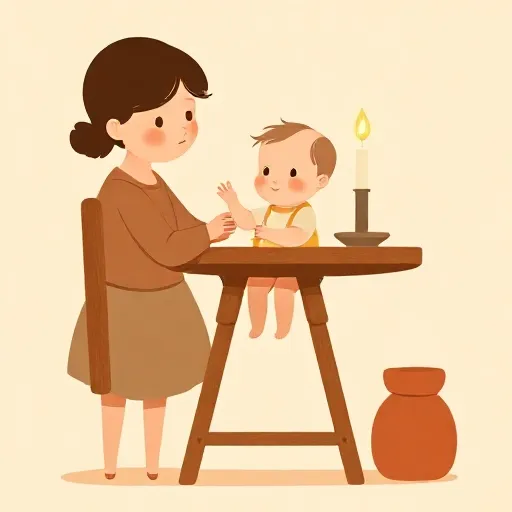
When Dewey began studying psychology, many scientists explained behavior with the reflex arc. The idea was simple: a stimulus hits you, you respond. A child sees a candle (stimulus), grasps it (response), feels a burn (stimulus), and pulls her hand back (response). It sounds like a tidy cause-and-effect chain. But Dewey spotted a deep problem. The model chops the experience into disconnected pieces, as if the child is a passive machine that suddenly gets turned on.
Dewey pointed out that the child is already doing something: she’s looking, reaching, exploring. The “beginning is with the act of seeing; it is looking, and not a sensation of light,” he wrote. In other words, the organism is never just sitting and waiting. It’s always in the middle of a continuous, cumulative exchange with its world — a transaction. The terms “stimulus” and “response” aren’t fixed things; they’re flexible ways of describing phases of a larger activity. A smell becomes a stimulus only because the animal is already sniffing. A block of wood becomes something to step on only because you’re trying to cross a stream.
This shift from isolated parts to an ongoing, functional whole became the engine of Dewey’s thinking. He applied the same logic to habits, perceptions, and even emotions. A habit, for example, is not a rigid routine but an acquired way of responding that stays plastic and can be reshaped when you hit a problem. And an emotion like fear isn’t a private inner state bolted onto an action. It’s the whole organism’s unsettled readjustment when a habit fails — like the jolt you feel when a strange dog appears and you don’t yet know how to act.
The Five-Step Pattern for Solving Any Problem
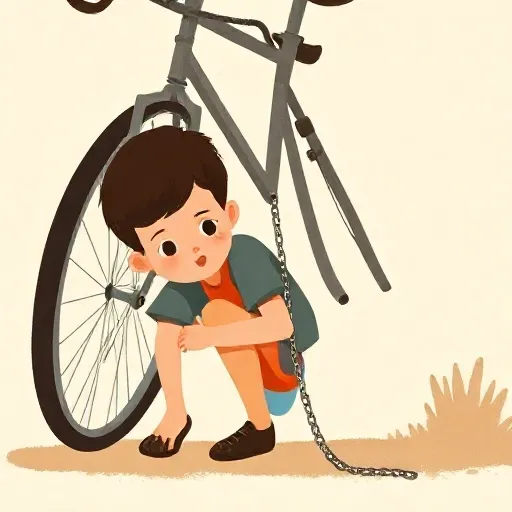
Dewey didn’t just want to describe the mind; he wanted to show how we actually think when we think well. He called this process inquiry and argued that it’s the same basic pattern whether you’re fixing a bike, doing science, or deciding how to handle a fight with a friend.
The pattern has five phases, though they often blend together. First, something feels off — you get that vague, niggling sense that a situation is doubtful. Second, you formulate exactly what the problem is. (The chain is loose and won’t grip the sprocket, not just “my bike is broken.”) Third, you propose a hypothesis: an imaginative guess about what might fix it. Maybe if I loosen the axle and slide the wheel back… Fourth, you reason through the idea, thinking about what would have to be true if the guess is right and whether it might create new problems. Finally, you act — you test the hypothesis in the real world. If the chain snaps tight and the pedals turn smoothly, the indeterminate situation has become a determined one.
For Dewey, this is what knowledge really means: not a stash of facts stored in a mental cabinet, but a reliable resource produced by inquiry. Truth isn’t a perfect picture of a hidden reality. It’s a statement that has been tested and settled enough to be useful for further inquiry — though it’s always open to revision if new problems arise. That’s why Dewey called his approach instrumentalism. Ideas are tools. You judge them by how well they help you navigate and improve experience, not by whether they match some invisible template.
The School That Felt Like Real Life
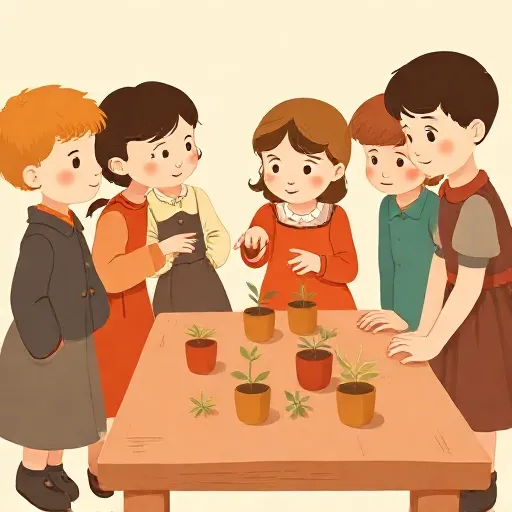
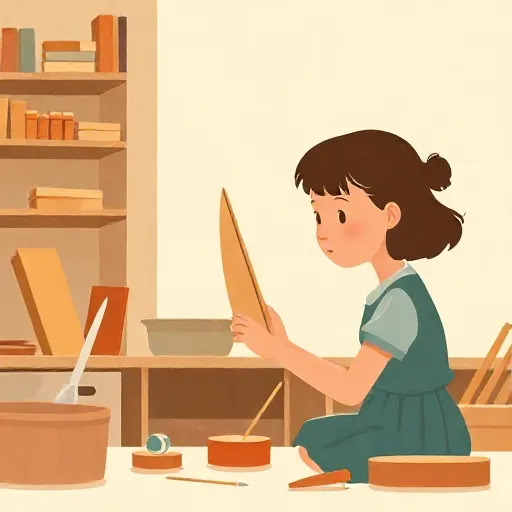
If thinking is a tool for living, Dewey believed schools had to be completely reimagined. At the University of Chicago in 1896, he founded the Laboratory School. It wasn’t a place where children sat in rows, memorizing dates and definitions. It was a workshop of doing. Children cooked, gardened, built shelters, and wove cloth. Academic subjects grew naturally out of these activities: a child weighing flour for a recipe needed fractions; a discussion about a garden’s watering schedule turned into a lesson on rain and geography.
Dewey rejected both sides of a heated debate in his day. “Traditionalists” wanted to pour curriculum into empty minds with strict discipline. “Romantics” said let the child’s impulses run free. Dewey insisted that real education must start with the child’s interests and activities but deliberately connect them to the knowledge and habits that society values. The teacher becomes not a boss but a guide who designs situations where students encounter genuine problems and are led to experiment, fail, and revise. The goal is to cultivate the same intelligence that drives scientific discovery: curiosity, imagination, and a willingness to test ideas in the open.
Democracy Means We Figure It Out Together

Dewey carried his experimental way of thinking straight into politics. He lived through wars, a depression, and the dizzying growth of industrial cities. He watched older ideas about rugged, independent individuals break down. His answer was a vision of democracy as a way of life — not just a system of voting and courts, but “a mode of associated living, of conjoint communicated experience.”
In this picture, a democratic public forms around shared problems. Ordinary people, scientists, and officials join in inquiry: defining the trouble, imagining solutions, reasoning through their consequences, and trying them out. That requires free speech, open communication, and an education that gives everyone the habits of critical thinking and collaborative problem-solving. It also requires a kind of faith — not in a supernatural plan, but in the possibility that human intelligence, working together, can continually adjust and learn from experience. Dewey called this “faith in experience.”
He knew this was fragile. Publics can become foggy and distracted. Citizens can be kept too busy or too uninformed to participate. But for Dewey, the worst danger was the belief that problems should be handed over to experts, absolutes, or rigid creeds that shut down inquiry. The only guard against that is a society that treats every classroom, every town hall, and every dinner table as a place for intelligent experiment.
Your Life, Your Experiment

Dewey’s ideas aren’t locked in dusty books. They’re alive every time you face a snag. You try to figure out why a video game controller won’t connect. You feel that twinge of something-wrong, define the problem, guess at a solution, think it through, and test it. That’s inquiry. You argue with a friend, and later you replay the conversation, imagining how you might have said something differently — a kind of dramatic rehearsal that helps you adjust next time. That’s intelligence remaking habit.
The world Dewey wanted is one where we stop chasing certainty and start treating life as an ongoing experiment. It’s messy, fallible, and always open to revision — just like a truly good science class. And that, he thought, is not a reason to panic. It’s a reason to lean in, get curious, and learn together.
Think about it
- Think of a recent problem you solved, like fixing a stuck drawer or figuring out a tricky homework assignment. Did your process follow anything like the five-phase pattern Dewey described? Were some phases harder to separate than others?
- Where do you think schools put too much weight on memorizing facts and too little on experimenting with real problems? What would your perfect classroom look like if you could redesign it?
- If democracy depends on citizens who can investigate problems together and learn from experience, what gets in the way of that happening today? What could help?