
Is Your Mind a Computer, or Something More?
The Magical Number Seven That Broke the Taboo

In 1956 the American psychologist George Miller published a summary of many experiments with a strange result. No matter what people tried to remember—numbers, words, musical tones—they could keep only about seven items in mind at once. Miller described this as a limit of around seven items, plus or minus two. But he also had a deeper insight: people overcome the limit by packing information into chunks, mental clusters that the brain unpacks when needed. To chunk information, the mind must have hidden procedures for encoding and decoding—real mental operations that cannot be seen from the outside.
At the time, saying such a thing was almost forbidden. For the first half of the twentieth century psychology was ruled by behaviorism, a view that treated the mind like a black box. Behaviorists such as J. B. Watson (early 20th century) insisted that science could only study what was directly observable: a stimulus that goes in and a behavioral response that comes out. Talk of thoughts, memories, or mental pictures was thrown out of serious discussion.
The landscape changed dramatically around 1956. While Miller was counting chunks, other pioneers were founding the field of artificial intelligence. John McCarthy, Marvin Minsky, Allen Newell, and Herbert Simon started building computer programs that could solve logic puzzles and play games. Around the same time the linguist Noam Chomsky rejected the behaviorist story that children learn language just by imitating. He argued that the mind contains a mental grammar of rules that lets you understand sentences you have never heard before. These six researchers—Miller, McCarthy, Minsky, Newell, Simon, and Chomsky—are often seen as the founders of a new way to study the mind: cognitive science.
The Big Idea: Your Mind as a Running Program
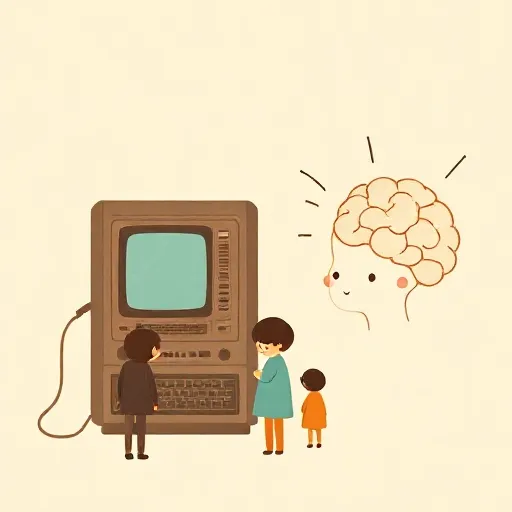
The central hypothesis of cognitive science is bold: thinking is best understood as mental representations inside your head plus computational procedures that shuffle those representations around. Representations are like the data structures of a computer program—they can be logical sentences, rules, concepts, images, or analogies. Procedures are like algorithms—deduction, searching, matching, rotating an image, or retrieving a memory. The same few operations, applied to the right structures, are thought to produce everything from solving a math problem to dreaming up a story.
This is not a claim that your skull literally contains a desktop computer. The analogy works in three directions: mind, brain, and machine. The brain is a parallel processor: it runs billions of tiny computations at the same time across interconnected neurons. Most of the computers we use every day are serial processors that do one step after another, though some newer machines also work in parallel. So when researchers build a computer model of, say, how you recognize a face, they might use a connectionist network—a web of simple artificial neurons that excite and inhibit each other, inspired directly by the brain. The mind‑as‑computer idea is not a single fixed blueprint; it is a framework that invites many competing designs.
Different theories within cognitive science disagree sharply about the right kind of representations and procedures. Some rely on explicit rules (IF a ball is coming toward you, THEN duck). Others build concepts out of sets of typical features: your idea of a bird does not have a strict dictionary definition but bundles together features like wings, feathers, and flying. Still others claim that thinking is fundamentally about mapping an old situation onto a new one—analogy. And a powerful family of models called deep learning uses many layers of artificial neurons that learn from massive amounts of examples, enabling computers to beat world champions at the board game Go or to translate sentences with surprising accuracy. All of these are guesses about the hidden software of the mind.
Peeking Inside the Black Box
If thinking happens behind the curtain, how can anyone study it? Cognitive scientists use several different flashlights to peer in.
Psychological experiments are the oldest tool. A researcher might bring people into the lab, give them a logic puzzle, and carefully measure where they go wrong. Others test how fast you can rotate a mental picture or how you learn a list of new words. The goal is to catch the operations of thinking in motion, not just to trust what people say about their own minds—introspection can be deeply misleading.
Computational modeling lets researchers build programs that imitate human performance. If a model of human memory makes the same kinds of slips that people do, it hints that the mind might really use something like the program’s strategy.
Linguistics adds another angle. Linguists in the Chomskian tradition examine subtle differences between sentences. “She hit the ball” is perfectly normal English, but “She the hit ball” is jumbled nonsense. Patterns like these suggest that your mind contains a grammar built from mental rules, not just a collection of phrases you have memorized.
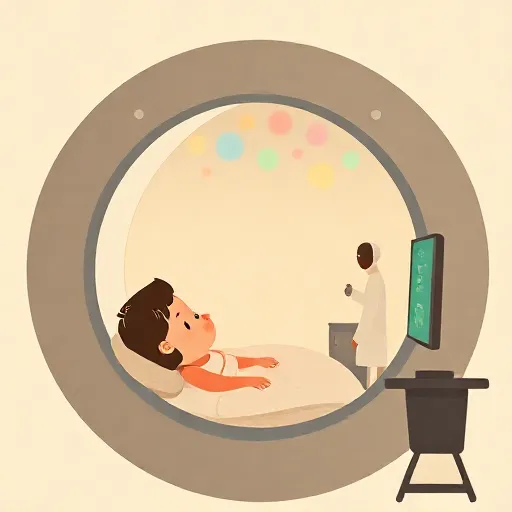
Neuroscience gets closest to the physical machinery. Using magnetic scanners, researchers watch which brain regions become active while you read a word or imagine a beach. They also study people whose brains have been injured in specific ways—a stroke that damages a language area, for instance, can leave someone unable to form sentences even though their intelligence is intact.
Cognitive anthropology widens the view by asking how thought works in different cultures. A color word like “blue” might not divide the rainbow the same way everywhere, and understanding those differences reveals that some patterns of thinking are not built into the biology but shaped by the world you grow up in.
Finally, philosophy handles the big questions that bubble up when researchers get deeper: What is a representation? Is the mind just the brain, or something more? Does thinking have to be conscious? Together, these six fields form a kind of stereo picture—each contributes something the others cannot see alone.
Four Blueprints for Thought
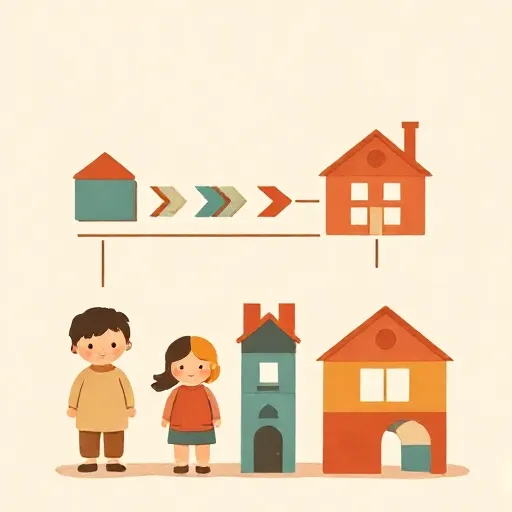
Cognitive scientists do not all draw the same blueprint. Here are four influential sketches.
Rules. Much of what you know feels like IF… THEN instructions. If a number ends in 0, then it is divisible by 10. Rule‑based models treat the mind as a vast library of such condition‑action pairs, plus procedures for searching the space of possible moves. Early computer programs that solved algebra problems or planned a route were purely rule‑based.
Concepts. Instead of rigid definitions, you probably think of a “pet” as a fuzzy bundle of typical features: furry, domesticated, lives at home. Concept systems organize these bundles into hierarchies (a poodle is a kind of dog, a dog is a kind of animal) and match a new thing to the closest bundle. This explains why you call a strange‑looking lizard a “lizard” even if you have never seen that exact species before.
Connectionist networks. Imagine thousands of tiny light‑bulb nodes connected by adjustable wires. When you see a picture of a cat, some nodes light up and the signal spreads through the network. Learning happens by gradually turning up certain connections and turning down others—no explicit rules needed. These models capture how you start to recognize patterns without being told the steps.
Deep learning. This takes connectionist ideas and multiplies the layers. A deep neural network might have dozens of sheets of neurons that each learn slightly more abstract features. Fed millions of cat photos, it eventually “knows” what a cat looks like better than a set of verbal rules ever could. By 2016 a deep‑learning program called AlphaGo was the top Go player on the planet. Still, many thinkers doubt that deep learning alone can explain things like causal reasoning, sudden insight, or the felt texture of an emotion.
Feelings, Bodies, and the Real World

From the start, critics have asked whether the representation‑and‑computation story leaves out too much. Their challenges are not settled, and they keep the field honest.
One cluster of worries says that cognitive science neglects the messy stuff that actually fills your mind: the stab of fear when a friend yells, the flutter of excitement before a performance, the way your body already knows how to catch a ball before your thoughts catch up. Emotion, consciousness, and embodiment—the fact that you think with a whole body in a real physical and social world—can seem like afterthoughts in a purely computational picture.
A different kind of challenge comes from mathematics. Some have argued that certain results in formal logic, especially Gödel’s theorem, prove that human thinking cannot be just computation. Most cognitive scientists today believe this argument misunderstands what the theorem really says, but the exchange shows how philosophy and mathematics can push back on scientific orthodoxy.
Other critics complain that cognitive science has not yet produced a single unifying theory—the way evolution and genetics unify biology. Instead, the field still looks like six disciplines mostly doing their own thing. Defenders reply that genuine progress is happening at the seams: psychologists and neuroscientists are showing how mental concepts are realized by patterns of firing neurons, and computer models are becoming more biologically realistic every year. The integration is messy, but it is real.
These debates matter because they touch questions you probably care about. If mental life is just a stack of computational procedures, can your choices be truly free, or are they determined like a program’s output? Are your thoughts identical to brain states, or can the same thought be “run” on different hardware? What separates a genuine understanding of a story from merely producing the right words? Cognitive science does not settle these questions, but it gives them a sharp, testable shape.
Why the Blueprint You Choose Changes Everything

Here is why any of this matters to a twelve‑year‑old living today. The way scientists describe your mind seeps into how you understand yourself. If you think of your memory as a searchable database, you study one way; if you think of it as a web of connections that need to be strengthened, you rehearse another. If you believe that a fleeting mental image is just a pattern of neural activity, you might stop worrying that an awkward daydream says something deep about who you are.
The computational view also shapes the world you will inherit. When a voice assistant or a video‑game character seems to “know” what you mean, it is running a cognitive architecture that descended from those 1956 conversations. The same questions that Miller and Chomsky raised now appear in consumer technology: Is the assistant just a clever mimic, or does it understand? If a future machine passes every test of intelligent behavior, should we treat it as a mind, or just a tool? And if your own thinking really is a kind of natural computation, what does that say about the times you feel most free—choosing a flavor of ice cream, forgiving a friend, inventing a joke?
None of these questions has a final answer. Cognitive science keeps refining its blueprints while critics keep pointing out what the blueprint leaves blank. That means you get to join the conversation not as someone who simply learns the facts, but as someone who can ask the next round of questions.
Think about it
- If a computer program wrote a poem that moved you to tears, would you say the program was being creative, or just following its code?
- Imagine a brain scan could predict with perfect accuracy which snack you will pick tomorrow. Would that change the feeling that you are choosing freely?
- Can a machine that has no body, no feelings, and no friendships ever truly understand what it is like to be you? Why or why not?