
How Do You Really Figure Things Out? A 100-Year-Old Guide to Thinking
The Clock on 16th Street

You’re downtown, and a clock catches your eye. The hands read 12:20. You remember you have an appointment at 1:00 way across town. Immediately your mind starts racing: Should you take the bus? It might be too slow. The subway express? There could be a station near, or you could walk several blocks and lose time. The elevated train? You’d need to check how far the station really is. In a few seconds you weigh the options, remember what you know about the city, and decide on the subway, arriving right on time.
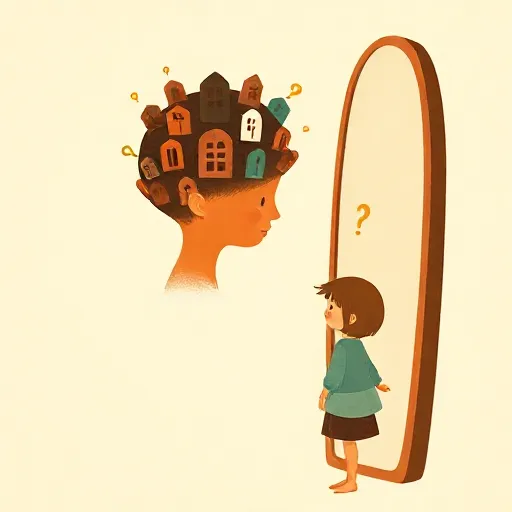
This ordinary puzzle, described by the American philosopher John Dewey (1859–1952), is a perfect example of what he called reflective thinking. Today we usually call it critical thinking. It’s the opposite of blindly guessing or just believing the first idea that pops into your head.
What Is Critical Thinking, Exactly?
Dewey defined reflective thinking as
active, persistent and careful consideration of any belief or supposed form of knowledge in the light of the grounds that support it, and the further conclusions to which it tends.
In plain words: when you’re puzzled, you stop. You ask what you really know and what reasons you have. You think through where each possible answer would lead, and you test it before you accept it.
He wasn’t the first person to dream up such a skill. He quoted older thinkers like Francis Bacon and John Locke, who also wanted people to develop a scientific attitude of mind. But Dewey gave teachers a clear recipe. By the 1930s, many schools in a massive study called the Eight-Year Study made critical thinking their target. They even created tests to see if students were getting better at it. In 1941, a researcher named Glaser showed with real experiments that high school students could be trained to think more critically.
Philosophers and educators today capture the idea in three simple features. Critical thinking is:
- Purposeful – you’re trying to make up your mind about what to believe or do.
- Standards-seeking – you’re holding your own thinking to a level of accuracy and fairness.
- Achieving – your thinking actually meets those standards to some degree.
In other words, critical thinking is careful, goal-directed thinking. Jumping to a conclusion without looking at alternatives is uncritical thinking. Using a fixed formula without understanding why it works is not critical thinking either, nor is refusing to change your mind because you think your side can’t possibly be wrong.
The Stages of Thinking It Through

Dewey noticed a pattern in dozens of examples, from catching the right train to explaining a strange pole on a ferryboat. He broke the thinking process into five phases—not rigid steps, but moments that can loop and overlap:
- Suggestions: Your mind leaps forward to a possible solution. (“Maybe the subway express is faster.”)
- Naming the difficulty: The vague puzzle turns into a clear question you can work on. (“I need to know the fastest route, not just any route.”)
- Guiding hypotheses: You use a suggestion as a test idea to lead your search for facts. You don’t marry it yet—you treat it as a guess. (“I’ll check how far the elevated station is.”)
- Reasoning: You think through what would follow if your guess were true. (“If the elevated station is two long blocks away, I’ll lose time. If the subway goes nearer my destination, I’ll save time at the end, too.”)
- Testing: You check your idea against the world, either by looking or by an actual experiment.
Take the case of the bubbles. Dewey described a student washing tumblers in hot soapy water. When he placed them mouth-down on a plate, bubbles formed on the outside of the glass, then moved to the inside. Why? He guessed that air trapped inside expanded and escaped; to test his guess, he took out more tumblers and shook some to trap cold air, while keeping others mouth-down to stop cold air from entering. The pattern of bubbles matched his prediction. He then even placed an ice cube on a tumbler to see the bubbles reverse—and they did.
Notice that he didn’t just wonder and stop. He built a tiny experiment, collected evidence, and only then accepted his explanation.
The Habits of a Sharp Thinker

Being able to think critically is one thing; actually doing it when you’re in a hurry, upset, or under pressure is another. That’s why researchers talk about critical thinking dispositions—habits of mind that push you to stop and think instead of rushing.
One of the most important is the willingness to suspend judgment. When you’re faced with a messy room, the first thought might be “burglar!”. But if you immediately commit to that answer, you’ll stop looking for other clues. A good critical thinker holds the guess lightly and checks whether valuables are missing before settling on an explanation. That habit is called open-mindedness: a genuine willingness to consider alternatives even if they challenge what you already believe.
Other initiating dispositions include:
- Attentiveness — noticing something puzzling, like a sudden cool breeze that makes you suspect rain.
- A habit of inquiry — a kind of mental energy and curiosity that makes you want to figure things out, not just shrug.
- Self-confidence — trusting that you’re capable of reasoning well enough to make progress.
- Courage — being willing to think for yourself, even when that’s uncomfortable.
- Trust in reason — believing that thinking carefully usually pays off.
- Seeking the truth — actually caring about getting it right, instead of sticking to a comfortable story.
Once you start, internal dispositions keep you on track: staying focused on the question, persisting when the problem is hard, and being ready to change strategies if your first approach isn’t working.
Skills You Build (and Why They Aren’t Magic)
A critical thinker draws on a toolkit of abilities. You need to observe carefully, recognizing the difference between what you actually see and what you’re just assuming. You need to be able to turn a vague confusion into a clear question—one that doesn’t already sneak an answer into its wording. You need imagination to dream up possible explanations, and inferential skills to figure out what would follow from each. You need to know how to consult sources and judge whether to trust them. And in today’s world, you need to identify and analyze arguments—not just fight back, but really understand the structure of someone else’s reasoning.
Yet here’s a lively disagreement: Are these skills general, like a mental Swiss Army knife you can use on any subject? In 1981, a philosopher named McPeck argued that there are no general thinking skills; you can only think about specific topics, and each subject has its own rules. You might be brilliant at weighing evidence in history but careless in chemistry. Other thinkers push back, pointing out that we do teach some general abilities—like writing clearly or checking for bias—that help across many fields. Most educators today agree on a middle ground: you need a deep well of subject-matter knowledge, but you also need general habits of checking your work, asking questions, and staying open-minded. Transferring your skills to a new domain doesn’t happen automatically; it takes practice and a nudge from a teacher who points out the connections.
Why It Matters for Your Whole Life

Back on that city sidewalk, your careful thinking saved you twenty minutes. But the value goes much deeper. Dewey believed that learning to think reflectively made people happier and reduced the “social waste” of bad decisions. Later philosophers like Harvey Siegel gave extra reasons: Respecting a person means giving them real reasons, not just orders—so schools should honor your demand for explanations. Preparing you for adulthood means building your self-sufficiency, not your ability to memorize someone else’s answers. And living in a democracy requires citizens who can follow arguments, spot empty promises, and reason together across disagreements.
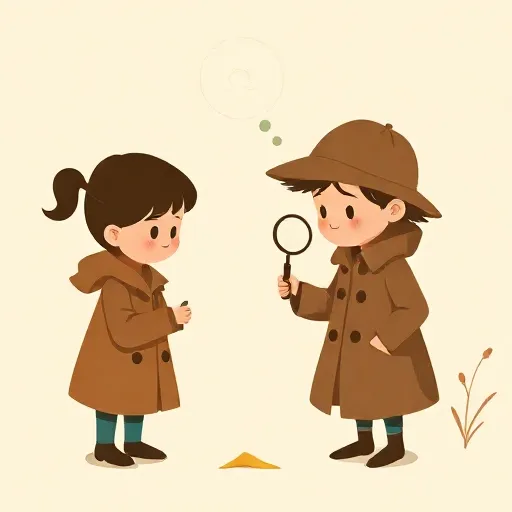
Critical thinking also guards against your own brain’s shortcuts. Psychologists have shown that once you have a hunch, you tend to confirmation bias—you notice evidence that supports it and ignore what doesn’t. That’s why accident investigators and detectives are trained to gather evidence before forming a solid theory. And in a world where anyone can publish anything, the habit of asking “What’s the evidence?” and “Is this source reliable?” is more urgent than ever.
Every time you decide which friend to believe, which product to buy, or how to spend your free afternoon, you’re in the same spot as the person watching the clock. You’re standing before a puzzle with more than one path. Reflective thinking doesn’t make you slow—it makes you sure.
Think about it
- Suppose a friend sends you a social media post that makes an incredible claim. What are three careful questions you could ask before you decide whether to share it?
- Is it ever smarter to go with your gut feeling instead of thinking through all the options? Can you imagine a situation where trusting your instincts is the best kind of thinking?
- If you and a classmate disagree about the best way to solve a problem, how could the habits of open-mindedness and seeking truth help you both reach a fair conclusion—even if neither of you turns out to be 100% right?