
What Lives in Your Mind When You're Not Thinking About It?
The Thought You Just Remembered

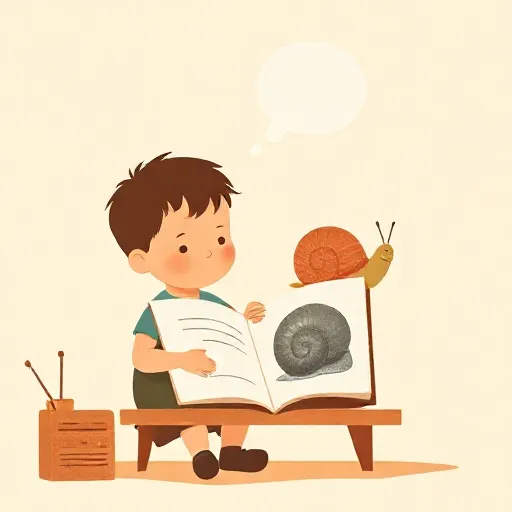
You are sitting in class when the teacher mentions penguins. Suddenly you recall a fact you have not thought about in years: penguins have knees. Where was that fact a moment ago? It did not feel present. Yet it was not gone either. It came back the instant something nudged it.
A German philosopher named Johann Friedrich Herbart (1776–1841) spent his life asking where mental contents go when you stop thinking about them. His answer was startling. He said the mind is a kind of physics experiment — a system of forces where ideas push, shove, merge, and sink below the surface of awareness. And he believed you could describe all of this with mathematics.
The Mind Is Not a Toolbox
In Herbart’s time, many philosophers explained the mind by listing its “powers” or faculties. You remember because of a faculty called “memory.” You make choices because of a faculty called “the will.” You feel things because of a faculty called “emotion.”
Herbart thought this was useless. Calling something “memory” is just giving a name to the thing you are supposed to be explaining. It is like saying a clock works because of a “time-telling power.” A real science, he argued, needs laws — rules that describe exactly how mental events unfold, the way physics describes how objects move.
He had another objection. If the mind is a collection of separate powers, then who is in charge? Are memory and will and emotion all fighting for control? That picture, he said, leaves you with a broken self — a person torn apart by competing inner agencies with no real unity.
Herbart wanted a psychology that was one thing: rigorous, mathematical, and built from a single kind of mental stuff. He called that stuff representations (Vorstellungen). A representation is simply something present in your awareness — a color you see, a sound you hear, a thought you think, a memory that surfaces. Everything mental, he argued, is made of representations and the laws that govern how they interact.
Ideas at War

Here is Herbart’s picture. The soul — what he sometimes called the psyche — is a simple, unified thing. By itself, it is empty, a blank slate. But the world constantly disturbs it through the senses. Each disturbance creates a representation, like a ripple on a pond when rain falls.
Now imagine hundreds of raindrops hitting the pond at once. The ripples collide. Some merge together, becoming stronger. Others interfere with each other, canceling out. Herbart said representations behave the same way.
If two representations are similar — two shades of blue, say — they fuse (Verschmelzung), joining into one stronger representation. If they are different — blue and the sound of a bell — they do not fight at all. They complicate (Komplikation), folding together peacefully because they belong to different mental “continua.”
But if representations are opposed — if they cannot both fully occupy awareness at the same time — they inhibit (hemmen) each other. Each one tries to push the other out of consciousness. The stronger representation dims the weaker one. The weaker one does not vanish, though. It becomes a striving (Streben) — an urge to return to full awareness as soon as the pressure lets up.
This is why Herbart called representations self-preservations of the soul. Each one is the soul’s attempt to maintain itself against a disturbance, to keep representing even when pushed down.
The Threshold
Here is the idea that made Herbart famous. When two representations oppose each other, the weaker one gets dimmed. But it can only be dimmed so far. It never reaches zero.
Add a third representation, though, and everything changes. Two strong representations working together can push a third one completely out of awareness. Herbart called the boundary between awareness and unawareness the limen — the threshold of consciousness (Schwelle). A representation pushed below this threshold is not gone. It is not destroyed. It simply stops contributing to your current state of mind.
This explained something ordinary but puzzling. You know thousands of things right now that you are not thinking about. Your grandmother’s face. The capital of France. How to ride a bike. Where are they? Herbart’s answer: they are hovering beneath the threshold. They are still in you, still real, but not currently “lit up” in awareness.
When something — a question, a smell, a sound — weakens the representations that pushed them down, they rise back above the threshold. You remember.
This also explained why strong feelings and good intentions can abandon you. You meant to be patient. You resolved to be brave. But in the moment, other thoughts crowded in too vividly. Your resolve sank below the threshold, and you acted against your own better judgment. It is not a mysterious evil force, Herbart said. It is just the mechanics of the mind.
Who Is Watching?
If the mind is just representations pushing and pulling, then what about the feeling that you are in there, watching it all happen? What about the self?
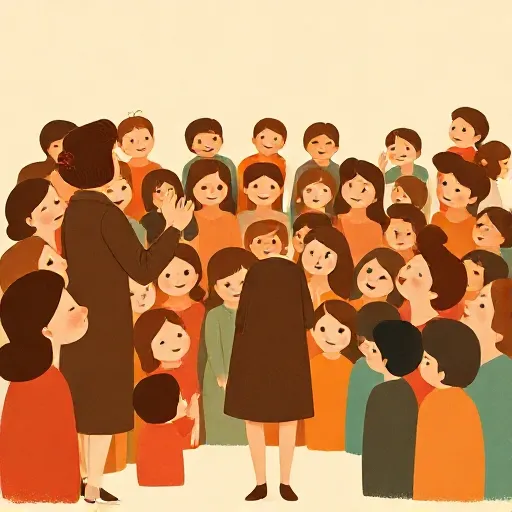
Herbart had a radical answer. There is no separate “self” doing the observing. What we call self-consciousness is just one group of representations observing another group.
He called this process apperception. When a new perception enters your mind, it meets the older, more stable masses of representations already living there. The older mass — your existing knowledge, your concepts, your habits of thought — assimilates the newcomer. It pulls in what fits and pushes back what does not.
Think of a skilled musician who can pick out one wrong note in a choir of a hundred voices. Or a doctor who spots symptoms in an instant that you would miss entirely. Their minds contain rich, organized apperception masses — networks of representations built up through experience. These masses do the “noticing.” They are the observer.
The “I” you feel yourself to be is, on Herbart’s view, not a soul-substance standing behind your thoughts. It is a node — the point where all your representational series intersect. It feels real. It feels like the thinker of your thoughts. But it is an effect of the system, not a ghost in the machine.
Building a Person
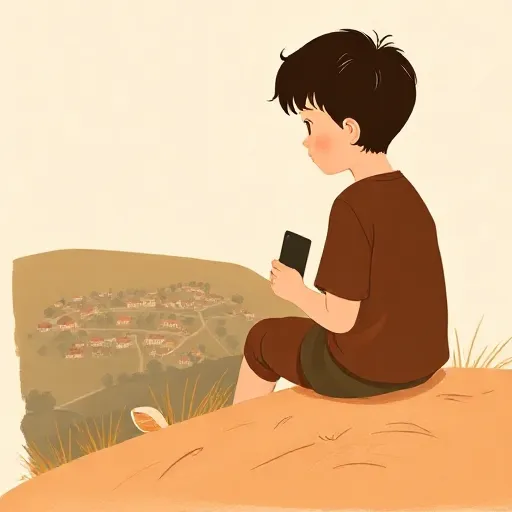
Herbart believed his psychology had enormous practical consequences — especially for education. The German word for education is Bildung, which literally means “formation.” If the mind is built from representational masses, then educating a child means carefully forming those masses.
The goal, he said, was moral character — a person who acts well not because they are following rules, but because their inner system of representations is organized around the good. You cannot lecture character into someone. You build it by giving the child rich, organized experience: history, literature, music, science, human relationships. Each new representation that gets assimilated strengthens and refines the apperception masses that will, in adulthood, do the work of moral judgment.
Herbart also thought this meant respecting the child’s own activity. Representations fight their own battles. The teacher cannot simply implant ideas. She can only arrange conditions so that the right representations rise, fuse, and win. The child must do the mental work — must notice, associate, reflect — on their own.
This connects directly to your life. Every time you learn something new, you are not just adding a fact to a pile. You are reshaping the masses that will determine what you notice, what you care about, and how you act. The things you practice thinking about become the things you are.
Think about it
-
Right now, before you read this question, were you aware of the feeling of your socks against your feet? That sensation was below the threshold. What else might be in your mind right now that you are not noticing?
-
If every decision you make is the result of representations pushing and shoving according to mechanical laws, can you ever really be free? Or are you just watching the fight?
-
Herbart thought the books you read and the things you practice thinking about literally shape who you become. If that is true, what would you want to fill your mind with — and what would you rather leave out?