
What Happens to a Belief When You’re Not Thinking About It?
Where Did My Snail Fact Go?

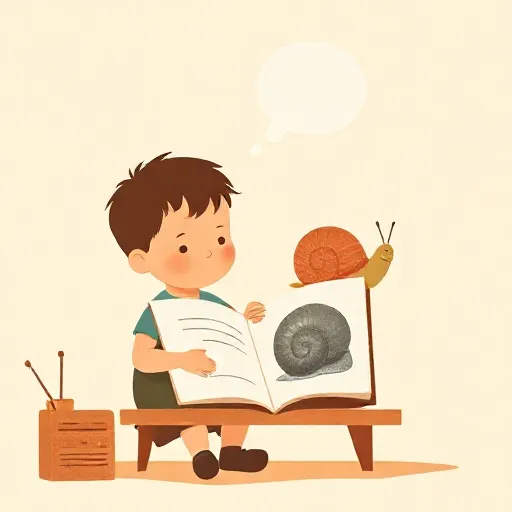
One day Kai reads that garden snails are hermaphrodites — they have both male and female organs. Kai thinks “huh, interesting,” then forgets about it. Days later, Kai and their younger sister watch a nature video about molluscs, and suddenly the snail fact pops back into mind. Kai says, “Did you know garden snails have both male and female organs at the same time?” But where was that belief all those days? What kind of thing is a belief when it isn’t being thought about?
Philosophers of mind have been arguing about this for decades. Some say a belief is a mental sentence stored in your brain, like a file on a hard drive. Others say a belief is just a pattern of being ready to act in certain ways. Still others say belief is a label we stick onto people to make sense of their behavior — not something inside them at all. Understanding this debate doesn’t just tell us about brains. It shapes how we think about animals, computers, and even in-between states like half-believing something.
Is a Belief a Sentence in Your Head?

The idea that beliefs are things stored in the mind is called representationalism. Most philosophers of mind today lean this way. The thought is that when you learn a fact, your brain creates a representation — a kind of mental symbol — that stands for that fact. Later, you can pull it out, combine it with other representations, and use it to guide your speech and actions.
One famous version comes from Jerry Fodor (1935–2017). He argued that the brain works like a computer using an internal language of thought. Just as a computer processes machine-language sentences to do calculations, your brain processes its own mental sentences. If you believe “snails are hermaphrodites,” that belief is a sentence-like structure in your mental language, placed in a kind of “belief box” in your head. When someone asks you about snails, your brain retrieves that sentence and uses it in reasoning, producing an answer.
Fred Dretske (1932–2013) offered a different representational picture. He focused on biological systems whose job is to track features of the environment. Some ocean bacteria have tiny magnets that align with Earth’s field, guiding them toward deeper, safer water. Dretske said those magnetic systems “represent” the direction of oxygen-poor environments because their function is to respond only under certain conditions. In more complex animals, many such tracking systems combine through learning, forming a web of representations that guide behavior. For Dretske, a belief is a state of a representational system whose evolved job is to indicate how things stand.
Both Fodor and Dretske think that if you could look inside a believer’s mind, you’d find structures that carry content — something that is about the world, even when not being consciously thought about.
Or Is Belief Just What You’re Ready to Do?

A rival view is dispositionalism. According to dispositionalists, you don’t need to find a sentence in the head to understand belief. What matters is how a person is disposed to act. If you believe it’s raining, you’re likely to grab an umbrella, complain about the wet, or say “yes” if someone asks. The belief simply is that cluster of dispositions — the readiness to do and feel those things.
Traditional dispositionalism tried to reduce beliefs entirely to outward behavior. But this ran into trouble fast. The same belief can lead to very different actions, depending on a person’s other beliefs and desires. Kai might bring an umbrella because they desire to stay dry; someone else who loves getting soaked won’t. So you can’t specify the exact behavior without mentioning other mental states, which defeats the reductionist aim.
More recent “liberal” dispositionalists accept that mental states are tangled together. They still hold that to believe P is to be in a state that would, in the right circumstances, produce a whole pattern — including inner feelings like surprise if P turns out false, or silent self-talk, not just visible moves. Think of a person in a repressive country who believes a certain leader is corrupt. They might never say so aloud, but the belief lives in their private thoughts, their discomfort, and how they would speak up if the world changed. For the dispositionalist, that hidden readiness is the belief.
What If Belief Is Only in the Eye of the Beholder?
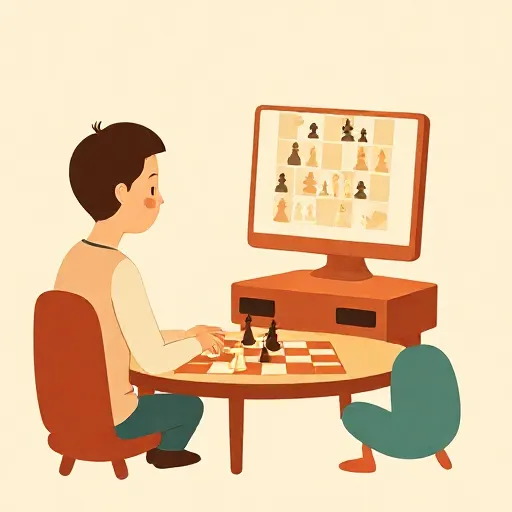
Philosopher Daniel Dennett (born 1942) turns the whole question inside out. On his interpretationist view, belief isn’t a secret ingredient inside a person at all — it’s a tool we use to predict behavior. To see what he means, imagine predicting a chess computer’s moves. You could try to trace every circuit (the “physical stance”) or consult its programming (the “design stance”). But usually that’s too hard. Instead, you take the intentional stance: you pretend the computer wants to win and believes you’ll fall for a certain trap. If that lets you guess its moves, then the computer, in a real sense, has those beliefs — because the belief-attributing pattern works.
Dennett thinks belief ascriptions are like saying where the equator is. There’s no red line painted on the ground, but the equator is real in the sense that it captures a real pattern in the spinning Earth. Beliefs are patterns in a creature’s behavior that become visible only when we take the intentional stance. Two different observers might attribute slightly different beliefs, and there may be no fact of the matter which is “correct.” This is indeterminacy — and for Dennett, that’s just part of the package.
Are Beliefs Just a Useful Fiction?

A small but provocative group of philosophers go even further. Eliminativists like Paul Churchland (born 1942) argue that beliefs don’t exist at all — not as inner sentences, not as dispositions, not as patterns. They think our everyday talk about beliefs is a crude theory that will be replaced by a mature brain science, just as the idea of phlogiston was replaced by oxygen. Other philosophers, labeled instrumentalists or fictionalists, grant that belief talk is useful but deny that it refers to anything robustly real — more like a handy story than a discovery.
Most philosophers find eliminativism too extreme: remembering where you left your keys seems too real to dismiss. Yet the challenge reminds us that our ordinary talk about the mind might not be the last word.
Can a Dog Believe a Squirrel Is in the Tree?

Theories of belief don’t just matter for humans. They determine whether we can say that dogs, babies, or robots literally believe something. Philosopher Donald Davidson (1917–2003) famously argued that belief requires language. He offered three reasons. First, to have a belief with a specific content — say, “the squirrel is in the tree” — you must have a rich network of related beliefs (like what a squirrel is, that trees stay put). Dogs might not possess that network. Second, Davidson thought you can’t have a belief unless you also have the concept of belief — you understand that beliefs can be false. That, he claimed, demands language. Third, on his overall view, belief attribution goes hand in hand with interpreting a creature’s speech. No speech, no real belief.
Critics push back. Biologists note that many animals show complex expectations that look a lot like beliefs. Even if a dog doesn’t think in words, it might represent the world in map-like or sensory formats. And developmental psychologists have shown that human toddlers act on beliefs long before they pass tests of false-belief understanding. If we deny belief to dogs and two-year-olds, we may end up with a picture of minds that doesn’t fit the living world.
Thus the debate about what belief is shapes who counts as a believer. That’s not just an academic puzzle — it affects how we treat animals, what we expect from artificial intelligence, and how we understand a baby’s developing mind.
So What Is It, When You Believe?

Next time you suddenly recall a snail fact, or realize you believe your friend is honest, pause. Is that belief a stored sentence in your mental code? A readiness to trust them even when they’re not around? A tag that other people stick on you because of how you behave? The philosophy of belief doesn’t give a single tidy answer. Instead, it gives you different lenses — each sharpening one part of the puzzle and blurring another.
Thinking about belief this way changes how you see your own mind. You might notice that sometimes you half-believe something, or that you can’t put your belief into words. You might wonder whether the family dog really thinks you’re at school when you are. None of these are silly questions. They’re the very edge of what we know about ourselves.
Think about it
- Imagine you’re playing a video game and your character dodges an enemy without you having to think about it. In that moment, did you “believe” the enemy was dangerous, or was it something else?
- If we built a robot that acted exactly like a friend who believes they’re hungry, would you say it really believes, or just simulates belief? What could change your mind?
- Think of a belief you have but never tell anyone. In what way is that belief real — as a sentence in your head, a private feeling, or something only you can observe?