Can a Magician Be a Scientist? Giovan Battista della Porta Thought So
A Recipe That Almost Got Him Burned
In 1558, a young nobleman from Naples published a book that made him famous all over Europe — and put him in deadly danger. His name was Giovan Battista della Porta (1535–1615). The book, called Magia naturalis (Natural Magic), was crammed with recipes: how to build a lamp that would make respectable women strip naked, how to roast an animal alive inside a stone, how to improve a camera obscura so images weren’t upside down, and a recipe for an ointment supposedly used by witches.
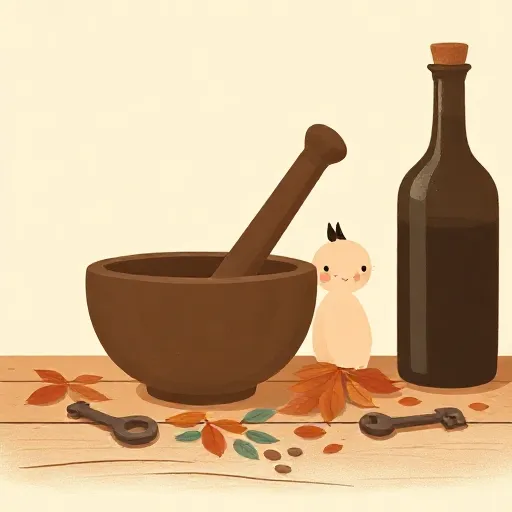
That ointment got him in the worst trouble. At the time, many people believed that witches flew through the night to meet with demons. They thought the witches’ experiences were real, and the punishment for witchcraft was often burning at the stake. Porta offered a completely different explanation: the ointment contained belladonna, a plant that causes vivid hallucinations when absorbed through the skin. There were no demons, no real flights — just a drug-induced dream. Some religious authorities were furious. The influential thinker Jean Bodin (1530–1596) said Porta deserved to burn for making the witches’ Sabbath seem like a natural event. The Inquisition banned his book and kept him under surveillance for the rest of his life. Porta had learned a sharp lesson: never write about demons, angels, or prayers in a magic book. So he set out to do something bold: strip the supernatural out of magic entirely, and turn it into a science of secrets.
Mastering the Hidden Forces of Nature
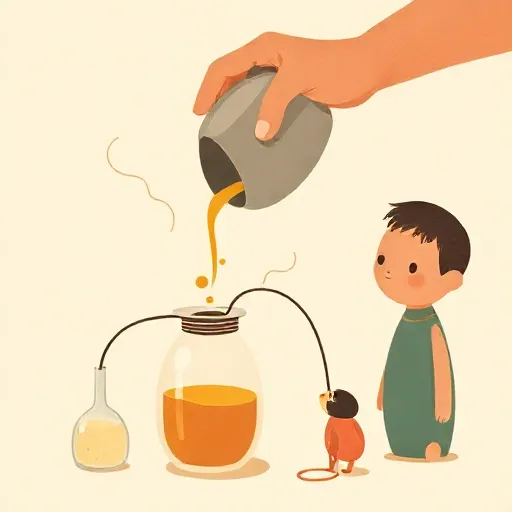
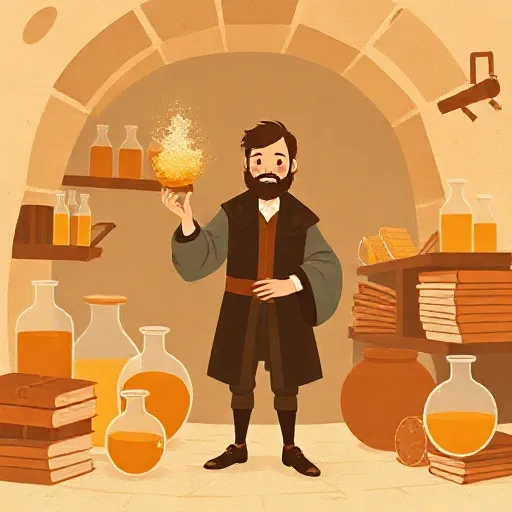
Porta called his kind of magic natural magic. He defined it not as a way to contact spirits or to get God’s help, but as a craft. A magician, he wrote, is like a farmer who tills the soil: nature does the real work of growing the crop, but the farmer prepares the ground just right so that nature’s potential bursts out. In the same way, a natural magus — Porta’s word for a master of secrets — prepares matter so that its hidden qualities can show themselves.
Those hidden qualities were called occult properties. “Occult” here doesn’t mean ghostly; it means “hidden” — qualities that we cannot fully understand with our minds, but that are perfectly real. A tiny pinch of a substance could make someone fall into a deep sleep. A magnet could pull iron across a table without touching it. Porta believed all such powers came from formal causes rather than from the material itself — because such a small quantity of matter could produce such an enormous effect.
He also borrowed an ancient idea from the philosopher Empedocles and from Renaissance thinkers like Marsilio Ficino: the universe is held together by love and hate. Not human feelings, exactly, but invisible attractions and repulsions between all things. Iron “loves” the lodestone, certain herbs “hate” certain animals. The natural magician learns these sympathies and antipathies and acts as a matchmaker, bringing together bodies that will produce astonishing results. This was why Porta’s books were filled not just with theories, but with page after page of concrete instructions: tinctures, incubators, distorting mirrors, and recipes for astonishing optical illusions.
The Key to Character: Reading Faces and Other Signs
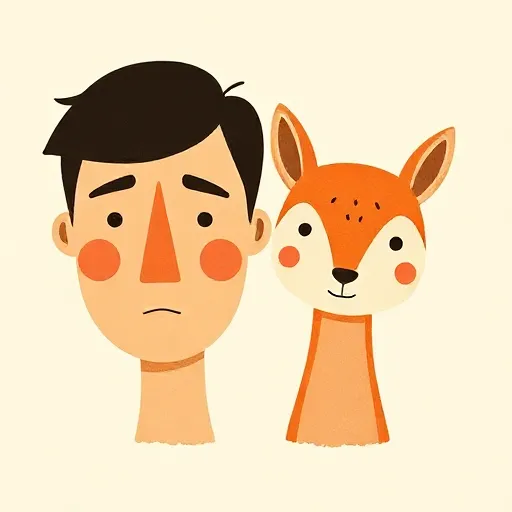
If hidden powers exist in stones and plants, Porta reasoned, they must also exist in human bodies. He became Europe’s most famous expert in physiognomonics — the art of reading a person’s character from their outward appearance, especially the face. Porta believed that a person’s looks were a form of signature, a visible sign of the invisible tendencies of the soul.
His method was comparison. He would study the face of a sheep or a bull, then find a human being whose features resembled that animal and conclude they shared the same temperament. In his book Coelestis physiognomonia he told a story meant to prove how useful this could be: he once warned a friend to avoid a certain man because the man had an ugly, unlucky face. The friend ignored him — and soon both were caught making counterfeit coins and ended up hanged.
From our point of view, this is deeply troubling. Porta linked beauty directly to goodness and health: a well-proportioned body meant a virtuous soul, while a monstrous or ugly appearance signaled bad luck, disease, or moral weakness. This thinking would later influence ugly traditions like phrenology and criminal profiling. Yet for Porta it was a universal science: he extended it to plants (by their shapes you could guess their medical uses) and even to the planets — he believed you could read their dispositions from their visible colors and brightness, not from astrological charts. Nature, in his eyes, was all signs, and the natural magus was the only person able to decipher them.
From Mirror Tricks to Telescopes: Wonder and Science
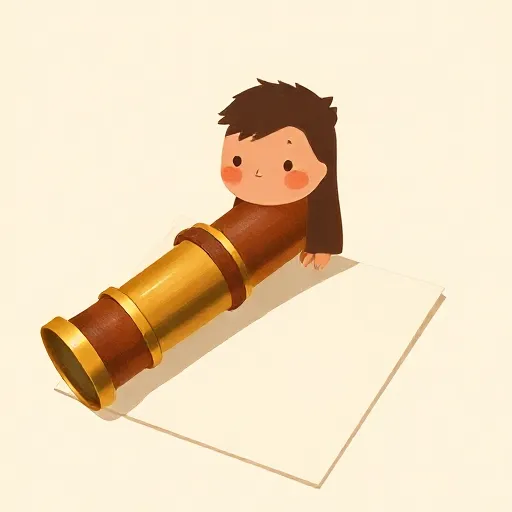
Porta did not just write about secrets; he built them. He spent years experimenting with curved mirrors and glass lenses, trying to control what people saw. He designed an improved camera obscura — a dark room with a small hole that projected an image of the outside world onto a wall — and combined a convex lens with a concave mirror so that, at least in theory, the image would not appear upside down. He called it a device for staging theatrical shows: imagine summoning the ghost of a roaring bull in mid-air before an amazed audience.
His spy-glass — what we now call a telescope — grew out of the same playful tinkering. When Galileo Galilei (1564–1642) later claimed to have invented the telescope, Porta was furious and a public dispute broke out. While the historical record is messy, the Academy of the Lynx, a pioneering scientific society, did officially recognize Porta’s contribution.
Porta’s way of working was unusual for his time. Unlike earlier scholars who started with abstract theories about light, Porta began with real objects — glass orbs, mirrors, lenses — and carefully tested what they could do. He then drew detailed diagrams and used those to imagine even more complex devices. Recent historians call this bottom-up modeling, and they see in it a bridge to modern laboratory practice. But Porta’s end goal was never just knowledge; it was the production of marvel. A device that made you gasp with wonder was already a success, whether or not anyone understood exactly why it worked.
Why We Still Talk About the Magician Who Wanted to Be a Scientist
Porta sits right on the knife-edge between magic and modern science. He stripped away angels, demons, and prayers, and tried to keep only things you could stir in a pot or polish in a workshop. He explained witches’ flights as a chemical reaction on the skin, not a treaty with the devil. That impulse — to find a natural cause for a strange event — is one of the motors of science itself.
But Porta also clung to ideas that we now reject. He believed you could judge a person’s worth by their face, and he offered his skills to powerful rulers who wanted to police society. His physiognomonics fed later, harmful pseudosciences, and his notion that beauty equals goodness has caused real-world pain across centuries. Even today, studies show that people unconsciously treat attractive faces as more trustworthy — a ghost of Porta’s old signatures at work.
The reason his story matters isn’t that he was right or wrong about everything. It’s that he shows how curiosity, when pushed far enough, can walk a double line. A mirror that creates a floating apparition in a nobleman’s palace is entertainment; a slightly better mirror, aimed at the sky, becomes the telescope that rewrites astronomy. The same hands that mixed belladonna ointments also sketched diagrams that helped later thinkers understand how lenses form real and virtual images. Porta wanted to be the master of secrets. What he left us is a problem: where exactly does magic stop and science begin, and who gets to draw that line?
Think about it
- If you could build a device that made people see something that isn’t really there, would you call that magic or science? Does the label matter, or only how you use it?
- Porta believed a person’s face revealed their hidden character. Is it ever fair to judge someone by their appearance? What could a society lose if it trusted that idea?
- Porta tried to explain a terrifying mystery — the witches’ Sabbath — by a natural drug. Does explaining something frightening always make it less scary, or can it sometimes make it more unsettling?