
Why Would a Scholar Write a Book About How All Books Are Useless?
A secret meeting and a book of forbidden magic

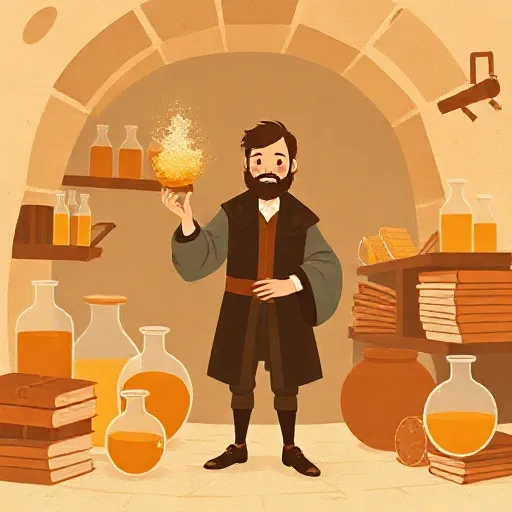
In the winter of 1510, a young German scholar named Heinrich Cornelius Agrippa (1486–1535) travelled to a monastery in Würzburg. He carried a rough draft of a book that would change his life — and get him into endless trouble. The manuscript was called De occulta philosophia (Three Books of Occult Philosophy), and Agrippa handed it to the famous abbot Johannes Trithemius (1462–1516), who was known for his knowledge of secret sciences. Trithemius praised Agrippa’s ambition but warned him: “not to imitate bullocks, but to emulate birds”.
Agrippa had set out to defend and reform what he called natural magic — the art of understanding the hidden powers in stones, plants, stars, and words. He believed that true magic was not about demons or superstition, but about knowing how the world is connected. Everything in the universe, he thought, was linked by invisible chains: the pure ideas in God’s mind flow down through stars and planets and end up hidden in ordinary things. The wise person, or magus, could learn to use those chains to heal, protect, and even draw closer to God.
At the time, many church authorities considered magic dangerous and heretical. Agrippa had already been accused of being a “Judaizing heretic” for teaching Christian Kabbalah. He dreamed of a reformed magic — a way of knowing that combined natural philosophy, astrology, and sacred ceremonies, all anchored in a deep faith. But he had not yet worked out how to make that dream fully consistent with Christian teaching. He would spend the next twenty years trying.
How one man declared every science empty

If you only read his most famous work, you might think Agrippa was the angriest know-it-all in history. In 1530 he published De incertitudine et vanitate scientiarum (On the Uncertainty and Vanity of the Sciences), a roaring attack on every human art and science: grammar, law, medicine, theology, hunting, dancing, even dice games. He argued that all these fields were built on uncertain sense-perception, contradictory opinions, and arrogant pride. The sciences, he claimed, had become a plague of petty arguments and empty words that did nothing to make people truly good or truly wise.
Agrippa wrote that the happiest life is not to know: “it is much safer not to know anything than to have knowledge.” He packed his book with examples of philosophers disagreeing, doctors killing their patients, and lawyers twisting the truth. He seemed to be saying that reason alone, without faith, leads only to confusion and moral ruin. Many later readers took him to be a skeptic — someone who believes we can’t really know anything.
But here’s the puzzle. While he was writing this book against all sciences, Agrippa was also revising and expanding his boyhood work on magic. He never abandoned the occult philosophy. How could the same person declare every field of learning worthless and deliver a huge manual on how to command the hidden powers of the cosmos? The answer lies in what he thought a real human being was.
The three-storey soul and the fall of Adam and Eve
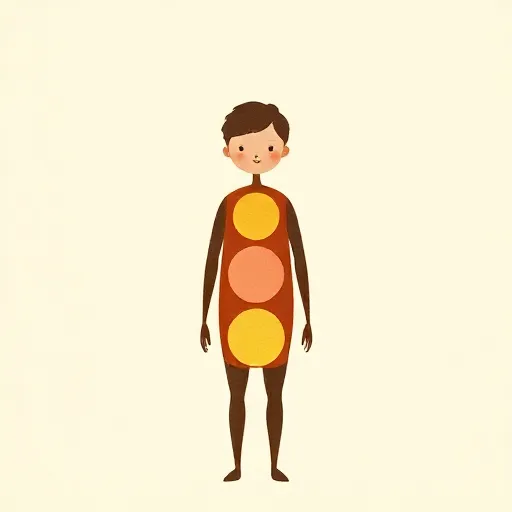
Agrippa didn’t just want to tear things down. He had a clear picture of why everyday learning fails and what a better kind of knowledge would look like. That picture came from mixing Plato, mystical Jewish texts, and Christian scripture. He believed every human soul has three parts, each with a different job.
The highest part is the mind (mens), a divine spark placed directly by God. It already contains innate ideas — true knowledge that doesn’t come from the senses. Below that is reason (ratio), which can choose to look upward toward the mind or downward toward the lowest part, the senses (idolum), which are tied to the body and the material world. In a healthy soul, reason obediently follows the mind’s light. But when reason rebels and tries to build knowledge from sense-perception alone, it becomes like a broken compass.
Agrippa retold the biblical story of Adam and Eve as an allegory for this inner drama. Adam stands for faith and the mind; Eve stands for reason. The serpent represents the lure of sensory things. Adam was not allowed to eat from the Tree of Knowledge of Good and Evil — that is, he wasn’t supposed to seek ultimate truth through material experience — but Eve was allowed to explore the physical world. In the story, Eve let herself be tempted by the senses, and then she convinced Adam to follow. For Agrippa, this was the first copy of a mistake we all repeat every time we trust our five senses more than the divine light inside us. That “original sin” isn’t about a piece of fruit; it’s about reason wanting to be its own boss.
The real magic: turning inward instead of outward
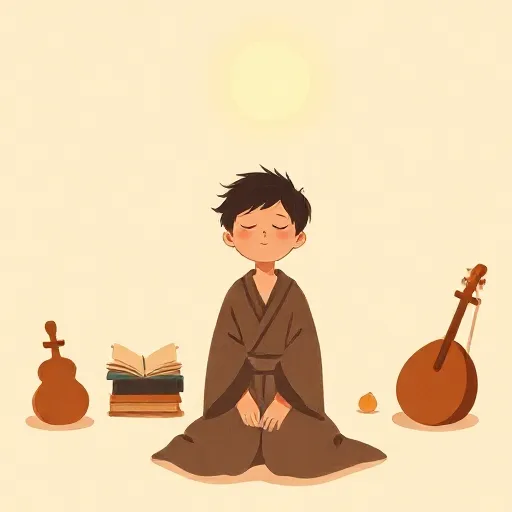
Agrippa’s answer to the mess of false sciences was not to throw away all human skill. It was to reform knowledge by putting it back under the rule of the mind — the part of the soul that is directly illuminated by God. This is the deep lesson behind his final, much-expanded version of De occulta philosophia, printed in 1533 after a dramatic fight with Church censors.
Real magic, Agrippa argued, isn’t about controlling spirits with strange incantations. It begins with dignificatio — a long moral and intellectual training. First, you need a natural fitness, which might come from a fortunate horoscope or from carefully chosen foods and habits. Second, you must earn merit by mastering your bodily passions and letting reason submit fully to the mind. When that happens, the soul becomes an anima stans et non cadens — a soul that stands and does not fall — and can work wonders “by God’s virtue.” Third, you practice godliness by performing sacred ceremonies that remind you of the transformation God is working inside you.
So the magus wasn’t an anti-Christian sorcerer. Agrippa called such a person a perfect philosopher, perfect magus, and perfect priest all in one. The secrets of magic were right there in the book for anyone to read, but they would only work for someone whose soul was ordered the right way. In Agrippa’s view, most people’s divine spark stays asleep because their reason is enslaved by bodily impulses. True knowledge is inseparable from becoming a certain kind of person.
Why it still matters: what counts as knowing?

Agrippa died in 1535, possibly arrested by the French king and then released shortly before his death. He left behind a set of books that seem to contradict each other wildly. But his message is more unified than it looks: he was obsessed with the difference between information that puffs us up and truth that changes us.
Today we carry more knowledge in our pockets than Agrippa could have imagined. Yet his question still cuts deep. If all that information doesn’t make us kinder, more honest, or more alive to what really matters, is it real knowledge at all? Agrippa thought that knowledge built on the senses alone — what today we’d call empirical science — isn’t worthless in itself, but it becomes a poison when it pretends to be the only kind of truth. The alternative he proposed was a life where reason listens first to something higher, something innate, something you can only find by quieting the noise and turning inward.
Whether or not you believe in a divine mind inside the soul, Agrippa’s challenge remains: what is your knowing for? If it only helps you pass tests and win arguments, he would call it demonic. If it helps you and your neighbor grow into better human beings, he would call it sacred.
Think about it
- If you could instantly know everything in every school textbook, would that automatically make you a wiser person? Why or why not?
- Agrippa thought reason becomes dangerous when it refuses to listen to something higher than itself. Can you think of a time when being “too smart for your own good” got someone into trouble — without using any religious idea?
- Imagine a world where families only taught children how to think logically, but never discussed feelings, friendships, or right and wrong. What would that world be missing?