Can You Turn Misfortune into a Superpower?
When Your World Collapses, Can You Find a Secret Gift?
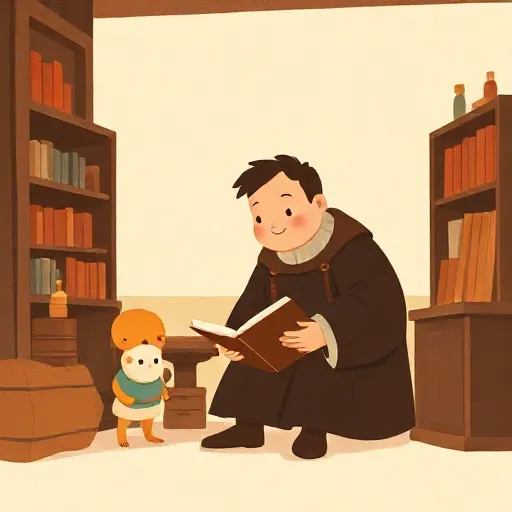
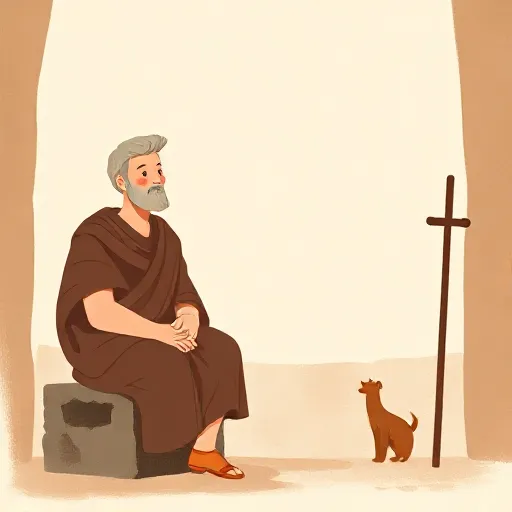
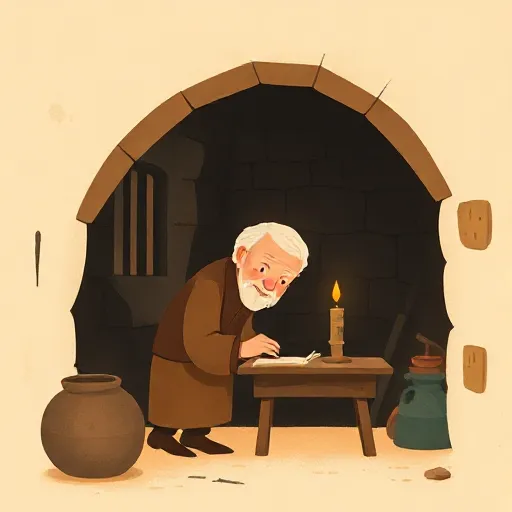
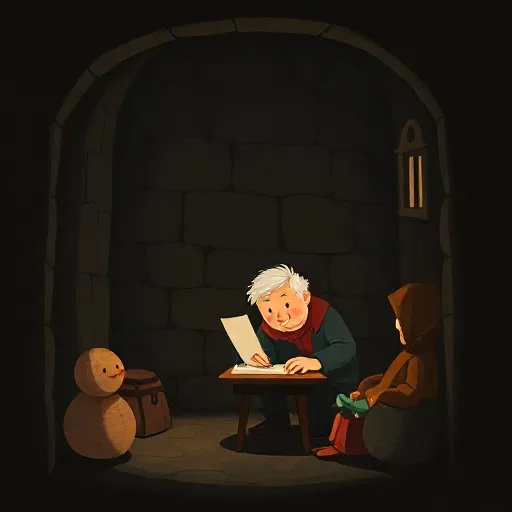
In the winter of 1570, a sixty-nine-year-old man sat in a cold prison cell in Bologna. His name was Girolamo Cardano (1501–1576), and he was one of the most famous doctors and thinkers in Europe. Yet now he was starving himself — he wrote that eating would drive him mad, and not eating might kill him, which he thought the lesser evil. He was being held by the Roman Inquisition, suspected of dangerous ideas about God, the stars, and fate.
But Cardano was no stranger to disaster. Ten years earlier, his eldest son had been convicted of murder and executed. That event shattered his life. Astonishingly, Cardano responded by writing a book with a hopeful, almost impossible title: On Gaining Advantage from Misfortunes. He argued that every trouble — from a stubbed toe to the death of a child — could be turned into something useful, if you only knew how.
This mixture of wild optimism and brutal honesty runs through all of Cardano’s philosophy. He wanted to explain the hidden order of the universe, prove that the human soul lives forever, and give ordinary people a toolkit for standing up to bad luck. In the process, he built a worldview where stars, souls, and even your own mind are all tangled together in one living web.
The Universe Is a Giant, Living Web
For Cardano, the world is not a dead machine. Instead, everything — planets, people, plants, even stones — is linked by a kind of life-force. He borrowed ideas from Aristotle, but he added his own twist.
At the very top sits God, whom Cardano often calls the One. God is pure unity, infinite, and perfectly still. From God, life flows downward like light from a lamp. The first stop is a realm of heavenly intellects — pure minds that never touch matter. Then come souls at every level: the world-soul that holds the whole cosmos together, the souls of planets, the souls of animals and humans, and even a “common vital soul” that pulses through plants and the elements.
What physically carries this life through the universe? Cardano points to celestial heat. Unlike ordinary fire, celestial heat is a subtle energy that rides on starlight. It is, he says, the active ingredient that wakes matter up and makes it grow, move, and feel. In fact, he insists that what we normally call “fire” is not a true element. The only three real elements are earth, water, and air — fire is just a local effect of celestial heat.
Everything below the moon is shaped by the dance of matter, heat, and soul. And because souls are invisible and take up no space, they hold the world together without being trapped by it. Cardano once looked inward and described three inner principles that also rule all of nature: one is the heavy matter of our body (it is moved but does not move), one is the soul (it moves but is never moved), and the third is the innate heat — the body’s own spark of celestial fire — which is moved by the soul and in turn moves the body. This triple rhythm, he thought, is what makes you feel alive.
Why Cardano Thought You Must Believe in an Immortal Soul

If the soul is real, can it die? Cardano’s answer is no — and he thinks the whole universe makes no sense otherwise.
His most surprising argument is almost a bluff: God planted hope of an afterlife in human beings, so that hope cannot be a trick. Wise people grasp this through philosophy, ordinary people through religion. But God, Cardano adds, made our certainty about immortality deliberately weak — just enough to separate us from animals but not enough to make us arrogant. A firm, unshakable belief would create too wide a gap between humans and beasts, leading to dangerous pride. So history swings back and forth between moments of confidence and seasons of doubt. That wobble, he says, is part of God’s plan.
More personally, Cardano insists that without an immortal soul, morality collapses. He looks at the ancient Stoics and their hero Seneca: they tell you to face death calmly, yet they also claim nothing survives after death. That, Cardano says, is a bad joke. If death is the end, then being brave about it is just an illusion — mere stiffness, not real peace. Only if your deepest self lives on can you genuinely aim at the highest good.
And what is that highest good? For Cardano, it is a state of tranquil self-awareness in which your mind comes to resemble God’s own steadiness. He calls it tranquillity or securitas — a condition of unbreakable inner calm, free from worry and full of clear, joyful knowledge. It’s not a blank numbness; he compares it to a steady sea with just a ripple of motion that delights rather than disturbs. That subtle, alive stillness is the closest humans can get to divine life while still in a body.
The Art of Turning Bad Luck into Gold
Still, Cardano knew that most of us can’t live entirely on mountaintop visions. So he also wrote a second handbook for the messy ground-level of human life. In his book On Gaining Advantage from Misfortunes, he lays out a method for coping with trouble using only what your senses and your own reason can see, even if — just as a thought experiment — there were no afterlife at all.
He starts by listing five ways people respond to calamity. Two are “paradoxical” and, in his view, almost useless: the Stoic way (saying that hardships don’t touch true happiness) and the Christian way (calling every suffering a direct blessing). These might be noble, but they don’t actually tell you what to do. The other three are pragmatic: first, learn to predict and avoid misfortunes; second, when they happen, limit the damage; third — and this is Cardano’s big idea — extract some genuine good from any kind of ill.
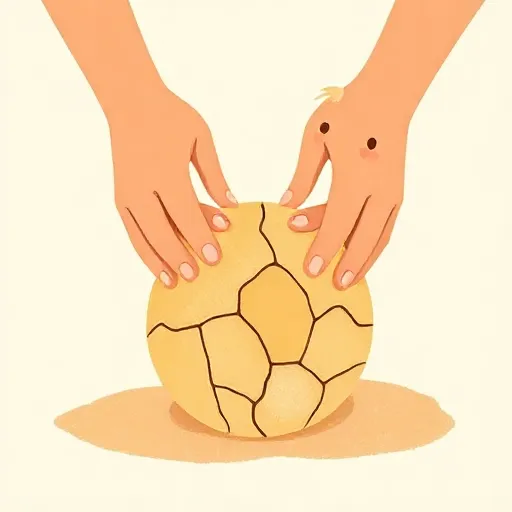
The secret is knowledge. To profit from pain, you need self-awareness (knowing exactly what you feel and what you value) and self-control (the power to reshape your cravings). He compares the whole world of human affairs to a mass of wax being pressed and squeezed. What was a bump becomes a hollow; what was ugly can become beautiful. Events never stay still. So if you stay alert, you can nudge a bad situation into a new shape.
This is not “look on the bright side” cheerfulness. Cardano is harsh about self-deception: many people, he says, prefer to be happy in a mistaken way rather than face the truth about their own lives. A good philosopher — like a good doctor — doesn’t distract a patient with pretty paintings but helps her see the real cause of the pain and then act on it.
Stargazing in Chains: The Inquisition and the Big Question of Fate
All this talk about the soul and self-control might sound safe — but Cardano’s views on fate and the stars landed him in prison. The Roman Inquisition arrested him in 1570 because his books seemed to say that the stars control everything, including human behavior, and that God rarely intervenes directly in the world.
Censors accused him of making the Christian martyrs seem like lunatics driven by planetary forces and of denying genuine miracles. In their eyes, he was following the path of Pietro Pomponazzi (1462–1525), a philosopher who had argued that free will is impossible to square with God’s omnipotence and Aristotle’s logic.
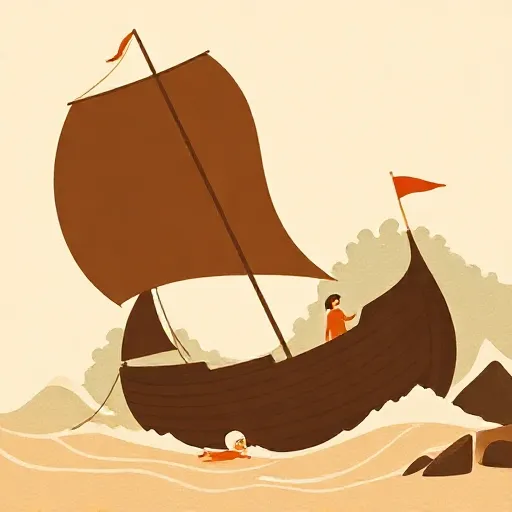
Cardano’s real view was more careful. He believed that providence is God’s eternal plan, while fate is that same plan unfolding in time and nature. The stars are instruments of this plan, but humans are not puppets. In his astrology, he said that you can learn to read the forces coming your way and then decide how to respond. Some events — great wars, natural disasters — carry a “necessity of fate” that no one can dodge. Yet even then, your choices matter. He gives the analogy of a shipwreck: you cannot stop the storm, but the skilled swimmer survives while the unprepared one drowns.
His lost book On Fate apparently went further, trying to prove that everything, even accidents, falls under an all-embracing fate — while still defending the “utility” of free will. We will never know the full argument, because Cardano probably destroyed the manuscript out of fear of the Inquisition. What remains is a thinker who refused to choose between a divine plan and human responsibility, insisting that both are real, just as a melody and the notes that make it up are real together.
Why a 500-Year-Old Rebel Still Makes Sense Today
Cardano lived in a world of plague, executions, and prison cells. Yet he never stopped looking for the thread of meaning inside the mess. His philosophy is a strange mix: he asks you to believe in an immortal soul and a living cosmos, but he also hands you a gritty manual for surviving disappointment right now.
What can we borrow from him? Three things, perhaps. First, the idea that awareness changes everything — knowing what is happening inside your own mind is the first step toward not being wrecked by it. Second, that setbacks are not pure poison; they can be raw material for something steadier, if you are willing to shape them. Third, that big questions about fate and free will are not dusty museum pieces — they show up every time you wonder whether a bad grade was your fault, whether a lost friendship could have been saved, or whether your next choice genuinely belongs to you.
Cardano would remind you that you are not a stone, unmoved by anything. You are a living web of thoughts, hopes, and sensations — and, in his eyes, a spark of celestial heat that cannot be extinguished.
Think about it
- Cardano thought you can learn something from every misfortune. Can you think of a time when something bad happened that later helped you grow — or do you think some pains have no upside at all?
- If a perfectly wise computer could predict every choice you will ever make, would you still feel like you were truly free when choosing your lunch or your friends?
- Cardano said that without belief in an afterlife, people cannot be genuinely good. Do you agree? Can someone be kind, brave, and honest without believing in a soul that survives death?