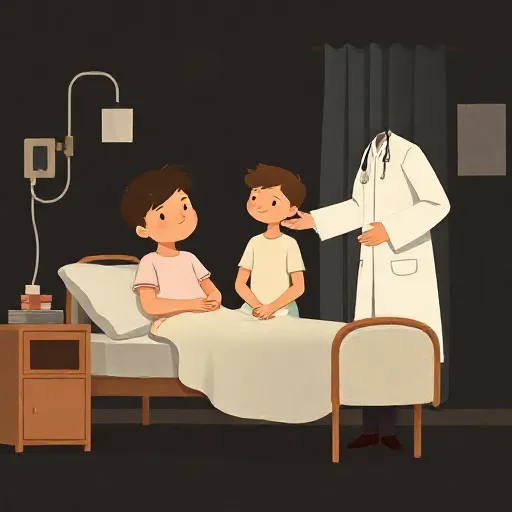
Can You Really Choose Your Own Medical Treatment?
You and the Big Decision
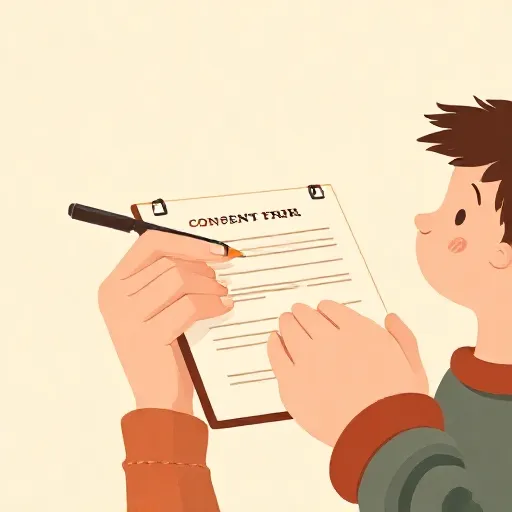
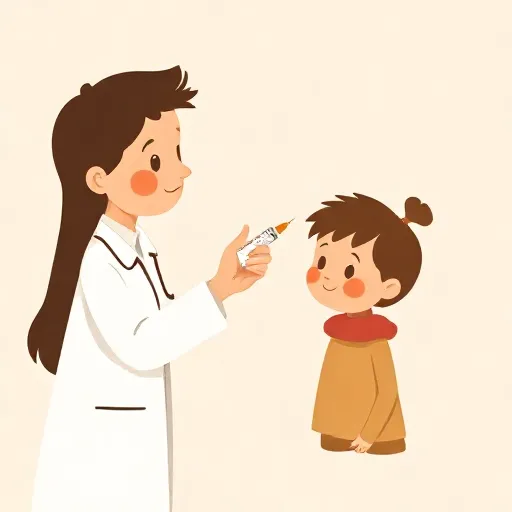
Imagine you’re 12 and you need an operation that could save your life. You’re terrified of the needles and the idea of being put to sleep. You want to say no. Can you? Every day, doctors face moments like this: a patient agrees to a medicine, or refuses it, but is that person truly able to decide? The answer depends on something called decisional capacity —the mental ability to make a medical decision for yourself.
The idea of capacity grew out of a bigger moral principle: respect for autonomy, or the right to shape your own life. As the philosophers Tom Beauchamp (born 1939) and James Childress (born 1940) put it, we have a basic duty to let patients choose, and to let them accept or reject information. But that duty only kicks in when someone can meaningfully choose. If you’re too confused, too young, or too unwell to think it through, simply handing you the choice isn’t enough. That’s why nearly every list of requirements for valid consent now includes decisional capacity, alongside things like getting the facts and making a free choice.
So how do doctors, or sometimes judges, figure out if a person has it? It’s not about being smart or even about being an adult. It’s about whether, right here and right now, your mind is working well enough to handle this particular decision.
What Do You Need to Be Able to Decide?

Researchers Thomas Grisso and Paul Appelbaum, in their influential 1998 book, described four abilities that almost everyone agrees are necessary. You have to be able to:
- Communicate a choice. If you can’t nod, blink, or somehow signal “yes” or “no,” nobody can know what you want. This is the simplest part, but it can be lost in conditions like locked-in syndrome.
- Understand the basic facts. For a tonsil surgery, you’d need to grasp what’s being done, why, and what might happen afterward. Nobody expects you to be a medical student, but you can’t decide in the dark.
- Appreciate what the facts mean for you. This goes beyond repeating the doctor’s words. You have to genuinely believe the situation is real and applies to your own life. A confused elderly woman might correctly say “the doctors want to amputate my foot,” yet still talk cheerfully about dancing next week, showing she hasn’t taken it in. That gap—between saying and truly believing—is a failure of appreciation.
- Reason with the information. You need to weigh the risks and benefits, compare options, and see how your choice connects to your goals. If you’re terrified of needles but know the surgery pain will pass while the illness won’t, you might reason your way through the fear. There’s no single “correct” way to reason, but the process of linking facts to your decision has to be there.
These four pieces form the core of most capacity tests used today. But who gets tested, and under what rules?
The Five Rules That Shape the Test
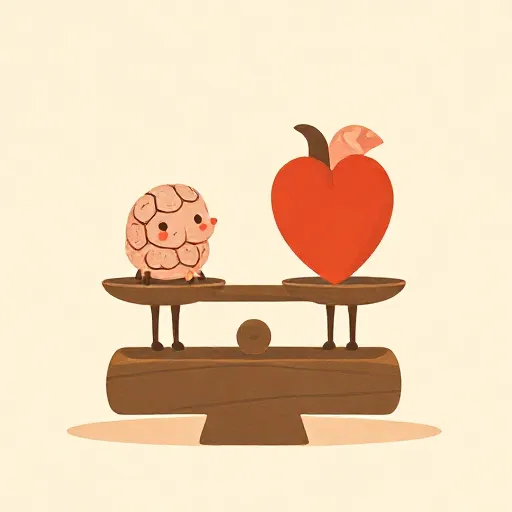
Decisional capacity isn’t like a passport you get once and keep forever. Five widely accepted ideas—and one more debated one—define how it’s checked.
Inclusivity. The test must be built so that most ordinary adults count as capable most of the time. A free society lets people make even self-harming choices. If a capacity test ruled out huge numbers of people, that would be a sign it was too strict from the start.
Decision-relativity. You might be perfectly capable of choosing a snack but not of weighing a complex experimental treatment. Capacity is tied to a specific decision at a specific moment, not a global label. The same person might lose focus late at night or in a noisy hospital, so doctors aim to assess under the best possible conditions.
All-or-nothing assessment. For a given decision, you either have capacity or you don’t. There’s no such thing as “sort of” having the final say. If you’re capable, others must honor your choice. If you’re not, a family member or guardian will decide for you. The judgment is bivalent, even if the abilities themselves exist on a spectrum.
Value neutrality. You cannot be declared incapable just because your choice seems weird, unpopular, or dangerous to others. A Jehovah’s Witness who refuses a life-saving blood transfusion for religious reasons may be making a choice that many people would never make, but she’s not confused about the facts. To respect freedom, the test must look at how you reached the decision, not which button you pushed. Most theorists insist that capacity is about the mental process, not the outcome.
Independence from diagnosis. A label like “schizophrenia” or “dementia” doesn’t automatically mean a person can’t decide. Many people with psychiatric or cognitive diagnoses are fully capable of making their own medical choices, and each must be assessed as an individual. This approach has helped reduce stigma and returned control to countless patients.
These rules together try to keep the doorway to choice as wide as possible while still catching those who truly cannot navigate it on their own.
When Refusal Feels More Dangerous: The Asymmetry Puzzle

There’s still a live debate about whether saying “yes” and saying “no” to the same treatment should require the same level of ability. Think of it in terms of a cooking student who makes a perfect omelet nine times out of ten. Her skill stays the same whether a failed omelet means just eating scrambled eggs for breakfast or losing her spot at chef school. The risk of the outcome changes, but her ability doesn’t.
Now apply that to medicine. A patient with a curable condition refuses a low-risk, life-saving treatment. If her refusal is a mistake, the harm is huge. If she accepts, a mistake is far less costly. Some thinkers, including Allen Buchanan and Dan Brock in their 1989 book Deciding for Others, argue that we can legitimately set a higher bar for refusal when the consequences of getting it wrong are so severe. This isn’t because the patient’s mental powers flicker, but because the whole point of capacity assessment is to balance two values: protecting people from harm and respecting their freedom. When one choice puts the person at much greater risk, it can make sense to shift that balance a little.
Others push back. They say that once you’ve decided someone is capable of making a treatment decision, that person should be free to pick either fork in the road. Tinkering with thresholds based on risk, they worry, could slide into overriding choices simply because doctors disagree with them. The disagreement is still unresolved, and different legal systems handle it differently.
What If Your Emotions Take the Wheel?

The four-abilities model is mostly about thinking, not feeling. But cases keep popping up where that feels incomplete. Consider a bright teenager with anorexia nervosa. She can explain perfectly what starvation does to her body. She knows the doctors’ facts are true. She scores high on standard capacity tests. Yet she insists that being dangerously thin is more important than family, friends, or life itself. Many people have the strong intuition that she isn’t truly capable of refusing treatment, even though her understanding and reasoning look fine on paper. Her values seem to have been hijacked by the illness.
This raises two interwoven challenges. First, emotions aren’t just noise. A depressed person may understand the facts but give very little weight to risks because she feels that nothing matters anyway. Her emotional state doesn’t erase her knowledge, but it reshapes what she cares about. On the other hand, emotion can also improve decisions—without caring, you wouldn’t have any reason to choose one thing over another. The problem is finding a fair way to distinguish helpful gut feelings from destructive ones without just sneaking in the doctor’s own opinion about what the right choice is.
Second, there’s the puzzle of authenticity. If an illness creates new values—like the desperate drive for thinness in anorexia—are those values really yours? Some philosophers propose that decision-making capacity should include an “ability to value,” meaning you can bring your own true values to bear on a choice. But how do you tell the difference between a value that’s genuinely new yet still authentic, and one that’s a symptom? People can change their minds in deep ways, sometimes because of what they’ve learned through being ill.
An even trickier case arises when the illness messes with your perception. Some patients with anorexia feel fat even while knowing they are dangerously underweight—a bit like seeing a stick bent in water: your eyes insist one thing, your reason another. When it’s time to decide, the powerful feeling may win, even though the person doesn’t truly believe it at a reflective level. That means the refusal can look, on paper, like a rational argument built from clear preferences, but it’s actually being driven by an emotional illusion. No one has yet designed a test that can cleanly sort out such cases across the board.
Why It Matters for You

These aren’t just puzzles for doctors in white coats. Decisional capacity is at the heart of some of the most difficult conversations happening right now. When should a desperately ill teenager be allowed to refuse chemo? Can someone with severe depression who wants to die really give consent for medical aid in dying? Should addiction ever count as an internal barrier that makes choice almost impossible? The answers involve fairness, freedom, and the deepest question of all: what makes a choice truly yours.
One day you might be the person in the hospital bed, or the family member sitting beside it. Knowing that capacity isn’t a simple on-off switch, that it’s about this particular moment and this particular brain and this particular life, can change how you listen. The struggle to respect both safety and self-rule has no perfect formula. But grappling with it is itself a form of respect—for the people who can still decide, and for those who, right now, cannot.
Think about it
- If someone loves a risky hobby like rock climbing and refuses a small treatment that could save their life after an accident, does that count as not understanding? Why or why not?
- Imagine a friend with depression says she doesn’t want to get better because nothing matters. How could you tell if she’s really choosing that or if the illness is speaking?
- Should a 14-year-old have the same power to say no to a life-saving treatment as a 40-year-old? What would make you say yes or no?