What Should You Do When Every Choice Is a Gamble?
The Doctor’s Impossible Choice
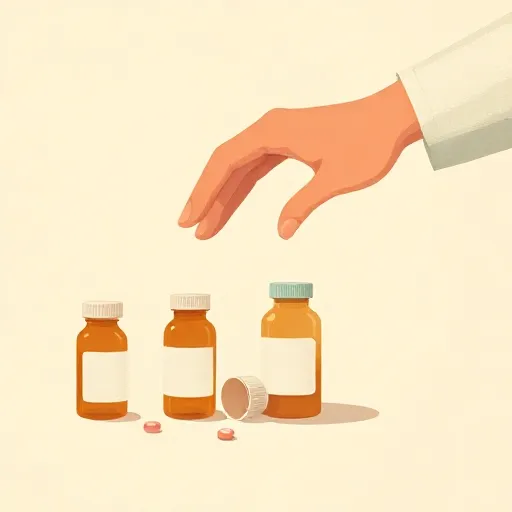
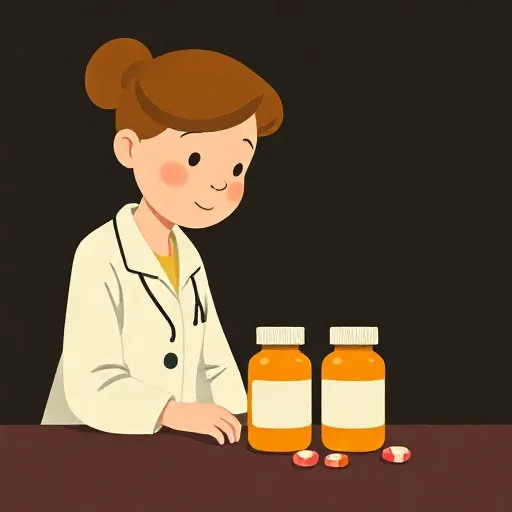
It’s a Tuesday morning in a clinic. Dr. Jill has a patient, John, with a nasty skin condition. She has three medicines: Drug A, Drug B, and Drug C. Drug A is almost certain to relieve the problem but won’t cure it completely. One of B and C will completely cure John; the other will kill him instantly. But no label, test, or expert can tell her which is the miracle cure and which is the poison. What should she do?
This case, from the philosopher Frank Jackson (20th century) in 1991, isn’t just a medical drama. It forces us to ask: when you lack crucial information, what does it even mean to do the right thing?
In one sense, Jill objectively ought to prescribe whichever drug is in fact the perfect cure—even though she can’t know which one that is. If an all-knowing observer could see the truth, that’s the action with the best outcome. But this objective standard isn’t the only one that matters. It doesn’t help Jill decide right now, and we wouldn’t blame her for skipping B and C entirely. So there must also be a subjective ought (or prospective ought) that takes her uncertainty into account. Given her ignorance, most philosophers agree she subjectively ought to prescribe drug A—the safe, imperfect option—instead of gambling with John’s life. This entry explores how we should think about that kind of uncertainty-relative verdict.
Weighing Chances and Consequences

How can you decide when you don’t know what will happen? One powerful idea is expected utility theory. It starts by giving each possible outcome a number, its utility, which represents how choiceworthy that outcome is—how strong a reason you have to bring it about or avoid it. You then weigh each outcome by its probability and add them up. The action with the highest expected utility is the one you ought to choose.
In Jill’s case, suppose drug B and drug C are equally likely to be the cure. Let’s assign utilities: John’s death = −100, a perfect cure = +100, a partial cure with drug A = +90. Then drug B’s expected utility is (100 × 0.5) + (−100 × 0.5) = 0, same for C. Drug A’s expected utility is (90 × 0.5) + (90 × 0.5) = 90. It wins hands down. The formula captures why we think she shouldn’t gamble.
Expected utility theory doesn’t require that utilities measure goodness in a simple way. They just need to represent the strength of reasons. Some philosophers think the structure of good decisions guarantees that a utility function exists, even if we never consciously calculate it. The theory gives a clear criterion of rightness for risky choices and, in simple cases, a decision procedure you can follow step by step.
But the theory works best when you can put numbers on both probabilities and moral weights. As we’ll see, that’s often harder than it sounds.
When You’re Totally Clueless

Suppose right now you pick up a pen with your left hand instead of your right. Through the “butterfly effect,” one of these tiny choices might cause more destructive typhoons over the next millennium. But you have no evidence which hand would do that. Both possibilities look perfectly symmetric. Most of us assume we can ignore this far-off storm scenario when deciding how to grab a pen. But why?
This puzzle is called cluelessness. If morality tells you to care about all the consequences of your actions, including far-future ones, then you might be clueless about what you ought to do in almost every choice. The philosopher James Lenman (20th–21st century) argued that this is a serious problem for any theory that gives heavy weight to long-term effects, like act consequentialism.
One reaction is to use a principle of indifference: when you have no evidence favoring one possibility over another, treat them as equally probable. That would cancel out the typhoon worries. But many philosophers think indifference principles are deeply suspicious—they can give contradictory results depending on how you describe the possibilities. Even if simple symmetry works, Hilary Greaves (21st century) notes that most real-life cases involve messy, complex evidence that you can’t just average out. You end up unable to estimate expected values precisely enough, or the probabilities themselves become imprecise. If the true expected value of your options is indeterminate, you might not be able to know what to do—and that feels like a failure for a moral theory.
The Risk of Doing Terrible Wrongs

Not all moral theories focus only on good and bad outcomes. Many hold that there are agent-centred constraints: rules that forbid certain actions directly, even when breaking them would prevent more of the same wrong being done by others. For example, you must never kill an innocent person, even to stop three other murders from happening. But what if you aren’t sure whether your action would break the constraint?
Take the Two Skiers case from Jackson and Michael Smith (21st century). Two skiers race down separate slopes. Each, if they continue, will trigger an avalanche that kills ten innocent people. You can save each group only by shooting the skier dead. You know it’s wrong to kill an innocent threat (someone endangering others through no fault of their own) but permissible to kill a culpable aggressor. Each skier has the same probability of being innocent, and you think both won’t be. If you evaluate each shot individually, shooting skier 1 is permissible because the risk is below your personal threshold. Same for skier 2. But if you can only act with one bullet that kills both, the combined probability of killing at least one innocent might jump above the threshold—so the paired action would be forbidden. That seems odd: why should the number of bullets matter?
This agglomeration puzzle shows how difficult it is to set a simple probability threshold for constraint violations. Some philosophers try to import constraints into expected utility theory by giving outcomes of violating a constraint a massively negative utility, making the risky action never worth it. But that can lead to other strange results, like treating almost any tiny risk of a terrible wrong as absolutely paralyzing.
When You’re Not Sure Which Morality Is True

So far we’ve assumed you at least know the right moral principle—you just lack factual information. But what if you are uncertain about morality itself? Perhaps you think there’s a 50% chance that consequentialism (only outcomes matter) is true and a 50% chance that deontology (some actions are just wrong regardless) is correct. Facing the classic trolley problem—divert the trolley to kill one person instead of five—what do you do?
This is moral uncertainty. Many philosophers think you should take your moral doubts into account, just like factual doubts. The most popular approach is to maximize expected choiceworthiness (MEC): weigh how right or wrong each option is according to each theory, scaled by your credence in that theory. But this runs straight into the problem of intertheoretic comparisons. How bad is killing one innocent person according to deontology, compared to letting five die according to consequentialism? The two theories use entirely different moral yardsticks. Some argue there is no common scale, so expecting you to compare them is like asking whether a meter is longer than a kilogram.
Others reply that even if a universal scale isn’t obvious, we can still find common ground—for instance, both theories might agree on the value of saving a life, so we can use that as an anchor. Or we might treat each theory’s judgments as votes in a kind of moral election. The debate is live, and it matters: if we can’t handle moral uncertainty, we’re left adrift when we honestly don’t know what’s right.
Small Chances, Giant Stakes—and Why It Matters to You

Should you give up a sure good for an astronomically tiny chance of an enormous good? Suppose you can definitely save one person’s life, or take a one-in-a-billion chance of saving a billion lives. Expected value says you must gamble, because the tiny probability is swallowed by the gargantuan payoff. This is called fanaticism: no matter how small the probability, a large enough value difference can make the risky choice required.
Many find fanaticism deeply counterintuitive. It suggests we should pour all our resources into barely possible catastrophes or utopias. Yet arguments from separability—the idea that what’s good for one person doesn’t depend on others—push toward accepting some form of it. Philosophers are split.
You face mini-versions of these questions daily. Biking to a friend’s house is faster, but carries a slightly higher risk of a fatal accident than walking. When is that tiny additional risk worth the convenience? Morality can’t give you a clean number, but philosophy helps you see what’s at stake. The puzzles that start with Dr. Jill end up in your own hands every time you choose.
Think about it
- If you could accept a 1-in-a-million chance of causing a disaster to almost certainly save a single life, would you do it? Who gets to decide which risks are worth taking?
- When you’re totally clueless about far-off consequences, is it better to pretend they don’t matter, or to try to guess and risk getting it badly wrong?
- If two friends disagree about whether a risky action is morally okay, should the more cautious one’s view carry more weight? Why or why not?