Is It Ever Okay to Put Someone at Risk — Even a Tiny One?
The Brick Test
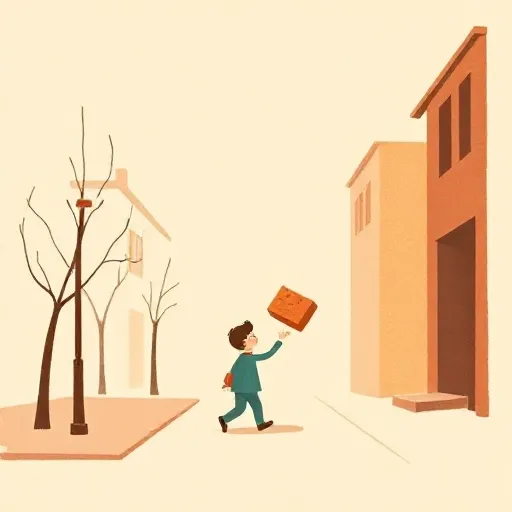
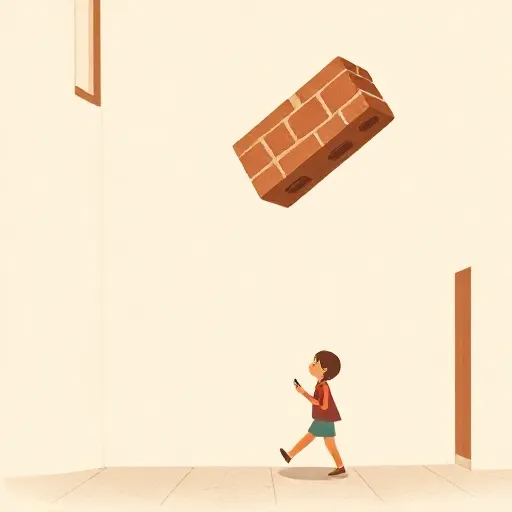
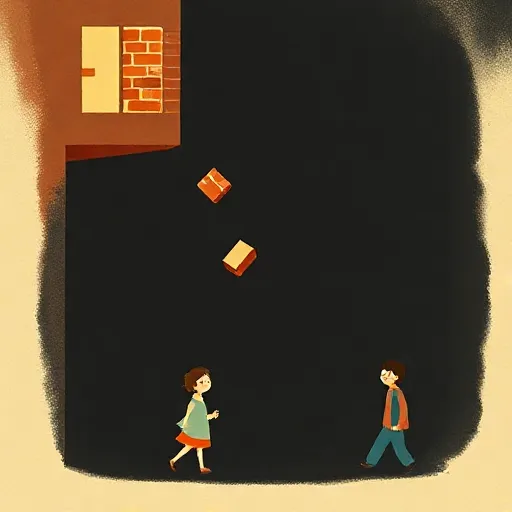
Imagine you drop a brick from a tall building, aiming right at someone’s head. That’s clearly a terrible thing to do. Now imagine you drop a brick from the same window without looking — you don’t know if anyone is below. The outcome might be the same, but is the action any less wrong?
Philosophers use this kind of thought experiment to show that risk — the chance that something bad might happen — can be its own moral problem. Even if luck keeps everyone safe, creating a serious danger might still be a wrong. But we all take risks every day: walking across the street, riding in a car, even eating food prepared by strangers. So when is putting someone at risk okay, and when does a tiny chance cross the line into unfairness?
What Even Is a Risk?
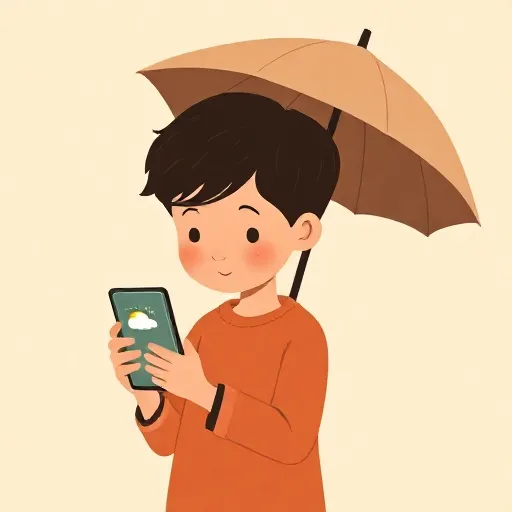
In everyday talk, a risk is a situation where it’s possible but not certain that something unwanted will happen. If you carry an open umbrella in a crowd, there’s a risk you’ll poke someone’s eye. The chance may be small, but it’s real.
To think clearly about risk, philosophers and scientists use numbers: a probability between 0 (impossible) and 1 (certain). A fair coin has a probability of 0.5 of landing heads. But most real-life risks don’t come with such nice numbers. We don’t know the exact probability that a new medicine has a dangerous side effect or that a bridge might fail during a storm.
That’s where the line between risk and uncertainty gets blurry. Some decision theorists say a situation involves risk only when the probabilities are known, like a coin toss. If they are unknown, it’s decision under uncertainty. Yet almost everything in life involves some uncertainty — even the “known” probabilities are just our best guesses. So when we talk about handling risk in real life, we’re almost always talking about uncertainty too.
This mix of knowing and not knowing makes risk both a mathematical puzzle and a trust puzzle: we act on what we think is likely, but we also have to live with the fact that we might be wrong.
Math vs. Our Guts: How Should We Decide?
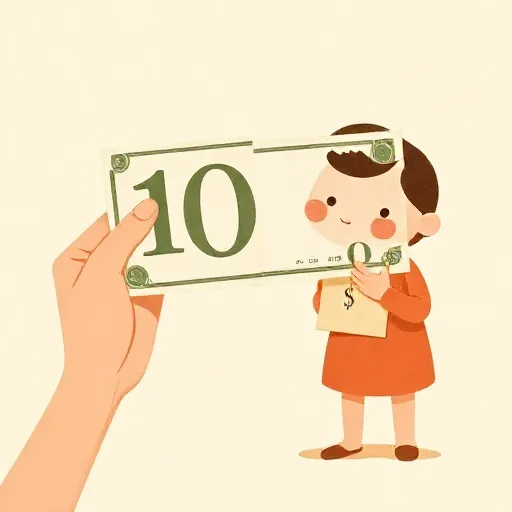
Suppose I offer you a sure $10 right now, or a 50% chance to win $30. The math says the second option has a higher expected utility: multiply the probability (0.5) by the value ($30) and you get $15, which is more than $10. So if you just want the biggest average payoff, you should take the gamble.
But many people wouldn’t. They’d rather play it safe. This tendency is called risk aversion (or cautiousness). A risk‑averse person values avoiding a loss more than gaining extra, even if the numbers say the gamble is “better.”
That’s not irrational; it’s a different way of weighing outcomes. However, the story gets even more complicated when the bad outcome is huge. Would you accept a 1‑in‑100 chance of losing your home for a 99% chance of winning a large sum? Most wouldn’t, even if the expected utility calculation liked it. Our minds treat tiny probabilities of disaster very differently from mid‑range probabilities.
Psychologists Daniel Kahneman and Amos Tversky discovered that people tend to give extra weight to probabilities near zero and near one. That’s why we buy insurance against rare disasters and also buy lottery tickets with astronomically tiny odds. Their theory, prospect theory, replaces the raw probabilities in expected utility with “decision weights” that reflect how we actually feel.
The philosophical question is: Should we follow the math of expected utility, or should we sometimes trust our caution, even if it violates the numbers? Many philosophers argue that a theory of rational choice should allow us to give special weight to avoiding disasters, because not all bad outcomes are equal in a purely numerical sense.
Is It Fair to Risk Someone Else?
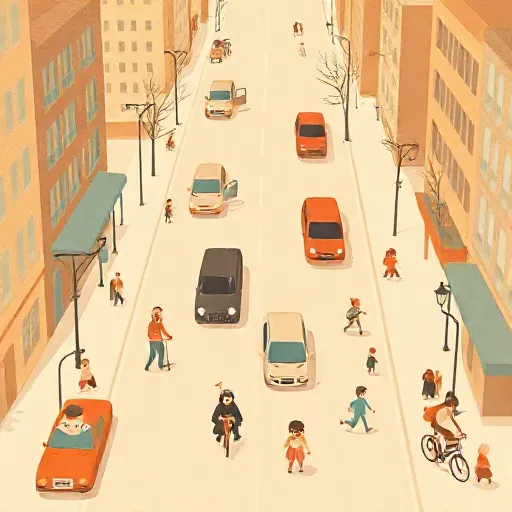
The real twist comes when you’re not the one taking the risk — you’re imposing it on someone else. Think back to the brick. The person who drops it without looking isn’t risking their own safety; they’re risking yours. Is that a violation of your rights?
Philosopher Robert Nozick (1938–2002) put the problem sharply: “Imposing how slight a probability of a harm that violates someone’s rights also violates his rights?” If you have a right not to be injured, do you also have a right not to be exposed to a tiny risk of injury?
A strict “yes” would make society impossible. Every time someone drives a car past you, they impose a very small risk of an accident. If that violated your right, you could forbid all driving. That seems absurd. So any workable right not to be risk‑exposed must have exceptions — it’s only a prima facie right (a right that can be overridden).
But then we face the exemption problem: when is it okay to override that right? Nozick noticed that you can’t just draw a line based on probability, like “risks below 0.001% don’t count.” In a tradition that says stealing a penny violates someone’s rights — no matter how tiny the theft — a similar probability threshold for risk seems arbitrary.
Philosopher Sven Ove Hansson (b. 1951) has proposed a different approach. Look at how risks and benefits are shared. Suppose you accept the tiny risk that I might hit you with my car, only because I accept the same risk from you and we both enjoy the convenience of driving. That’s a reciprocal exchange of risks: we all trade similar small dangers for shared benefits. If the system is fair and everyone has a say, then the risk impositions might be justified — even though no single probability number can do the job.
But this doesn’t settle everything. What if some people face much higher risks than others, or don’t get a fair share of the benefits? Then the exchange stops feeling fair, and we’re back to the drawing board.
When Scientists Aren’t Sure: The Precautionary Principle
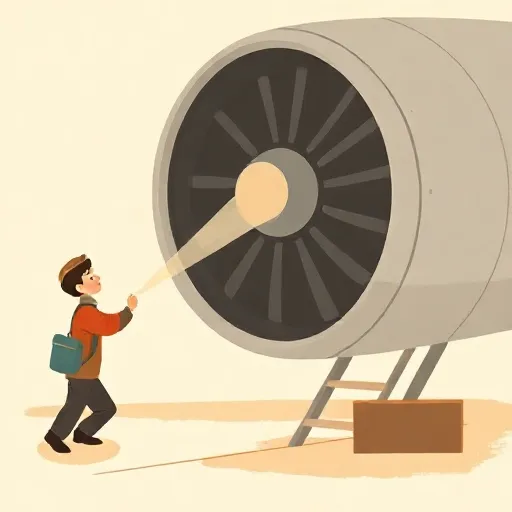
Sometimes the risk isn’t just unknown — it’s scientifically unclear. We suspect a new chemical might cause cancer, but the evidence isn’t strong enough for a “proof.” Should we wait for more research, or ban the chemical now?
Here we run into two kinds of mistakes that scientists and policymakers worry about. A type I error (false positive) is when you think there’s a danger and there isn’t. A type II error (false negative) is when you miss a real danger. In pure science, the worst mistake is usually a type I error — scientists don’t want to claim an effect exists unless they have strong evidence. So they set the bar high to avoid false positives.
But in policy, things flip. Think about a passenger plane. If an engine might have a hidden flaw, what’s worse: grounding the plane for an extra check and finding it’s fine (type I), or taking off and then crashing because the flaw was real (type II)? Most people would rather suffer a false alarm than a real disaster.
The precautionary principle says that when we have reasonable scientific grounds to suspect a serious threat to health or the environment, we should take protective action — even if the science isn’t settled. It’s been included in international agreements since the 1990s. But it’s also controversial. Critics worry it could be used to block every new technology, even ones that turn out to be safe and beneficial.
So the precautionary principle isn’t a magic rule. It still requires us to judge how “reasonable” the suspicion is and how serious the threat — which brings us right back to the philosophical debates about evidence, fairness, and how to weigh uncertain dangers.
So, How Much Risk Is Too Much?
You’re twelve, and you already face risk decisions every day. Should you cross the street when the light is flashing? Should you try that bike jump your friend dared you to do? Should you worry about the air quality when you play outside? All involve choices about how much risk you’re willing to accept — and sometimes, what risk you think it’s fair to push onto others.
The brick‑thrower who “didn’t look” wasn’t just unlucky — they showed a disregard for other people’s safety that feels different from the person who carefully checks. That’s because risk isn’t just about numbers; it’s about responsibility, fairness, and trust.
Philosophers haven’t found a simple answer to “how much risk is too much.” But they’ve given us tools to ask better questions: Who decides to take the risk? Who bears it? Are the dangers spread fairly? Is there a way to share both the risks and the benefits? These questions aren’t just for scientists and lawmakers — they’re for anyone who wants to think clearly about the world and their place in it.
Think about it
- Your friend dares you to jump across a wide gap, saying there’s only a tiny chance you’ll fall. What would make the risk worth taking — or not? Does it matter if your friend would be the one hurt, or you?
- Imagine a city where every possible source of risk — cars, bicycles, even kite‑flying — is banned so that nobody ever faces danger from someone else. Would you want to live there? Why or why not?
- A food company wants to use a new food coloring that hasn’t been tested for long‑term health effects. Scientists are unsure whether it’s completely safe. Should the government allow it on store shelves, or ban it until there’s more proof? Why?