Who Speaks for the Black Woman? Anna Julia Cooper’s Challenge
The Witness Who Was Never Called
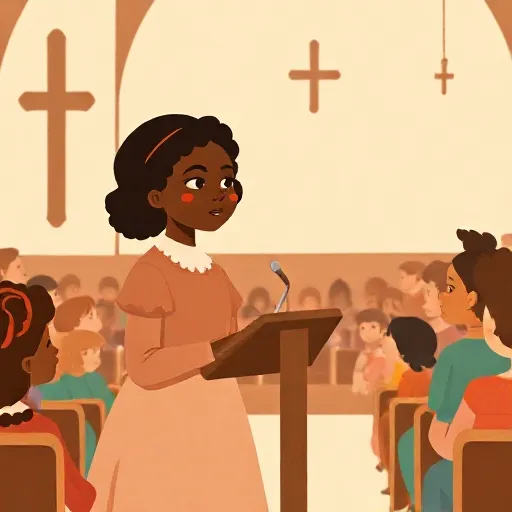
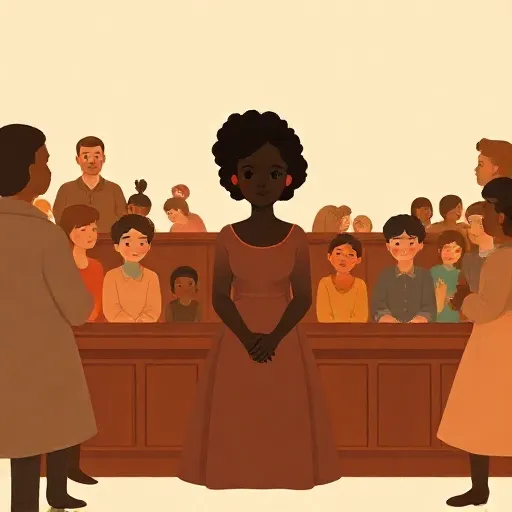
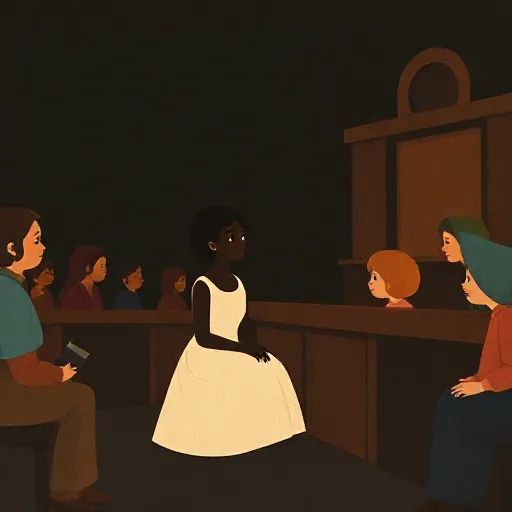
Imagine a trial where one key witness is never allowed to speak. The lawyers argue, the jury waits, but the person who knows the truth sits silently in the corner, invisible. That is the picture Anna Julia Cooper (1858?–1964) painted in 1892 in her book A Voice from the South. She wrote: “The summing up of evidence deposed, and the charge to the jury have been made — but no word from the Black Woman.”
Cooper knew that invisible corner from the inside. She was born into slavery in Raleigh, North Carolina. Her mother had been enslaved; her father was likely the white man who owned them. Unlike most enslaved children, she learned to read and write early. By the time she wrote those words, she had become a teacher, a school principal, and one of the sharpest thinkers about justice in the United States.
The big idea she brought to that courtroom was what we now call intersectionality — the insight that systems of oppression overlap. Black women, she explained, are hit by racism (what she called “the race problem”) and sexism (“the woman question”) at the same time. Yet white women often ignored them when fighting for the vote, and Black men often overlooked them when fighting for racial progress. Cooper pointed out that this left Black women uniquely qualified to see how the whole machine of injustice worked. Philosophers today call this a distinctive standpoint — a position from which you can see things others miss.
Learning to Lift Your Voice
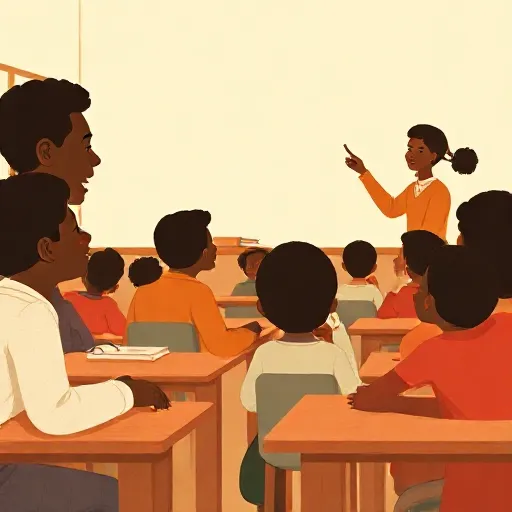
If no one calls you to speak, you first have to teach yourself to speak. For Cooper, education was not just about getting a job — it was about earning the right to be heard. She entered St. Augustine’s Normal School at age nine, then earned a B.A. in mathematics from Oberlin College in 1884 and an M.A. in 1887. Decades later, at age 66, she defended a doctoral thesis at the Sorbonne in Paris, becoming the fourth African American woman to earn a Ph.D.
In her essay “The Higher Education of Women,” Cooper argued that society could not afford to waste women’s minds. She noticed that some Black men supported racial uplift but balked at educating girls. “It seems hardly a gracious thing to say,” she wrote, “but it strikes me as true, that while our men seem thoroughly abreast of the times in almost every other subject, when they strike the woman question they drop back into sixteenth century logic.” Her rule was simple: give girls a chance. Girls, she said, were not ornaments — they were half the race, and half the brainpower.
That conviction got her into trouble. As principal of M Street High School in Washington, D.C., she insisted on teaching classical languages, literature, and advanced mathematics — subjects some critics thought Black students did not need. She lost her position in a political fight, but she never backed down. She believed vocational training had its place, but if a student hated Latin and wanted to build steamboats, forcing them into the classics was foolish. The real goal was to let each person develop their full intellectual power so they could add something to the world that no one else could.
What Are We Worth?

Cooper’s essay “What Are We Worth?” began with a cruel question. A famous white preacher, Henry Ward Beecher, had once mused that if Africa and Africans sank into the ocean, the world would miss not a single poem, invention, or piece of art. Cooper did not just get angry — she took the question apart like a mathematician.
First, she pointed out that race prejudice is a feeling, not a fact. It is “mere sentiment governed by the association of ideas,” impervious to reason. You cannot argue a feeling out of existence, so she changed the terms. She offered an efficiency theory of worth: a person’s value should be measured by what they actually produce and what they overcome.
Then she flooded the page with evidence. She listed Black schools, teachers, ministers, doctors, and lawyers — all built “by unassisted effort.” She showed the poetry of Phillis Wheatley, the sculpture of Mary Edmonia Lewis, the heroism of Black soldiers. She also described the sharecropper earning fifty cents a day in the sun and the “pinched and down-trodden colored women bending over wash-tubs” all week for barely enough to buy a pair of shoes. Her numbers made the invisible cost of racism visible. And she argued that anyone who faces and overcomes such hardship develops a kind of strength and existential depth that someone who has never struggled cannot match.
Conflict, Not Conquest

Many voices in Cooper’s time said that to progress, Black people should either blend in completely or separate entirely. Cooper took a third path. In “Has America a Race Problem?” she argued that difference is fuel for progress, not an obstacle to it. She compared the world to a symphony: each race has its own “peculiar keynote,” its own note to play. Harmony comes from the equilibrium of opposing forces.
This was not a call for endless fighting. She rejected brutal domination. She also rejected the idea that one race should swallow up another’s identity. She wrote that progressive peace is achieved through fair conflict and difference. She believed that every group brings something irreplaceable, and that human civilization grows when those distinct gifts are allowed to sharpen each other. That idea — that you need tension and variety to get better — echoes in later thinkers like Audre Lorde, who wrote that difference is not a “case for separation or suspicion” but a source of power.
Cooper lived this out in her own activism. She co-founded the Colored Women’s League, spoke at the 1893 Chicago World’s Fair, helped organize the Pan-African Conference, and as an elderly woman ran a university for working Black adults. She did not wait for an invitation to the table. She built one.
Why Her Voice Still Echoes
Cooper’s life was a single demand: when a whole group of people is forced to be silent, everyone loses. She showed that the person who lives at the crossroads of multiple unfair systems — what she called “the Black woman” — often understands those systems more clearly than anyone else. That is not a weakness; it is a unique platform.
Her philosophical toolkit still works. When you notice that a friend at school is never asked for their opinion, when a whole perspective is missing from a classroom debate, Cooper’s question cuts through: whose voice hasn’t been heard yet, and what might change if they finally got the floor? She did not want Black women to be spoken for. She wanted them to speak, so that their “trained, efficient forces” could join the work of building a fairer world.
She died in 1964 at 105, still teaching. Her gravestone calls her “Early Advocate of Equal Rights for Blacks and Women.” But her real monument is the ongoing lesson: if you believe in equality, you have to listen to the people equality has been denied — not just argue about them.
Think about it
- Cooper said that only when Black women are free to speak can the whole community rise. In your own school or neighborhood, whose voices do you think are still not being heard — and what might you miss by not hearing them?
- If you believe all people deserve equal rights, how should that change the way you treat someone whose life experience is very different from yours?
- Why might it be dangerous for one group to speak on behalf of another group, even with good intentions?