Why ‘I Saw Her Duck’ Can Mean Two Totally Different Things
A Sentence That Makes You See Double
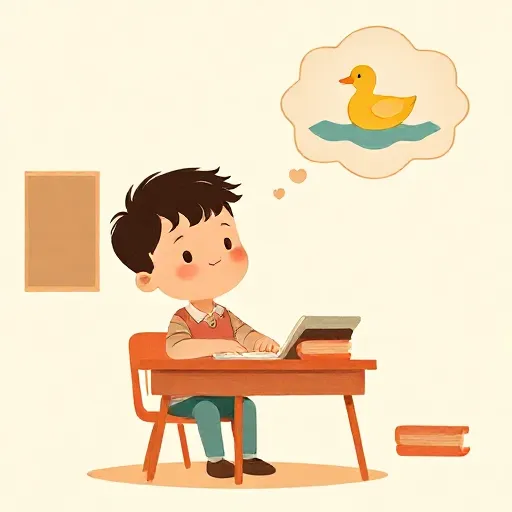
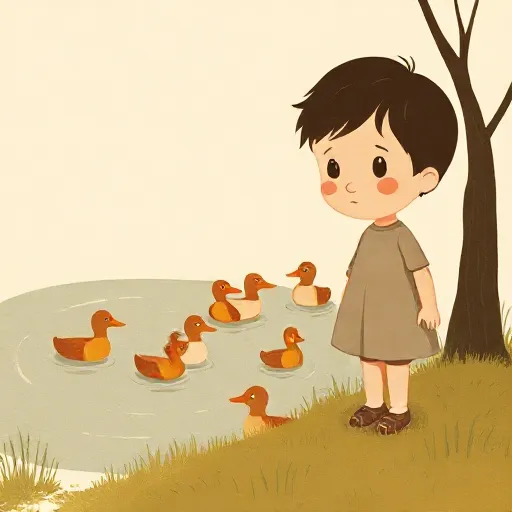
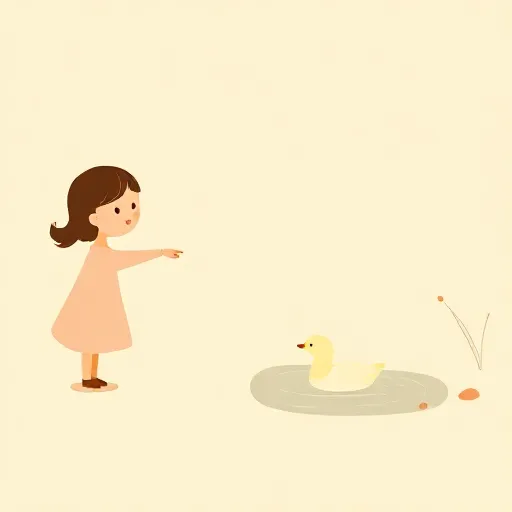
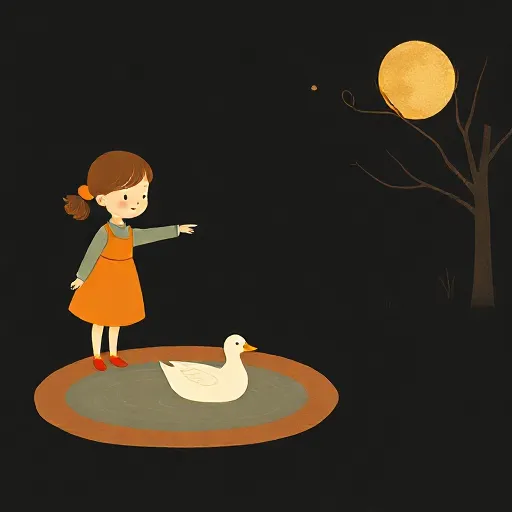
Your friend says, “I saw her duck.” What picture pops into your head? Maybe you imagine a bird floating on a pond. Or perhaps you picture someone suddenly lowering her head to dodge a flying object. The same sentence can mean two completely different things. This is ambiguity: when a single piece of language carries more than one legitimate meaning.
Not every unclear sentence is ambiguous, though. If I say, “I’m going to visit my aunt,” you don’t know whether it’s my mother’s sister or my father’s sister. That’s under-specification (also called sense-generality) — the word “aunt” covers both possibilities with one meaning, not two. Vagueness is different again: a word like “bald” has no sharp borderline, but it isn’t ambiguous. And context sensitivity makes a word like “I” pick out a different person every time someone speaks, but “I” itself isn’t ambiguous. Aristotle (384–322 BCE) already noticed how ambiguity could trick people into bad arguments. Philosophers ever since have tried to tease these things apart.
Where Ambiguity Hides: Lexical and Structural
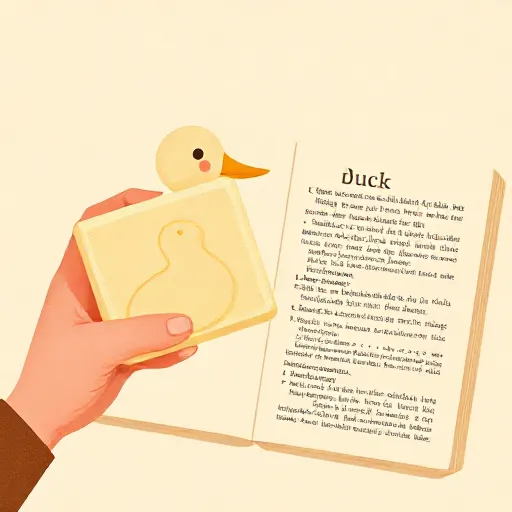
Ambiguity comes in two main forms. Lexical ambiguity happens when a word has multiple, separate dictionary entries that happen to sound or look alike. “Duck” is a perfect example: one entry means a water bird, another means to lower your head quickly. “Bank” can be a financial institution or the side of a river. When the meanings are closely related — like the different uses of “in” (in a car, in trouble) — linguists sometimes call it polysemy, but it’s still a kind of ambiguity.
Structural ambiguity arises when a whole sentence can be built in more than one way, even if every word has just one meaning. The classic phrase “superfluous hair remover” is structurally ambiguous. It could mean “a remover of hair that is superfluous (extra),” or “a hair remover that is itself superfluous (unnecessary).” Quantifier sentences can shift too. “Every woman squeezed a man” has a scope ambiguity: it can mean each woman squeezed some man (possibly different ones), or there’s one man whom all the women squeezed. Even negation can play tricks. Bertrand Russell (1872–1970) noted that “The present king of France is not bald” could deny that there is a bald king of France, or assert that the king of France is non-bald, depending on how the negation is attached.
How to Test for Ambiguity: The Problem of the Light Feathers

How can we tell when a word is genuinely ambiguous? Philosophers and linguists have invented tests. One famous test is conjunction reduction. Take the word “light,” which can mean “not heavy” or “pale in color.” You can say “The feathers are light” and “The colors are light.” But if you join them — “The feathers and the colors are light” — the sentence sounds ridiculous. This jarring effect is called a zeugma, where a single word gets stretched across two clashing meanings at once. A truly unambiguous word passes the test smoothly: “Toronto exists,” “Numbers exist,” and “Triadic relations exist” can combine into “Toronto and numbers and triadic relations exist” without any joke.
A contradiction test also helps. If “aunt” were ambiguous between “mother’s sister” and “father’s sister,” you could plausibly say, “She is an aunt but she isn’t an aunt,” just as you can say “That bank isn’t a bank” by switching meanings. Yet “She is an aunt but she isn’t an aunt” feels like a plain contradiction, so “aunt” is probably sense-general, not ambiguous. Saul Kripke (1940–2022) added a cross-linguistic check: if a word like “bat” (sports stick vs. flying mammal) is truly ambiguous, we wouldn’t be surprised that other languages use completely different words for the two meanings. When many languages pack the same distinction into a single word, the word might express one broad concept after all.
Why Philosophers Argue About Ambiguity
Spotting ambiguity isn’t just a word game — it matters for clear thinking. In logic, an equivocation is a fallacy where a crucial word switches meaning halfway through an argument. For instance: “Babe Ruth owned a bat. Bats have wings. So Babe Ruth owned something with wings.” The argument looks valid only if you ignore that “bat” means different things in the two premises. Gottlob Frege (1848–1925) warned that natural language is full of such traps, and he dreamed of a perfect logical language where every sign had exactly one meaning.
Ambiguity also affects how we build theories. Paul Grice (1913–1988) proposed a razor: “Senses are not to be multiplied beyond necessity.” It’s tempting to label a slippery word as ambiguous whenever it causes trouble, but we should resist unless the evidence is strong. Kripke called this move the “lazy man’s approach.” Gilbert Ryle (1900–1976) once argued that “exists” is ambiguous because it sounds strange to say “There exist prime numbers, Wednesdays, and navies” in one breath. Most philosophers found his example unconvincing — a reminder of how hard it is to prove ambiguity. Keith Donnellan (writing in 1966) suggested that some sentences show pragmatic ambiguity: a single unambiguous meaning can be used with different intentions, like pointing to someone you think is Smith when it’s actually Jones.
Why It Still Matters: Words That Rule Our World
Legal texts show how high the stakes can be. In the U.S. Constitution, a clause says that if the President is removed, dies, resigns, or cannot perform duties, “the same shall devolve on the Vice President.” The word “devolve” could mean the office itself transfers, or only the duties. That ambiguity caused real confusion in early American history. Even today, laws must be written carefully because courts can interpret an ambiguous phrase in unexpected ways.
You constantly resolve ambiguity without even noticing. You hear “I saw her duck” and the surrounding situation instantly tells you which meaning fits. Understanding how your brain does this gives you a sharper eye for hidden tricks in arguments, advertisements, and rules. Next time a sentence makes you see double, you’ll know that ambiguity is not a glitch — it’s a feature of language that asks you to think twice.
Think about it
- Imagine your school has a rule: “No running in the hallways.” If you jog slowly, is that running? Is the rule ambiguous, or just vague? How would you rewrite it to remove all doubt?
- A friend says, “Every student read a book.” Could that mean all students read the same book, or each read a different book? Does your friend’s intended meaning depend on context, or is the sentence genuinely ambiguous?
- If a word like “bat” can be both a wooden stick and a flying animal, why don’t we get confused all the time? What clues help you choose the right meaning without thinking?