Why Can You Say “Ducks Lay Eggs” When Only Female Ducks Do?
The Duck Problem: True but Not 100% True
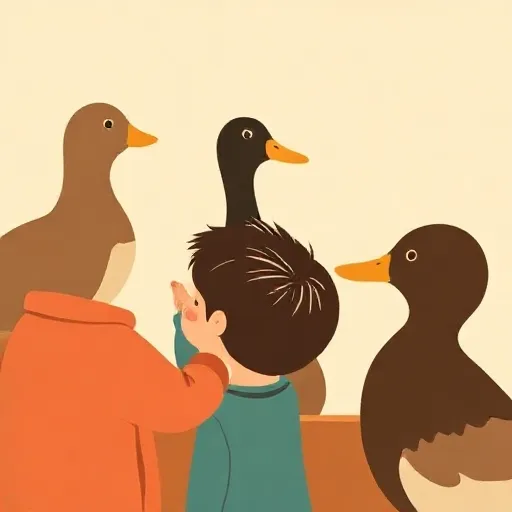
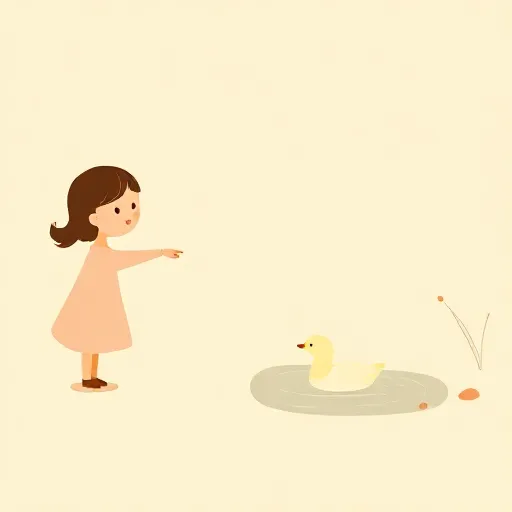
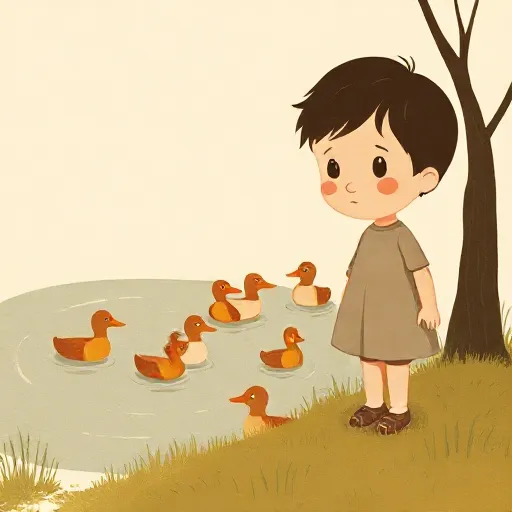
You are at a zoo, and a friend says, “Ducks lay eggs.” You happen to know that a male duck never lays an egg. But the sentence still seems right. Something similar happens when someone says, “Tigers are striped.” That’s true, yet around one in ten thousand tigers is born solid white. We don’t say the sentence is false; we just note the exception and move on.
Now hear these: “Mosquitoes carry West Nile virus.” Less than one percent of mosquitoes carry that virus, but the sentence feels true. Compare that with “Books are paperbacks.” About eighty percent of all books are paperbacks, but the sentence sounds false. How can a sentence with a tinier percentage be true and one with a huge percentage be false?
Philosophers call statements like these generics (more precisely, characterizing generics). They don’t come right out and say “all,” “most,” or “some.” They don’t even tell you how many members of a kind need to have a property. A generic like “dogs have four legs” sets off no alarm when you see a three‑legged dog. But “dogs are three‑legged” is clearly false, even though plenty of three‑legged dogs exist.
The puzzle that has kept philosophers busy for decades: if generics aren’t “all” and aren’t “most,” what do they mean?
Could the Answer Be “What’s Normal”?
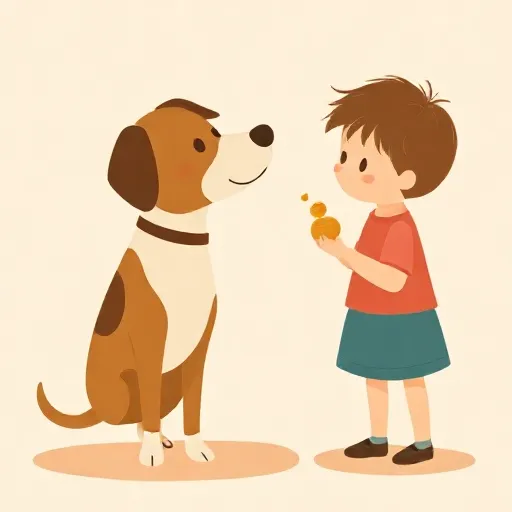
One popular idea is that generics talk about what is normal for a kind — not what always happens, but what would happen if things went as normally as possible. Think about the three‑legged dog. You still accept “dogs have four legs” because, if things had gone normally for that dog with respect to legs, it would have been born with four legs. A birth defect or an accident messed up the pattern.
Philosophers Francis Jeffry Pelletier (born 1945) and Nicholas Asher, together with Michael Morreau, built a theory that uses possible worlds — imaginary, fully detailed versions of reality where everything unfolds as normally as it can. In those worlds, each dog keeps its four legs. The generic is true, they argue, as long as every individual, if the world went normally for it, would have the property.
But trouble shows up fast. “Sharks attack swimmers” is a generic people accept, yet attacking a swimmer is not normal for a shark; most sharks never go near a bather. “Mosquitoes carry West Nile virus” is also true, but it’s not normal for a mosquito to carry the virus — the vast majority don’t. The normalcy account struggles to explain why we accept these generics at all.
Defenders of the normalcy idea sometimes try a fix: maybe when we say “ducks lay eggs,” we secretly restrict the conversation to female ducks. That would make “lay eggs” normal for that group. But experiments show that both children and adults don’t naturally do that. If we did, we would also accept “ducks are female” simply by mentally restricting to female ducks — and almost nobody thinks that generic is true.
A Numbers Game: Could Probability Solve It?
If normalcy can’t handle low‑prevalence generics, perhaps probability can. The linguist Ariel Cohen (late 20th century) proposed that a generic is true in one of two ways.
The first way is absolute. “Tigers are striped” is true because the chance that a randomly picked tiger is striped is over 50%. The second way is relative. “Mosquitoes carry West Nile virus” is true because, if you pick a random mosquito and a random other insect, the mosquito is more likely to carry the virus than the insect is — even if both probabilities are tiny.
Cohen added a rule called the homogeneity constraint to block bad predictions. The numbers must hold across all the important subgroups of a kind. “Bees are sterile” would be false because, even though most bees (the workers) are sterile, queen bees are not — and queens form a salient subgroup.
Yet counterexamples remain. Humans are more likely to be autistic than other mammals are, so “humans are autistic” would count as a true relative generic on Cohen’s view. But hardly anyone accepts that generic. Another problem, noted by the philosopher Bernhard Nickel, is polarization. Imagine that a small fraction of Dutch sailors are among the best in the world, and that fraction is larger than the fraction of top‑notch French or German sailors. Most Dutch sailors, however, are terrible. The numbers produce a true relative generic — but “Dutchmen are good sailors” still sounds false. Probability alone does not seem to capture what our minds are doing.
How Your Mind Draws the Line: Generics in Real Life
Psychologists have discovered that our brains handle generics in ways that formal semantics often overlooks. Children as young as 30 months use and understand generics, and by the preschool years they, like adults, accept “birds lay eggs” while rejecting “birds are female” — even though only female birds lay eggs. Remarkably, when a child hears a sentence with “all,” “most,” or “some,” they often treat it as if it were a generic. The default setting of the mind, it seems, is generic thinking.
One consequence is that almost no human language has a special word for generics in the way we have the word “all.” The linguist and philosopher Greg Carlson (born 1948) noted that bare plurals like “tigers” do the job without any extra signal. If generics are the brain’s automatic way to generalize, a dedicated “gen” word would be unnecessary — like having a button that says “breathe.”
This default‑mode thinking brings surprises. Researchers have found that people are much more likely to accept a novel generic like “lorches have purple spots” when the property is dangerous or characteristic of the kind, even if only a tiny minority of the imaginary animals actually have it. The property “carry Lyme disease” gets a pass at 5% prevalence; “have freckles” does not. Something about the content of the property — not just the numbers — tugs on our acceptance.
The way exceptions behave also matters. Books that aren’t paperbacks are hardcover — a positive, concrete alternative property. That may be why “books are paperbacks” gets rejected while “mosquitoes carry West Nile virus” does not: the uninfected mosquitoes simply don’t carry the virus; they don’t have a striking alternative feature that shouts for attention.
Why This Matters: From Language to Prejudice
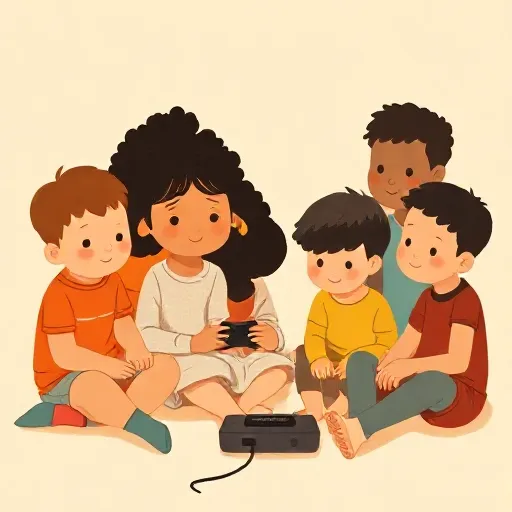
Generics are not just academic puzzles. They shape how we see people.
The philosopher Sally Haslanger (born 1955) pointed out that when someone says “women are submissive,” the generic nudges the listener to think the property comes from the very nature of women — deep, unchanging, and shared by all — rather than from temporary or unjust social conditions. Generics, in short, encourage essentialist thinking. Experiments confirm this: when children and adults hear a new social group described with generic language (“Zarpies eat marmash”), they begin to treat the group as having a hidden inner essence, even if they have no other evidence.
This effect can hurt real people. The psychologist Claude Steele and his colleagues showed that simply reminding a person of a negatively stereotyped group they belong to can lower their performance — a phenomenon called stereotype threat. Later studies found that uttering an evaluative generic such as “boys are really good at this game” is enough to create a performance gap in children. The generic doesn’t have to be true; it just has to be said.
So understanding generics matters for fairness. Learning to hear a generic and ask “Does this really say something deep about every member, or is it a pattern that has exceptions that matter?” is a small act of careful thinking. It can keep our minds from drifting into lazy stereotypes. That’s why philosophers and psychologists keep wrestling with the puzzle of generics — and why you can join the wrestling match every time you pause before saying “they” about a whole group.
Think about it
- If you hear a friend say “cats are aloof,” but you know a super‑cuddly cat, does that make the sentence false? Why or why not?
- Could changing the way adults talk about gender, race, or ability — avoiding certain generics — make schools and playgrounds fairer? What would be the hardest part?
- Imagine you could see into a thousand possible worlds where everything goes normally for humans. If in those worlds nobody ever acted cruelly, would that mean “humans are kind” is a true generic, even if the actual world is full of unkindness?