What Makes a Word Mean Two Things? A Philosopher’s Guide to Ambiguity
Imagine this: You tell a friend, “I saw the bat.” Your friend nods. But are you talking about the animal that flew out of the cave last night, or the piece of wood you grabbed for baseball practice? Your friend probably knows which one you mean, but the sentence itself didn’t pick. It let both possibilities hang there. That’s ambiguity.
Here’s a stranger one: “He loved his mother and she did too.” Who loved whose mother? The first “his” might mean John’s mother, or it might mean someone else’s. And “she did too”—is she loving John’s mother, or her own? One sentence, at least four meanings. And yet, in a real conversation, you’d probably know exactly what was meant. How does that work?
Philosophers have been puzzling over ambiguity for a very long time. Aristotle, writing in ancient Greece, listed it as a way arguments can go wrong without you noticing. If you say “All bats have wings” and “This is a bat,” you might mean the baseball bat in the second sentence while everyone else assumes you mean the animal. The argument looks valid—but it isn’t. You’ve been tricked by a word doing double duty.
This gets at something deeper: language is astonishingly flexible, but that flexibility can also make it slippery. And once you start looking, you see ambiguity everywhere. Some of it is harmless. Some of it is the whole point (in jokes, in poetry). And some of it, philosophers argue, reveals important facts about how our minds work and how we manage to understand each other at all.
The Easy Kind: When Words Just Have Two Jobs
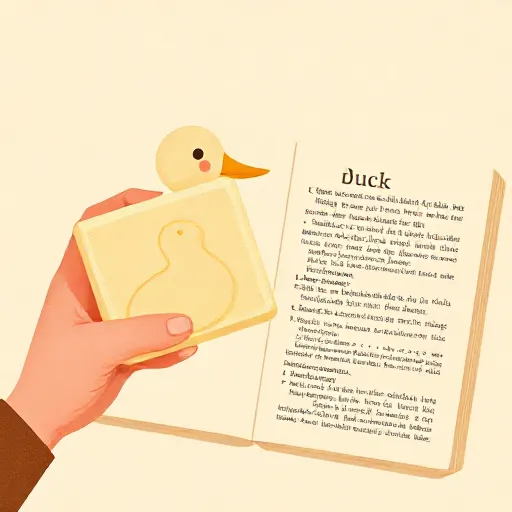
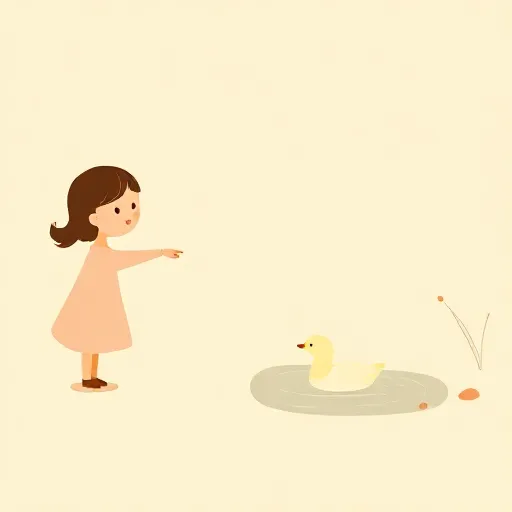
The simplest kind of ambiguity is lexical ambiguity: a word that just happens to mean two completely different things. “Bank,” “bat,” “duck,” “seal.” These are like accidents of language—words that sound the same (or look the same written down) but have unrelated meanings. If you know the language, you know both meanings; you just have to figure out which one fits the context.
But even this simple case raises a question that philosophers argue about. When a word like “bank” has two meanings, should we treat it as one word on the page that happens to have two separate definitions, or as two different words that happen to look and sound the same? Most linguists treat them as separate entries in the “lexicon” (the mental dictionary in your head). So your brain has two different files labeled “bank,” one for money and one for riverside. The trick is deciding which file to open.
This might seem like a boring bookkeeping question, but it matters. If you think of ambiguous words as having a single meaning with two branches, you need a theory about how those branches connect. If you think of them as separate words, you need to explain why our brains find it so natural to think of them as related—even when they aren’t.
The Tricky Kind: When the Structure Is Doing the Work
Sometimes the words themselves aren’t ambiguous—the way they’re put together is. This is called structural ambiguity or syntactic ambiguity.
Consider: “Superfluous hair remover.” You probably read that and immediately thought of some product that removes extra hair. But it could also mean a remover that is itself superfluous—like, an unnecessary hair remover. The words are the same. The difference is in how they group. In the first reading, “superfluous” attaches to “hair.” In the second, it attaches to “hair remover.” The sentence doesn’t tell you which grouping is correct. Your brain has to decide.
Or take: “Every woman squeezed a man.” This can mean two very different things. It could mean: for every woman, there was some man (maybe different men for different women) that she squeezed. Or it could mean: there exists a single man such that every woman squeezed him. (That second reading is a bit weird—wouldn’t he get crushed?—but the sentence allows it.) The difference is a matter of scope: which phrase takes charge over the other.
This gets really interesting with words like “must” and “might.” Consider: “John ought to be home by now.” Are you saying that, given what you know, it’s highly likely he’s home? Or are you saying he has an obligation to be home, even if he’s not? The sentence allows both. Philosophers call these different “flavors” of modality: the epistemic flavor (about knowledge) and the deontic flavor (about obligations). Some philosophers think “ought” is genuinely ambiguous. Others think it has a single meaning that shifts depending on context—like how “I” always means the same thing (the speaker) but refers to different people.
What Ambiguity Isn’t
Here’s where it gets subtle. Not every case where a sentence has multiple possible interpretations counts as ambiguity. Philosophers and linguists have worked hard to distinguish ambiguity from other phenomena that look similar.
Vagueness is different. “Is bald” is vague—where exactly does baldness start? There are borderline cases. But it’s not ambiguous. It doesn’t have two separate meanings; it has one meaning with fuzzy edges. Ambiguous words like “bat” have sharp edges: either you mean the animal or the equipment. There’s no in-between.
Underspecification (or sense-generality) is different too. If I say “My aunt is coming to visit,” I haven’t told you whether she’s my mother’s sister or my father’s sister. But that doesn’t mean “aunt” is ambiguous. It just means the word is general—it covers both cases without being confused between them. “Uncle” is the same: it covers your mother’s brother and your father’s brother, but it’s not ambiguous. You can test this: try saying “That uncle isn’t an uncle” as if one meaning applies to one part and the other meaning applies to the other. It just sounds like a contradiction. But “That bank isn’t a bank” can make perfect sense if you’re pointing at a riverside bank while denying it’s a financial institution. That’s a real test for ambiguity.
Context sensitivity is different again. “I am hungry” changes who it refers to depending on who says it, but “I” isn’t ambiguous—it has a single job (point to the speaker) that it does perfectly well in each context. Ambiguity, by contrast, isn’t resolved by context alone; context helps you choose, but the word itself is genuinely doing two jobs.
How to Test for Ambiguity
Philosophers have come up with clever ways to tell whether something is genuinely ambiguous or just vague or underspecified.
The conjunction reduction test is the most famous. If a word is genuinely ambiguous, you should get a weird, almost comical effect if you try to use it in both senses at once. Try: “The colors and the feathers are light.” “Light” can mean “not dark” (for colors) or “not heavy” (for feathers). Saying both together feels like a bad pun. That’s called zeugma, and it’s a sign of real ambiguity.
By contrast, “The colors and the feathers are soft” isn’t zeugmatic—because “soft” applies the same way to both, even though colors being soft isn’t exactly the same as feathers being soft. (That’s metaphor or sense-generality at work, not ambiguity.)
Another test: if a word were truly ambiguous, you’d expect different languages to have different words for the different meanings. It would be surprising if every language happened to use the same word for “bat” (animal) and “bat” (sports equipment). But if a word is just general or vague, you wouldn’t be surprised to find other languages that also have one word covering both cases. This test was proposed by the philosopher Saul Kripke, and it’s a useful check on our intuitions.
Why Philosophers Care About Ambiguity
There are several reasons ambiguity matters for philosophy.
First, arguments can go wrong. If you’re not careful, you can slip between meanings of a word mid-argument without noticing. A famous example: “All bachelors are necessarily unmarried. John is a bachelor. Therefore, John is necessarily unmarried.” The second premise might be true if “necessarily” applies to the whole statement about bachelors, but the conclusion only follows if “necessarily” applies directly to John—which would be false. The argument looks valid, but it’s actually an equivocation. Detecting ambiguity is a basic skill for clear thinking.
Second, ambiguity challenges the dream of a perfect language. Philosophers like Gottlob Frege wanted a language where every expression had exactly one meaning—no confusion, no equivocation. That’s why mathematicians use formal symbols and brackets: to eliminate ambiguity. But natural language (the kind we actually speak) is full of it. And that’s not necessarily a bug. Maybe the flexibility of ambiguous language is part of what makes it so powerful.
Third, ambiguity raises deep questions about meaning itself. When we understand an ambiguous sentence, we pick one meaning and ignore the others—usually without even noticing we did it. How? What mental processes allow us to disambiguate so effortlessly? Studying ambiguity gives us a window into how meaning works in the mind.
Fourth, philosophers sometimes use ambiguity as an excuse. The philosopher Kripke warned: “It is very much the lazy man’s approach to posit ambiguities when in trouble.” If your theory runs into a counterexample, you can always say, “Oh, that word is being used in a different sense.” Maybe you’re right—but maybe you’re just protecting your theory from criticism. So there’s a methodological principle: don’t multiply ambiguities beyond necessity. Only claim a word is ambiguous if you have real evidence.
The Hardest Cases: Where Ambiguity Gets Philosophical
Some cases of apparent ambiguity are genuinely hard to classify, and philosophers disagree about them.
Polysemy is a term for words with multiple related meanings. “In” can mean inside a container, inside a group, inside a state of mind, inside a period of time—these all seem connected by a notion of containment, but they work differently. Is “in” ambiguous, or does it have one very general meaning that gets specified differently in different contexts? There’s no settled answer.
Modals like “must” and “might” are another battleground. The philosopher Angelika Kratzer argued that modals aren’t ambiguous at all: they have a single meaning that takes different “inputs” from the context (different sets of possible situations). If you think about it, this is similar to how “I” works—it’s not ambiguous, just context-sensitive. But not everyone is convinced.
Word meaning and reference can blur together in ways that make ambiguity hard to pin down. Consider “mass.” Physicists once thought mass was a single property of objects. Then it turned out there were two different properties (inertial mass and gravitational mass) that happen to always match. Is “mass” ambiguous between these two? Or is it just vague? Or does it refer to a single property that we haven’t fully understood? These are philosophical questions, not just linguistic ones.
Metaphors that become dead (like “deadline,” which once literally meant a line you could be killed for crossing) pass into language as new meanings. But when exactly does a metaphor die? At what point does it become a genuine ambiguity? The process is gradual, and there’s no sharp line.
Living with Ambiguity
In the end, ambiguity is not a problem to be solved but a feature to be understood. It shows up in jokes (puns depend on ambiguity), in poetry (where multiple meanings enrich the text), in law (where ambiguous wording can lead to centuries of debate about what the Constitution really says), and in everyday conversation (where we resolve ambiguity without thinking).
The philosophical lesson is this: we are remarkably good at navigating ambiguity. When someone says “I love you too,” you know immediately whether they mean “I love you, just as you love me” or “I love you, and I also love someone else” or “I love you, and I also do other things”—because you know the context. You disambiguate without effort. That effortless ability is something philosophers and cognitive scientists still struggle to explain.
Ambiguity reminds us that meaning is not a simple thing. Words don’t have neat, single definitions stored in a dictionary somewhere. They are tools we use in real situations, and part of what makes them useful is that they can stretch, shift, and do double duty. Understanding ambiguity means understanding something about how flexible—and how fragile—our shared understanding really is.
Appendix: Key Terms
| Term | What it does in this debate |
|---|---|
| Ambiguity | A property of words or sentences that have more than one legitimate interpretation in the language |
| Lexical ambiguity | When a word (like “bank”) has two or more unrelated meanings that happen to look or sound the same |
| Structural ambiguity | When the same string of words can be grouped in different ways, producing different meanings |
| Scope | Which operator or quantifier takes charge over others in a sentence; scope differences produce different meanings |
| Vagueness | A term with fuzzy boundaries (like “bald”) rather than distinct meanings; different from ambiguity |
| Underspecification | When a sentence doesn’t specify some detail, but the words themselves aren’t ambiguous (like “aunt” not specifying maternal vs. paternal) |
| Zeugma | The odd or funny effect you get when you try to use an ambiguous word in both senses at once in the same sentence |
| Polysemy | A word with multiple related meanings (like “in” or “healthy”); sometimes treated as a kind of ambiguity, sometimes not |
| Context sensitivity | When a word’s reference shifts with context but its meaning stays the same (like “I” or “here”) |
| Equivocation | A fallacy that occurs when a word shifts meanings mid-argument, making the argument look valid when it isn’t |
Appendix: Key People
- Aristotle (384–322 BCE): Greek philosopher who first studied ambiguity as a source of bad arguments in his work Sophistical Refutations. He noticed that some words have multiple meanings that are related to a central sense (like “healthy”).
- Saul Kripke (1940–2022): American philosopher who warned against lazily claiming ambiguity to protect theories, and proposed tests for distinguishing genuine ambiguity from other phenomena.
- Gottlob Frege (1848–1925): German philosopher and logician who wanted a “perfect language” free of ambiguity, using formal symbols and brackets to eliminate confusion.
- Angelika Kratzer (contemporary): German philosopher and linguist who argued that modal words like “must” and “might” aren’t ambiguous but get their different meanings from context, like indexicals do.
Appendix: Things to Think About
-
Think of a pun you know. What makes it work? Does it depend on the two meanings being completely unrelated, or does it work better when they’re related in some way? Would the pun still work if the word had three meanings instead of two?
-
Consider the sentence “The chicken is ready to eat.” It can mean the chicken is ready to be eaten or ready to eat something. These are genuinely different interpretations. Do you think this is a case of structural ambiguity, or is it something else? How would you test it?
-
If you found out that in another language, the two meanings of “bat” were expressed by completely different words, would that change how you think about the English word? What if you found a language that had one word covering both baseball bats and flying bats? Would that make you doubt that English “bat” is really ambiguous?
-
Some philosophers think that words like “evidence” have both an “internal” sense (evidence as you experience it) and an “external” sense (evidence as it really is). Do you think that’s genuine ambiguity, or just a difference in what the word is applied to? How would you decide?
Appendix: Where This Shows Up
- In jokes: Puns and wordplay rely on ambiguity. When you hear “I used to be a baker, but I couldn’t make enough dough,” the ambiguity of “dough” (pastry vs. money) is doing all the work.
- In law: Legal documents sometimes contain ambiguous wording that leads to lawsuits about what the law really means. The U.S. Constitution’s phrase about the vice president “devolving” power is famously unclear—is it the office or the powers that devolve? People still argue about it.
- In artificial intelligence: Teaching computers to understand natural language requires solving the ambiguity problem. When you ask Siri or Alexa a question, they have to figure out which meaning of a word you intend—and they still get it wrong sometimes.
- In science: Scientific terms sometimes turn out to be ambiguous across different theories. The physicist’s “mass” is a famous case: it turned out to pick out two different properties (inertial and gravitational mass) that happen to always be equal.