Could There Be a World Exactly Like Ours — but Nobody’s Home?
The Robot That Could Pass for Human
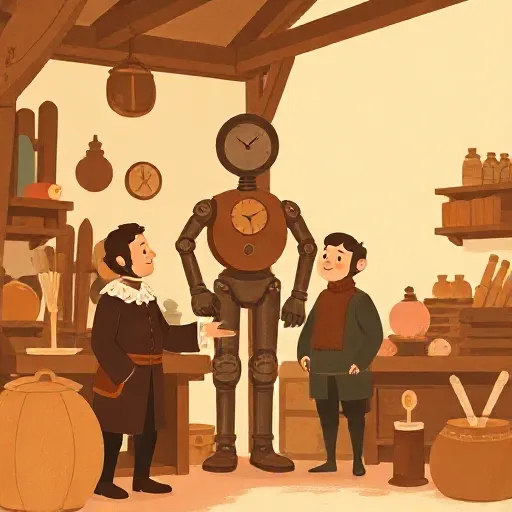
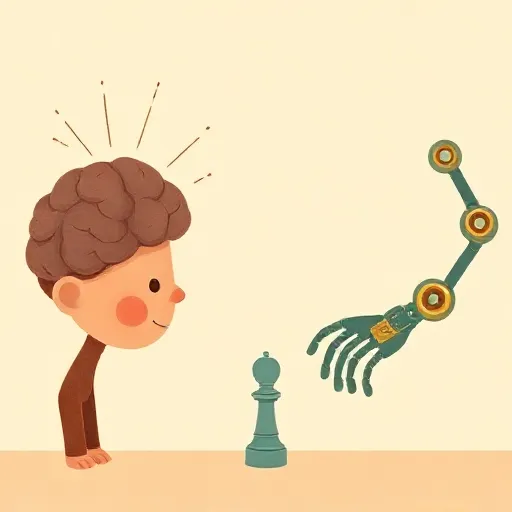
René Descartes (1596–1650) had a daring thought. What if a machine looked and acted exactly like a human being? In his time, the most advanced machines were clocks and fountains with moving statues. He believed animals were already like that — pure physical mechanisms with no inner life. But he was sure it could never work for people. Two things would give the machine away: it could not use language creatively, and it could not handle new situations with the flexible behavior a real person shows. No matter how convincing it seemed at first, you’d eventually notice that something was missing.
Descartes concluded that explaining human behavior required something beyond the physical body — an immaterial mind that interacts with the brain and body. If he was right, then a world physically just like ours but missing those minds couldn’t exist: human bodies wouldn’t work properly. So the idea of a zombie — a being physically identical to a person but with no consciousness — didn’t even arise for him. The closest thing was an automaton you could easily tell wasn’t really human.
The Cogs Go Round, but No One Feels a Thing

By the nineteenth century, science was painting a new picture. Physicists believed every physical event had a physical cause — the physical world was causally closed. That meant if you knew all the physical facts, you could explain everything that happened in the body, including all movement and speech. But where did consciousness fit in?
Some thinkers, like Thomas Henry Huxley (1825–1895), accepted that the brain and body ran entirely according to physical laws. Since adding an extra, nonphysical mind seemed to break the chain of physical causes, they argued that consciousness must be a by-product with no power of its own. You feel the pain when you stub your toe, but the feeling doesn’t make you yell — your brain’s physical reaction does that all by itself. This view is called epiphenomenalism, from the Greek words for “upon” and “appearance”: consciousness floats on top of the physical work like foam on a wave, caused but not causing.
If epiphenomenalism is true, a curious possibility follows. G. F. Stout (1860–1944) put it bluntly: then it should be quite believable that the world could be exactly the same as it is now — people writing books, building bridges, arguing about the mind — except with no consciousness at all. You’d still go through all the motions, but no one would feel anything. Stout thought that result was obviously absurd to ordinary common sense. But the mere fact that anyone could seriously entertain it gave birth to the modern zombie idea: a world physically identical to ours, but completely dark on the inside.
A World of Bodies, but No Minds

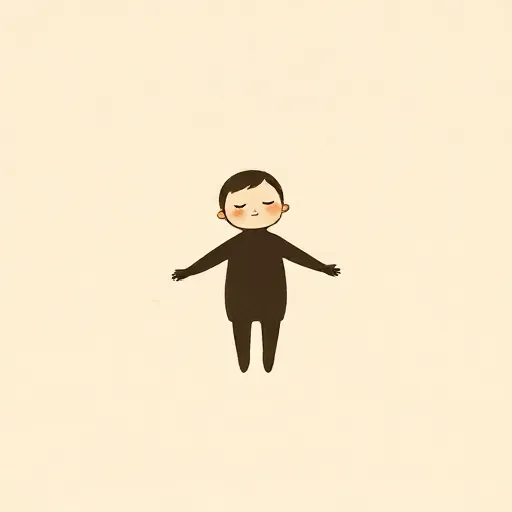
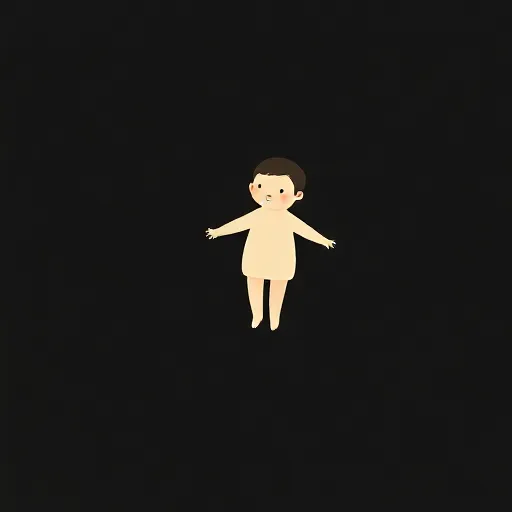
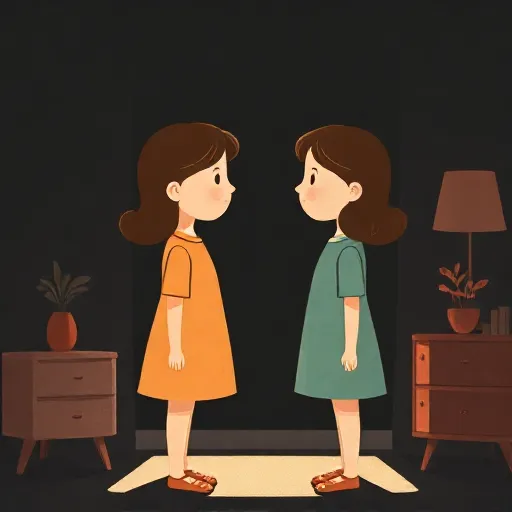
A philosophical zombie is not the spooky monster from horror movies. It’s defined purely as a creature that is molecule-for-molecule identical to a normal human being in all physical respects, with exactly the same brain states and behavior, but that has no conscious experience. When a zombie stubs its toe, it cries out and grimaces — but it feels no pain. It says “Mm, I love that smell” when coffee is brewing, yet there’s nothing it’s like to be that zombie. It has all the physical properties that we have, but none of the qualia — the particular what-it-is-like feelings of experience: the redness of red, the sting of a bee, the coolness of water.
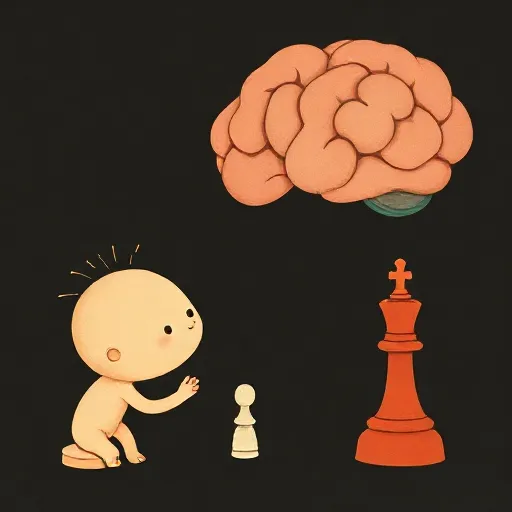
This idea challenges physicalism, the view that everything about our minds, including consciousness, is made up of purely physical stuff. If zombies are even possible, then you could have the physical story complete in every detail and still be missing consciousness. That would mean the physical facts alone don’t force consciousness to exist — there’s an extra ingredient. It’s a way of asking whether God, after creating the entire physical universe with all its atoms and forces, would still have to do something else to fill it with feelings. Physicalists must answer no: by making the physical world as it is, consciousness automatically comes along. If the zombie idea is even conceivable, physicalism is in trouble.
Can You Really Imagine a Zombie?

David Chalmers (born 1966) brought zombies back to center stage in the 1990s. He claimed that zombies are conceivable — you can think of their situation without finding a contradiction, the way you can’t think of a square circle. He offered thought experiments to support this. Imagine a team of tiny people inside your skull, each one doing the job of a single neuron: receiving signals and passing them along with cell phones. Would that system feel anything? Many people can at least conceive that it wouldn’t. If that’s conceivable, then swapping the tiny people back for ordinary neurons shouldn’t automatically switch on the light of consciousness. So it seems you can conceive of a being that functions just like you but lacks inner experience.
Other philosophers push back. Daniel Dennett (born 1942) argues that people who think they’ve imagined a zombie haven’t really followed through. If you truly imagine a creature with all the same physical parts and behaviors as you, he says, you’ve already imagined a conscious being — you just haven’t noticed it because you’re not imagining in enough detail. David Papineau (born 1947) and others suggest we may not even know all the relevant physical facts about the brain, so we’re not in a position to declare with certainty that we can conceive of a full physical copy without consciousness. And some philosophers worry about what zombies would say. If your zombie twin says “I’m in pain,” is it lying? Mistaken? If its words are meaningless, then maybe zombies are not really conceivable after all.
The debate over conceivability is messy. What seems obvious to some strikes others as a failure of imagination. That’s why the argument doesn’t rest on a mere gut feeling — it tries to build a bridge from conceivability to possibility.
From “I Can Picture It” to “It Could Really Happen”
Even if zombies are conceivable, does that prove they are genuinely possible? The simplest conceivability argument runs like this: (1) Zombies are conceivable. (2) Whatever is conceivable is possible. (3) Therefore zombies are possible — and physicalism is false. This argument is logically valid, but both premises are hotly contested.
The second premise is especially slippery. Some things are conceivable in a loose way but turn out to be impossible once you learn more facts. For centuries people could conceive that water wasn’t made of H₂O, but now we know that water just is H₂O, and it’s impossible for it to be anything else — not just physically impossible, but metaphysically impossible. Saul Kripke (1940–2022) showed that some truths are necessary a posteriori: we learn them through experience, but once we do, we see they couldn’t have been otherwise. Many physicalists say consciousness fits this pattern. Brain states might be identical to conscious states in a way that isn’t obvious at first, so a zombie world feels conceivable even though it’s actually impossible.
Chalmers counters that consciousness is different from water. With water, once you know all the physical facts, you can see why it must behave as it does. But with consciousness, even a complete physical description of the brain seems to leave an explanatory gap — you can still ask, “Why does all this biological activity feel like something?” If that gap is real, then the physical facts don’t logically force the presence of qualia, and zombies aren’t just a trick of our imagination.
Physicalists have another reply: the phenomenal concept strategy. This says we have a special way of thinking about our own experiences (phenomenal concepts) that makes the link between brain and feeling seem looser than it is. When you think about pain using a phenomenal concept — the concept that captures what it’s like to hurt — you’re using a concept that points directly to the feeling itself, not to its physical cause. That can create the illusion that pain is a separate, nonphysical thing, even if it’s really identical to a brain process. If that’s right, zombies can be conceivable without being possible, and physicalism survives.
Why It Still Matters: The Robot Sitting Next to You
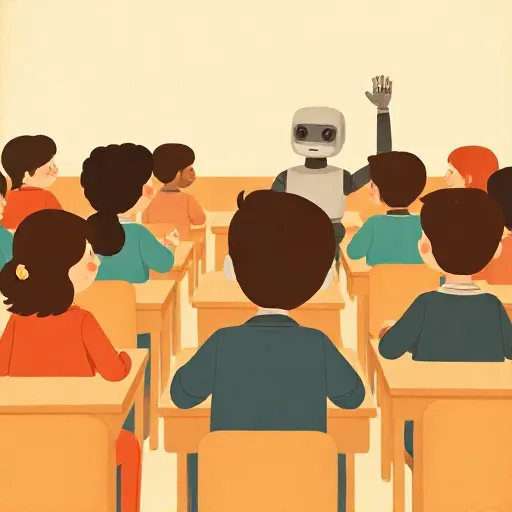
The zombie debate isn’t just about far-off possible worlds. It directly nudges questions you already live with. Could a machine ever truly feel anything, or would it always be a zombie? When a future robot says “I’m happy to see you,” is it merely processing data the way your brain does, or is there a glow of real happiness inside? If zombies are possible, then even a flawless physical copy of you — one with every neuron firing exactly the same — might have no inner life, and there would be no way for anyone else to tell. That would make the problem of other minds even sharper: if a zombie twin is conceivable, how can you be sure anyone around you actually has experiences like yours?
The same reasoning ripples into evolution. If consciousness takes no physical work and does nothing physical, why would it have evolved at all? A zombie would run from a predator just as swiftly. Some philosophers think the puzzle of zombies forces us to treat consciousness as a fundamental part of reality, maybe even woven into the universe’s fabric in a way we haven’t yet understood. Others think the whole zombie idea is a powerful illusion produced by the unique way our minds grasp themselves — a mirage that disappears the moment you try to touch it.
Right now, there’s no knockdown answer. The pull of the zombie intuition is strong: it’s hard to shake the feeling that a purely physical world could chug along in perfect silence on the inside. But history shows that deeply convincing intuitions — like the sun circling the Earth — sometimes dissolve under closer inspection. Whether zombies are a guide to reality or a trick our brains play on us remains one of philosophy’s liveliest disputes. And every time you wonder what it’s like to be someone else — or something else — you’re stepping right into the middle of it.
Think about it
- If you met a robot that behaved exactly like a person and claimed to have feelings, what could ever convince you it really did — or didn’t?
- Suppose scientists built a perfect physical copy of your best friend but told you the copy might be a zombie with no inner experience. Would you treat the copy the same way? Why or why not?
- Is it harder to believe that your own feelings are just brain processes, or that there could be an exact physical twin of you who feels nothing at all? What makes one idea feel more uncomfortable than the other?