
How Do You Know Your Friends Aren’t Zombies?
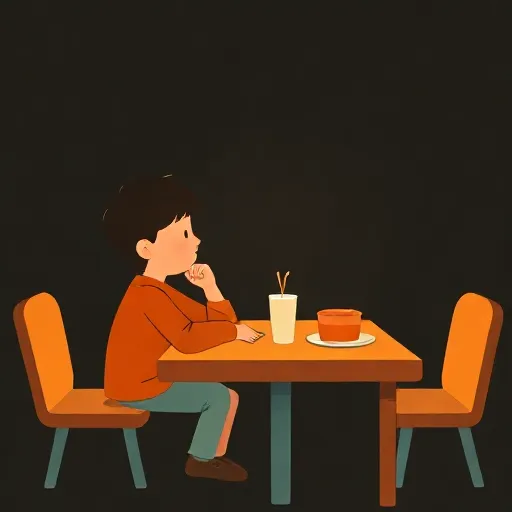
A Scary Thought: Are You All Alone?
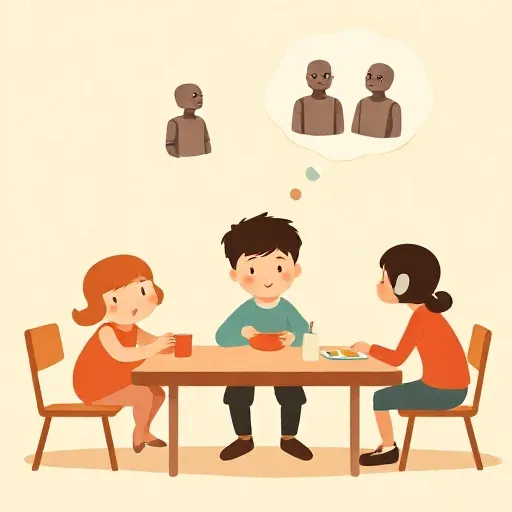
Imagine you’re at lunch. Your friend Mia cracks a joke, and you see her grin. You hear her laugh. You’d probably say Mia feels happy. But here’s a strange question: how do you know that? You can’t climb inside her head. You can’t feel her happiness the way you feel your own. All you ever get is a smile, a sound, a twinkle in her eyes.
The 17th-century philosopher René Descartes (1596–1650) pushed a much darker doubt. He asked: what if an evil demon (or a mad scientist) tricked me into believing there’s a world outside my mind? That same doubt can be aimed at other people. Maybe everyone around you—parents, friends, strangers—are actually automata, or what we’d now call zombies. They move and speak like you, but inside they’re completely blank: no thoughts, no sensations, no feelings at all. If that were true, you’d be the only thinking, feeling being in the universe. Philosophers name this lonely possibility solipsism.
This isn’t the everyday suspicion that someone is faking an emotion—that’s a “thin” problem. The thick, radical problem is that you might be totally alone even in a crowded room. Most philosophers think this extreme doubt is impossible to prove wrong for certain. The real question is: do we have good reasons to believe others do have minds?
The Argument from Analogy: “They’re Like Me”
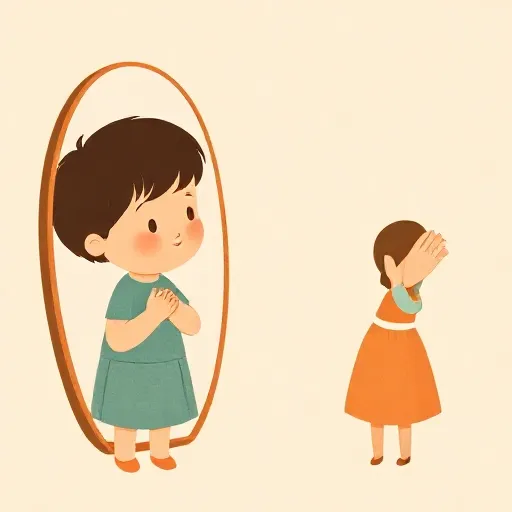
One of the oldest answers is the argument from analogy. The British thinker John Stuart Mill (1806–1873) put it plainly. First, other people have bodies like yours. Second, those bodies do things—laugh, cry, run away—that in your own case you know are caused by feelings. So you conclude that their bodies are probably accompanied by feelings too. It’s like recognizing that two different campfires both produce smoke; you infer both have fire, even if you can only see one flame.
For years, this felt like common sense. Bertrand Russell (1872–1970) and others used it. But soon serious cracks appeared.
Why Analogy Falls Short

The first crack: the conclusion is impossible to check. When you guess about a fire, you can walk over and look. But you can’t open Mia’s mind and directly inspect her happiness. Critics pointed out that there’s no possible observation that could settle the question—ever.
The second crack: the whole argument starts from a single case—your own. Usually, a good analogy needs multiple examples. Here you have only one person (you) whose inner life you know directly. Starting from one case is risky.
The deepest crack came from philosophers influenced by Ludwig Wittgenstein (1889–1951). They attacked the very first step: “I know from my own case what a feeling is.” The idea that you learn what “pain” or “joy” means by peering inward, all by yourself, seems to assume you could have a private language—a language only you could ever understand. Wittgenstein argued such a private language would be impossible, because there’d be no way to tell if you were using a word correctly. As he wrote, in that situation “whatever is going to seem right to me is right.” That isn’t a rule at all. If we can’t even form the concept of “pain” privately, then you can’t use your own case as a template to understand others. This worry leads to a conceptual problem: maybe you can’t even think about other minds, let alone know them.
A Better Guess? The Best Explanation Argument
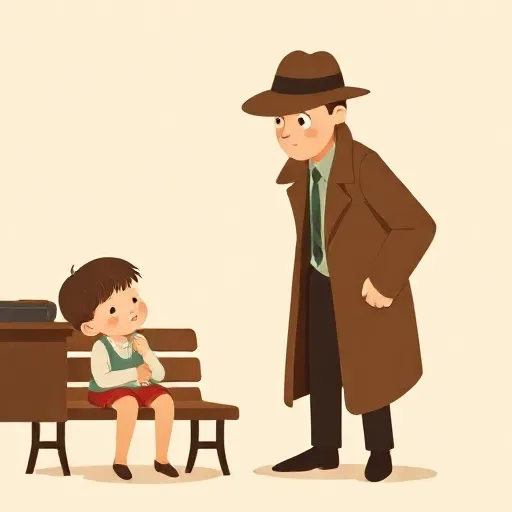
If the analogy argument is shaky, maybe we reason the way scientists do. This is the argument from best explanation (also called abduction). The idea is simple: we observe behavior and ask, “What invisible thing best explains all this?” The best explanation, many say, is that other people have real minds. As the philosopher David Chalmers (born 1966) once put it, this is as good a solution as we’re likely to get.
Think about it. If Mia cries after a fall, what’s a better explanation—real pain, or that an invisible puppet master is pulling her strings? Most people find the mind-hypothesis far more reasonable. Unlike analogy, this argument doesn’t have to lean on your own case. It just says the whole picture makes sense if minds exist. It also works for creatures whose behavior is very different from yours—a pet parrot, an octopus, a person who uses a wheelchair but still communicates in unexpected ways.
However, some philosophers, like Alan Melnyk, think best explanation still borrows from your own case anyway, because you wouldn’t even think of “pain” as a hidden cause unless you first experienced your own pain. Others worry that treating minds like hidden scientific objects—like electrons—misses something crucial: the subjective, felt quality of being sad or tasting chocolate. And if minds are nothing but hidden inner causes, the old skeptical worry—that the inner cause might be absent—keeps its grip.
Can You Just See Another Person’s Feelings?

Maybe we’ve been thinking about this wrong from the start. A century ago, Nathalie Duddington (1886–1966) insisted that our knowledge of other minds isn’t based on reasoning at all. It’s as direct as seeing a tree. When a friend’s shoulders slump and her eyes glisten, Duddington argued you don’t infer sadness—you perceive it. The sadness is right there in her expressive body.
More recently, Fred Dretske (1932–2013) defended a careful version of this. You can’t literally see the sadness, just as you can’t see the heat inside a hot stove. But you can see that the stove is hot, and you can see that someone is happy, if the conditions are right. What matters is reliability: if a person wouldn’t look happy unless they really were happy, then seeing the look can give you knowledge.
John McDowell (born 1942) goes further. He says we should think of behavior as genuinely expressive of mind, not a veil that hides it. When a child’s face lights up with delight, that delight isn’t trapped behind the smile; it lives in the smile. On this view, our ordinary way of talking—“I can see you’re upset”—isn’t just a loose metaphor. It’s a real perception. Of course, people can pretend. But McDowell insists that the possibility of faking doesn’t show that everyone is always faking, any more than a funhouse mirror proves all mirrors lie.
Philosophers in the phenomenological tradition, like Max Scheler (1874–1928), made a similar point: we experience feelings directly in gestures and facial expressions, not by internal detective work. This doesn’t mean we read minds perfectly; it means that understanding others is often a form of seeing, not solving a puzzle.
Why This Still Matters: Sharing a World
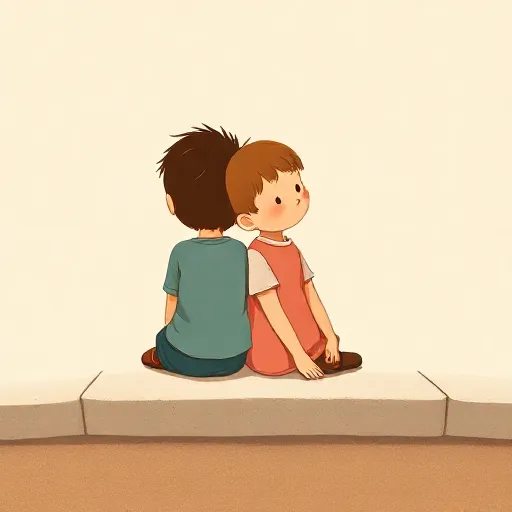
You might be thinking, “Okay, but I still can’t be 100% sure anyone else is real. So what?” The American philosopher Stanley Cavell (1926–2018) suggested we’ve been asking the wrong question. Instead of demanding proof, he said, notice that the whole problem has two sides: I worry about whether I can know you, but I also fear that you might not truly know me. That fear isn’t solved by logic—it’s addressed by how I express myself and how you respond.
Cavell called the crucial thing acknowledgment. You can stare at a friend’s tears and pile up evidence, but what you do—handing her a tissue, listening—is a way of treating her as a fellow mind. Acknowledgment isn’t knowledge; it’s an action that shows you take another person seriously. Even toddlers respond differently to people than to toys, gazing longer, reaching out. They don’t need an argument to do it.
In your own life, every conversation, every shared laugh, rests on a kind of unspoken trust that the person across from you is genuinely there. That trust might not be bulletproof, but it’s what makes friendship, apology, and even disagreement meaningful. The problem of other minds doesn’t disappear, but it transforms. The question becomes not just “How do I know?” but “How do I live with others in a world we share, even though we can never swap heads?”
Think about it
- If you had a perfect virtual reality game where every character acted exactly like a real person, would you treat them the same way you treat your friends? Why or why not?
- Could a robot ever convince you that it truly feels sad—not just follows a program—and what would it take for you to believe it?
- You know your own thoughts directly, but everyone else infers yours from what you say and do. Does that make you the world’s expert on yourself, or can someone else sometimes understand you better than you understand yourself?