Can Morality Really Be a Tidy System? Bernard Williams Said No
The Lifeboat Decision
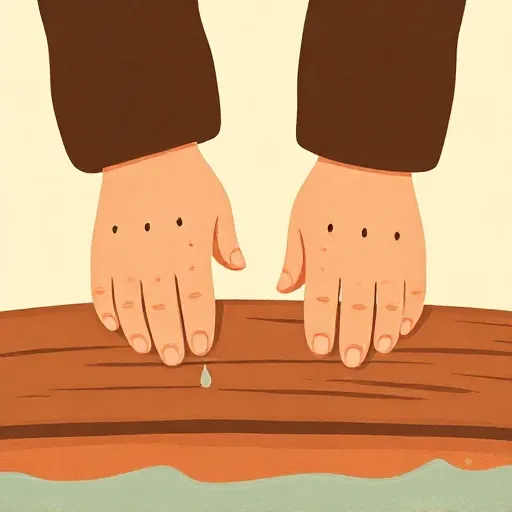
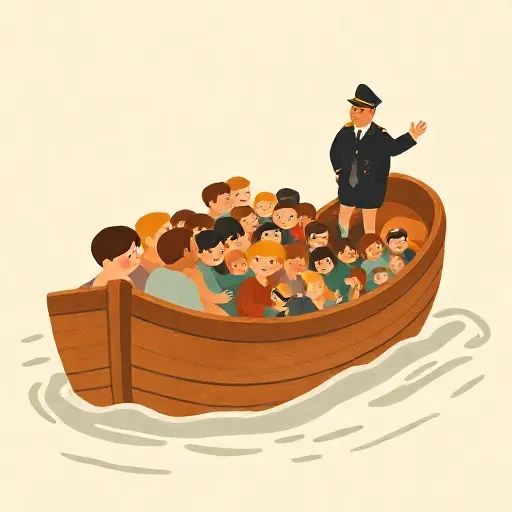
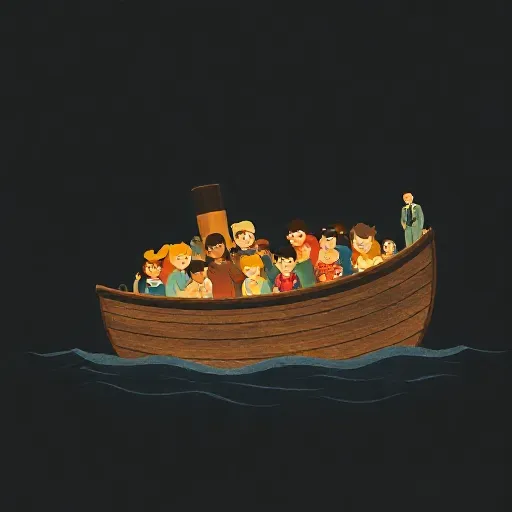
Imagine you are the officer of a sinking ship. The lifeboat is already dangerously full. More swimmers are trying to climb aboard, but if you let them on, the boat will capsize and everyone will drown. So you take the spare oar and push them away — forcing desperate, drowning people back into the water. You save those already in the boat, but you will never forget the sound of the oar hitting their hands.
Afterward, you feel a crushing anguish. A rule-follower might tell you, “You did what morality required; don’t give it a second thought.” But that feels wrong. Your regret is real, justified, and part of what it means to be a moral being.
This is the kind of story the philosopher Bernard Williams (1929–2003) loved to tell. He spent his career arguing that neat, abstract moral theories cannot capture the messy texture of real life. Williams believed that tidy rulebooks — whether they come from utilitarians, Kantians, or even his own teacher — distort what it means to face a genuine ethical problem. And he thought the deepest reasons we have are rooted in the people and projects we care about most.
Morality’s Peculiar Institution
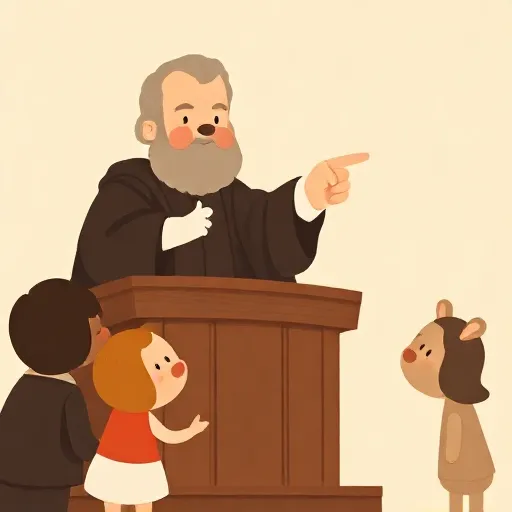
Williams grew up at Oxford, studying the ancient Greeks and arguing with his tutor Richard Hare (1919–2002). Hare believed that moral language had a strict logic: whenever you use “ought,” you are making a universal prescription. You are telling everyone in a similar situation what they must do. For Hare, a moral command was like a law written into the very words we speak.
Williams found this approach empty and boring. He thought it turned lived experience into a dry logical puzzle. He called the whole tradition of modern moral theory the morality system — and he compared it, with deliberate unease, to a “peculiar institution.” (That phrase was the American South’s euphemism for slavery; Williams wanted you to bristle.)
The morality system, as Williams described it, is built on several linked ideas: moral obligations are practical (you can always do them); they never really conflict; they are inescapable (you can’t opt out); they are overriding (they always beat other concerns); and blame is the automatic response when you fail. Most importantly, the system demands purity — it wants to judge you only for what you voluntarily control, leaving no room for accident or luck.
Williams attacked each piece. In real life, obligations do clash, and no argument can simply make one disappear. The lifeboat officer feels agent-regret — regret not just that a bad thing happened, but that he made it happen. That feeling remains even if every theory says he did the right thing. For Williams, this shows that morality cannot be reduced to a checklist of duties that magically cancel each other out.
He also thought that not everything important can be turned into an obligation. Gratitude, love, artistic ambition — these give life its meaning, but they don’t fit neatly into a system of rules. Williams reversed the usual order: what is important is what makes a human life meaningful, and obligations are only one small part of that. Morality cannot be inescapable, because there are things more important than morality itself.
Against the Calculators: The Integrity Objection

Williams saved some of his sharpest attacks for utilitarianism — the view that the right action is always the one that produces the most total happiness or well-being. He thought it was the most extreme version of the morality system.
Utilitarianism asks you to be completely impartial. Your own projects and feelings count for no more than anyone else’s. You are supposed to step back, calculate which action will add the most to the world’s happiness score, and then do it — even if that means abandoning the people and passions that define you.
Williams illustrated this with his story of Jim. Jim arrives in a South American village where a military firing squad is about to execute twenty randomly chosen locals. The captain offers Jim a deal: if Jim shoots one villager himself, the other nineteen will go free. If Jim refuses, all twenty die. Standard utilitarianism says Jim must pull the trigger: nineteen lives saved is better than twenty lost.
But that demand, Williams argued, is absurd. It requires Jim to treat himself as nothing more than a pipeline for consequences — a channel between the world’s happiness inputs and outputs. Jim is not merely a calculator. He is a person with a life structured around ground projects: the deepest commitments that give his existence its shape and purpose. Demanding that he set all that aside, even in a crisis, is “an attack on his integrity.”
For Williams, integrity didn’t mean simple honesty or virtue. It meant wholeness — the unimpaired state of being a person whose actions flow from what she genuinely cares about. Utilitarianism, by requiring an absolute impartial point of view (what one Victorian philosopher memorably called “the point of view of the universe”), destroys that wholeness. No one can really live from no point of view at all. Your life is yours, and that cannot be a mere data point in a cosmic ledger.
Reasons Come from Inside You

Williams’ most famous single idea is the internal reasons thesis. The claim is simple: you have a reason to do something only if it connects, in the right way, to something you already care about.
He called the collection of things you care about — your desires, loyalties, projects, and commitments — your subjective motivational set, or S. A real reason must either hook directly into your S, or be reachable by a sound deliberative route: a path of careful thinking that starts from where you already are. If nothing in your S can connect to a supposed reason, then it’s not a reason for you at all. It’s what Williams called an external reason — something that pretends to tell you what to do from outside, like a voice from nowhere.
Think of a bank-robber. Most of us would say he has a reason not to rob banks. But if he genuinely doesn’t care about being part of society, about the love of others, or about any of the things that not robbing banks would protect, then from his own S there may be no internal reason to stop. That doesn’t mean robbing is fine. It means the moral demand doesn’t take the form of a reason that applies to him automatically. It rests, instead, on the fact that the rest of us care, and on the hope that most people have the kind of social motivations that make morality stick.
This is a deep challenge to the old rationalist dream of a universal moral law that every rational being must obey. If reasons must always be internal, then morality cannot be built on commands that hover above human life. It has to grow out of what people actually care about. And if someone’s S is isolated or twisted, moral language can’t magically create a reason where none exists.
Williams did not think this made morality arbitrary. He believed that most people, through sound deliberation, would converge on motivations that support decent and humane living. But he insisted that we can’t claim more than that. The world of morality is held together by empathy, not by logical necessity.
What About Luck and the Artist?

One more twist runs through all of Williams’ thinking. The morality system wants to judge you only for what you voluntarily control. But life is soaked in moral luck — things beyond your control that affect how we evaluate you.
Consider the fictional Gauguin (inspired by the real painter). He abandons his family to move to Tahiti and become an artist. If he fails and produces mediocre work, we condemn him harshly. If he succeeds and creates revolutionary masterpieces, many of us will, however grudgingly, say he was justified. But success or failure is largely outside his control. That means our deepest judgments of blame and praise depend on luck.
Williams thought this was not a mistake to be corrected, but a truth to be acknowledged. The same goes for the driver who, through no fault of his own, accidentally hits a child. We don’t tell him his anguish is irrational just because he wasn’t reckless. The mark of what he has done stays with him. The ancient Greeks called it miasma — a stain that clings to the agent regardless of intention. Williams believed we still understand that terror, because “in the story of one’s life there is an authority exercised by what one has done, and not merely by what one has intentionally done.”
Why This Still Matters

Williams didn’t offer a new theory to replace the old ones. He thought that was exactly the point. Ethical life, he believed, is too rich, too particular, and too deeply personal to be captured by any single system.
But his ideas are not just about tearing things down. They open up a different kind of freedom. If reasons come from within, then you have the responsibility — and the liberty — to shape your life around the projects that genuinely move you. No outside rule can simply dictate what makes your life meaningful. At the same time, you can’t escape the fact that your choices entangle you with other people, with luck, and with consequences you will be held to account for, whether you like it or not.
Next time you face a choice that pits an abstract rule against someone you love, or a passion of yours against what “everyone says” you ought to do, Williams would ask you to stop and notice: the deep sources of your action are not a mistake. They are what make you an agent at all.
Think about it
- Can you think of a time when following a rule felt wrong because of someone you care about — and how did you decide what to do?
- If a person truly does not care about anyone’s suffering, do you think they still have a reason not to harm others — or does your sense that they “should” come from somewhere else?
- Should we judge an artist who abandons their family to create great art differently if their art turns out to be a masterpiece? Why might that feel unfair, yet also natural?