Can a False Idea Be More Useful Than a True One?
When “False” Gets the Job Done
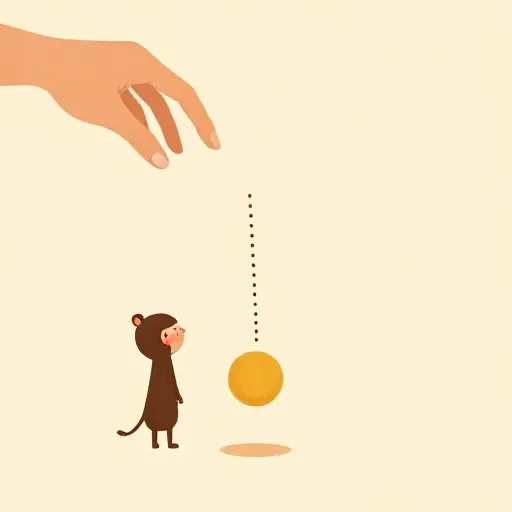
It is 2025, and your science teacher asks you to calculate how fast a ball will hit the ground if you drop it. Then she adds, “Assume there is no air resistance.” You know the air is real, but you go along with her pretend world. Within minutes the math clicks, and your answer is almost exactly what an experiment would show.
That tiny move—pretending something false to get a useful result—has a name: a fiction. Over a hundred years ago, a German philosopher named Hans Vaihinger (1852–1933) spent his life studying why and how we use such fictions. His conclusion was shocking: much of our best thinking, from science to everyday life, runs on ideas we know are not true. Vaihinger called his view fictionalism, and his giant book The Philosophy of As If (1911) made him a celebrity overnight. He argued that the mind is not built to copy reality. It is built to help us survive, and sometimes a useful falsehood is exactly what we need.
The Man Who Saw Fictions Everywhere
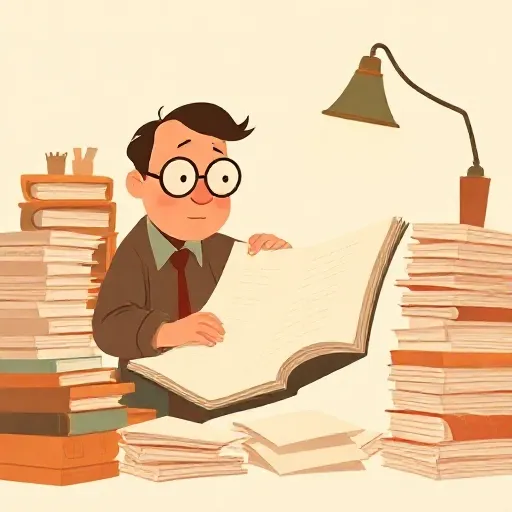
Vaihinger’s life was as unusual as his ideas. Born near Tübingen, Germany, he began studying theology, but quickly turned to philosophy and science. The thinker who changed everything for him was Friedrich Lange, a Neo-Kantian who argued that the latest research on the senses supported the idea that we can never know things as they really are—only as they appear to us. Vaihinger also soaked up the evolutionary ideas of Charles Darwin and the dark psychology of Arthur Schopenhauer, who claimed our intellect is just a tool for the will to survive. Vaihinger wove these threads together, but it took him more than thirty years to finish his masterpiece.
While working as a professor at the University of Halle, Vaihinger lost his eyesight almost entirely to cataracts. He dictated parts of his book from memory. The finished work, Die Philosophie des Als Ob, ran nearly eight hundred pages and listed hundreds of fictions from law, mathematics, physics, ethics, and religion. It went through ten editions during his lifetime and drew the attention of Einstein and Freud. Yet personal tragedy haunted him: his daughter died by suicide, his son was left incapacitated by the war, and after the Nazis rose to power, his liberal, pacifist philosophy was silenced. He died in 1933, largely forgotten. But the puzzle he raised—how can false ideas work so well?—never really went away.
Real Fictions and Semi-Fictions: More Than Just Mistakes

Vaihinger did not think all false ideas are equal. He split them into two kinds. Semi-fictions were ideas that are simply not true, but not impossible. When physicists treat the sun and the earth as tiny mass points to calculate their gravitational dance, they are using a semi-fiction. The real planets are huge, lumpy balls, but ignoring that lets us make predictions that are nearly perfect.
The second kind, real fictions, are ideas that are not just false—they contradict themselves. Take the ancient idea of an atom as a hard, indivisible particle that takes up no space. That is impossible: if it takes up no space, how can anything be solid? Yet, Vaihinger pointed out, scientists used that contradictory picture for centuries and made huge progress. Another example: Archimedes proved the area of a circle by treating it as if it were a polygon with infinitely many straight sides. The sentence “If the circle were a polygon, then it would be subject to the laws of rectilinear figures” is a fiction—the “if” part is impossible. But the reasoning works. Vaihinger insisted that such fictive judgments do not collapse into nonsense; their usefulness does not depend on their truth.
A key distinction separates fictions from hypotheses. A hypothesis says, “Maybe matter is made of atoms—let’s check.” A fiction says, “I know this is not literally true, but I will think as if it were, because that helps me.” Vaihinger believed many famous debates in science get stuck because we mistake one for the other. Atomism, for instance: critics say the idea is contradictory, so it must be false. Supporters say it is too useful to abandon. Vaihinger’s solution: both sides are half-right. Atomism is a fiction, not a failed hypothesis. We should keep it, but stop pretending we believe it.
Kant’s Secret Toolkit
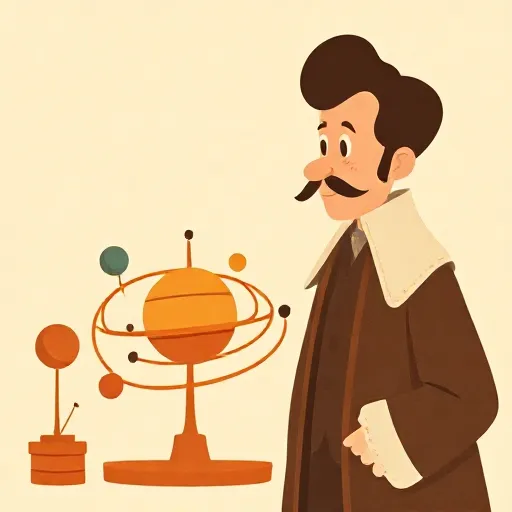
Vaihinger’s favorite example of a hidden fiction came from the philosopher Immanuel Kant (1724–1804). Kant argued that our reason is driven to think about things we can never experience directly—like God, an immaterial soul, or the freedom of the will. He called these regulative ideas. They do not give us knowledge of real objects, but they guide our thinking. Kant sometimes slipped and called them “heuristic fictions,” and Vaihinger pounced on this phrase. He argued that for Kant, such ideas are not things we should believe exist. They are tools we use as if they existed: looking at nature as if a wise designer made it, or acting as if you have free will, even if the universe is a chain of causes.
Vaihinger went further. He claimed that even Kant’s most basic building blocks—substance and cause—are fictions. When you say a tree is green, you imagine a “thing” that has the greenness. But a bare substance with no properties is impossible to picture. And when you say the sun causes the warmth, you add a connection that is not itself a sensation. For Vaihinger, all we ever directly experience are sensations. Concepts like objects, selves, and causes are fictions we invent to organize the chaos of sensations. Kant himself, Vaihinger believed, was already halfway there but never quite admitted it. Vaihinger’s own position, which he sometimes called idealistic positivism, held that nothing exists except sensations—everything else is a useful fiction.
Why Our Minds Love Pretending

Why would a mind be built to use ideas it knows are false? Vaihinger answered with evolution. He saw the human mind as an organ, like a stomach or a wing. Its original job was not to paint an accurate picture of the universe, but to keep its owner alive. To find food, avoid danger, and cooperate, you need to predict what will happen next. You do not need perfect truth. What natural selection favored, Vaihinger argued, was whatever mental shortcuts let you act fast and effectively.
Schopenhauer had said the intellect is a servant of the will—a tool for getting what the organism wants. Darwin gave Vaihinger a way to make that idea scientific. If our cognitive abilities evolved to serve survival, then there is no reason to demand they mirror reality. A fiction that saves your life is better than a true belief that leaves you frozen. Vaihinger added a Darwinian twist he called the “Law of Preponderance of the Means over the End.” A trait that evolves for one purpose often gets carried away and develops far beyond what survival requires. Our thinking, he suggested, overshot its original job. It became capable of mathematics, philosophy, and science—but it still carries the old habit of making things up when that is the most practical move.
Why It Still Matters

Vaihinger’s ideas never fully took over philosophy, but they echo everywhere today. In physics, we still treat planets as points, gases as ideal billiard balls, and light as both a wave and a particle—two incompatible models that each work as if they were true. In economics, we calculate with the fiction of a perfectly rational person who never makes mistakes. In law, we treat a corporation as a person that can sign contracts and be punished. None of these is literally true, yet they are indispensable. Vaihinger’s insight helps us see that giving up the dream of a single, true picture of the world can make us more clear-headed, not less.
And the pattern is not just for scientists. Every time you play a board game, you treat a colored piece of plastic as if it were an army. When you read a story, you feel fear for a character you know does not exist. When you promise a friend something, you act as if the future is open and your choice is free. These are not mistakes. They are fictions that make cooperation, imagination, and meaning possible. Vaihinger would say you are not doing something irrational. You are doing exactly what the most sophisticated theories do: using an “as if” to get something important done.
Think about it
- If you use a false idea to build a bridge that never collapses, is the idea still a “fiction” or does its success make it true in some way?
- Can you think of a time when pretending something was true (like a game or a story) helped you solve a real problem? How is that different from lying?
- If our brains evolved to help us survive, not to discover absolute truth, should we trust science less, or trust it more as a powerful tool for navigating the world?