When Did You Stop Being a Child? The Puzzle of Vague Words
The Two-Headed Man: A Question with No Right Answer
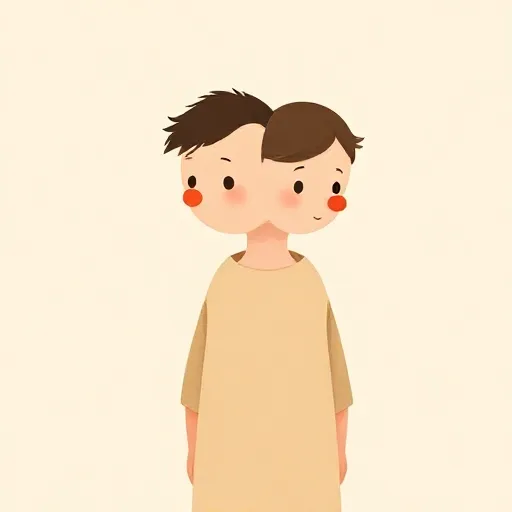
If you cut one head off a two-headed man, have you decapitated him? The word “decapitate” seems to mean “make headless” or “remove the head.” But if the man still has another head, is he headless? The question feels impossible to answer—not because we need more facts about anatomy, but because the word itself just does not cover this weird situation. That is a clue that something is strange about the way words get their meaning.
Imagine you are looking at a boy who might be considered overweight. You cannot tell by sight alone. His mother calculates his body mass index; a number above 30 means “obese.” But what if the number is exactly 29.9 or 30.1? There is still a borderline. Eventually, you reach a point where no test can settle whether he counts as obese, because the idea of obesity does not draw a perfectly sharp line. This is an absolute borderline case—a case that resists any attempt to find a yes-or-no answer.
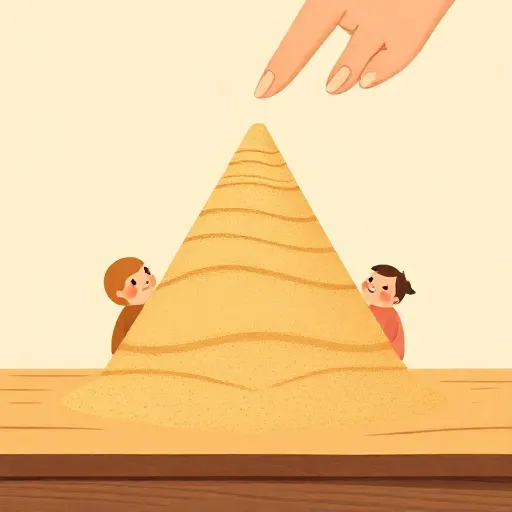
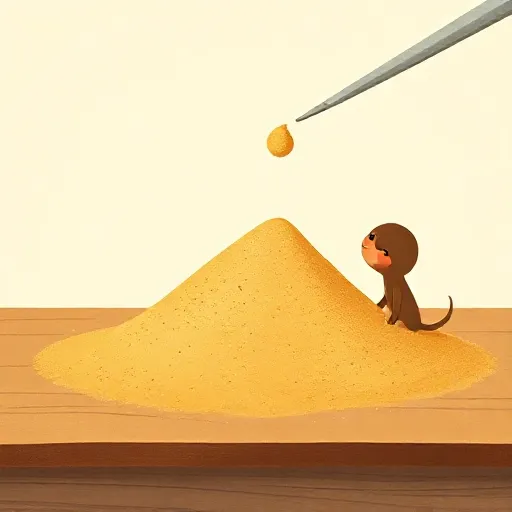
The American philosopher Charles Sanders Peirce (1839–1914) was one of the first to study this. He said that a term is vague when there are possible situations about which it is genuinely uncertain whether the term applies—uncertain not because we lack information, but because the meaning itself does not settle the matter. For Peirce, the classic example was the heap: how many grains of sand do you need to make a heap? You cannot fix a precise number. No amount of concept-checking or scientific measurement can ever answer that question. The trouble is built into the word, not your detective skills.
The Sorites Paradox: When a Heap Vanishes One Grain at a Time
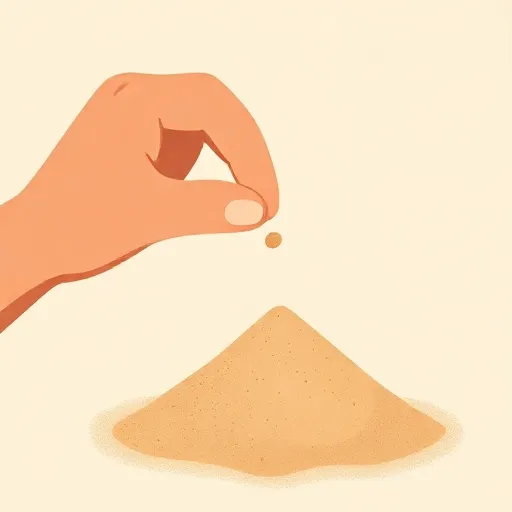
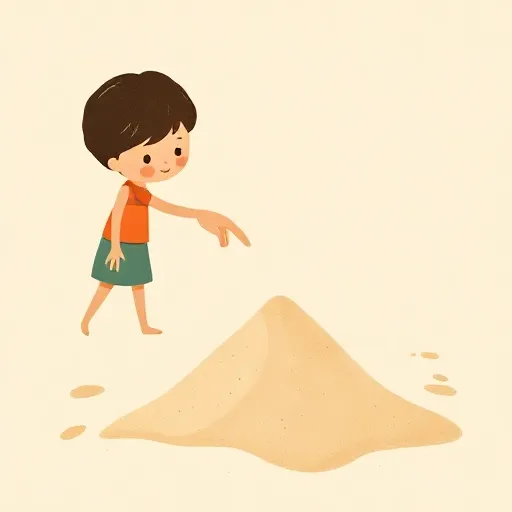
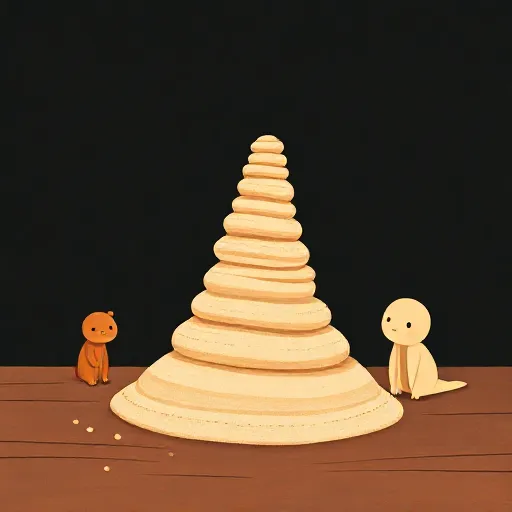
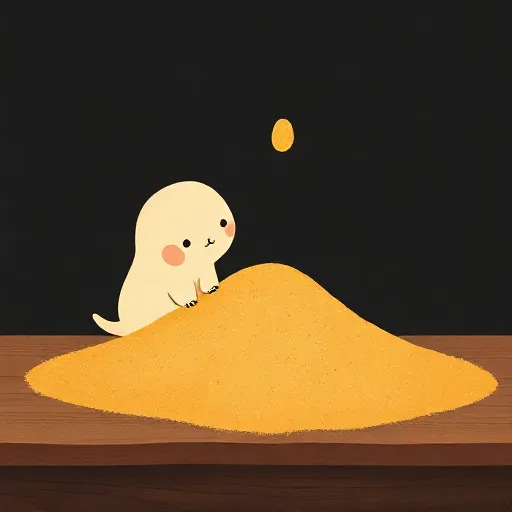
One grain of sand is not a heap. If a collection of grains is not a heap, adding one more grain will not suddenly make it a heap. So, if you start with one grain, you will never get a heap—no matter how many you add. Yet a million grains obviously is a heap. Something has gone wrong. This is the sorites paradox (from the Greek word soros, “heap”). The same logic works for almost any vague word. A one-day-old human being is a child. If someone is a child at age n days, they are surely still a child at n+1 days. Following that rule every single day, we must conclude that a 100-year-old is a child—and that is clearly false.
The sorites forces a stark choice. Either the second step (“If an n-day-old is a child, then an n+1-day-old is a child”) is false, or the reasoning itself has a flaw. Rejecting that step means admitting there is a sharp boundary—a precise day when childhood ends. Most people find that idea ridiculous. But keeping the step and everyday logic crumbles. That is the philosophical challenge of vagueness.
Epistemicists: The Hidden Sharp Line That Nobody Can See
One bold camp, called epistemicism, accepts the surprising outcome: there is an exact threshold—a specific number of days, grains, or hairs—but we cannot ever know where it is. Timothy Williamson (born 1955) argued that the meaning of a vague word depends on how an entire community uses it, which makes the threshold as impossible to predict as a tornado being caused by a butterfly’s wings weeks earlier. We are trapped in a “margin for error.” If you know someone is a child on day 2,000, you do not know they are a child on day 2,001, because if you were right you would only be right by luck. So our ignorance is guaranteed.
Epistemicists keep classical logic perfectly intact—every statement is either true or false—but the threshold becomes a hidden secret of nature. Many philosophers find this view comical. Could you really stop being a child between your 17,550th and 17,551st day (around your 48th birthday)? The idea sounds absurd. Yet according to epistemicists, that sense of absurdity is just a clue that our minds are not built to detect such fine-grained facts.
Making Room for the Blur: Gaps, Degrees, and Shifty Meanings
Most philosophers prefer to soften the logic rather than accept a hidden line. Supervaluationism treats borderline sentences as having truth-value gaps—they are neither true nor false. A sentence like “Either Mr. Stoop is tall or he is not tall” still counts as true, because no matter how you sharpen the word “tall” it comes out true. But standalone borderline claims simply lack a truth-value. This approach keeps many standard logical truths while giving up the rule that every sentence must have one fixed truth-value.
Another approach, many-valued logic, assigns degrees of truth. Instead of just true or false, borderline statements can be 0.6 true, like a dimmer switch. The sorites then becomes less shocking: the truth-value can slide from 1 to 0 as you move grain by grain, without a single sharp drop. Critics object that this merely swaps one sharp line for infinitely many—like 0.323 vs. 0.324—and doesn’t fully solve the puzzle.
Still other thinkers see vagueness as a kind of contextual shifting. Just as the word “here” picks out a different place depending on who says it, “child” might alter its extension as we puzzle through a sorites series. The rules of conversation, they say, stop any single step from producing a false borderline.
Why Your Words Will Always Be a Little Fuzzy
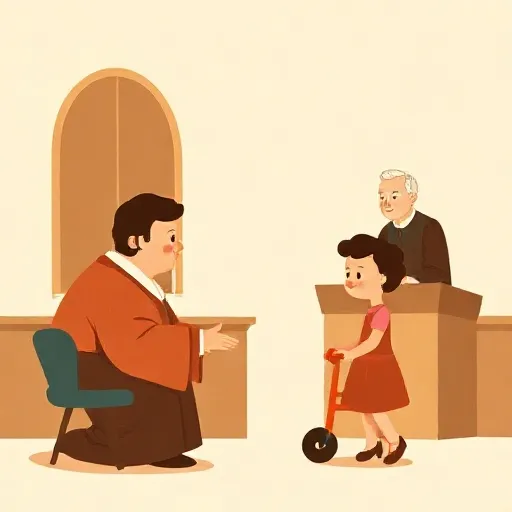
These puzzles matter far beyond philosophy classrooms. Laws are stuffed with vague terms: “reasonable doubt,” “negligence,” “drunk.” A motorist never knows exactly when one more sip makes them legally drunk, so sensible people stay extra sober. That wobbly line may actually prevent more accidents than a perfectly precise number would—because nobody can safely dance on the edge.
Judges cannot simply shrug at a borderline case; they must decide. So they are forced to pick a side even when the concept gives no clear answer, which can make their rulings seem like a lottery. Vagueness also shows up in everyday life. If you say you’ll arrive “noonish,” you communicate usefully without calculating minutes. The sorites paradox reminds us that hunting for absolute precision in words like “kid,” “fair,” or “game” can lead to absurdity. Sometimes the wisest move is to recognize when a question lives in the foggy zone—and to accept that some disagreements really are about where the blur begins.
Think about it
- Imagine a rule: “No vehicles in the park.” Does a kid on a tricycle count? What about a remote-controlled toy car? Where would you draw the line, and why?
- If you knew there was a precise number of hairs that makes someone bald, but that number was permanently secret, would you stop using the word “bald” or just accept the mystery?
- You and a friend can’t agree whether a move in a game is “fair.” Could the disagreement be due to the word “fair” having blurry edges? How might you settle it without just agreeing to disagree?