
Why is “one God in three persons” so hard to believe?
A diagram that seems to break the rules
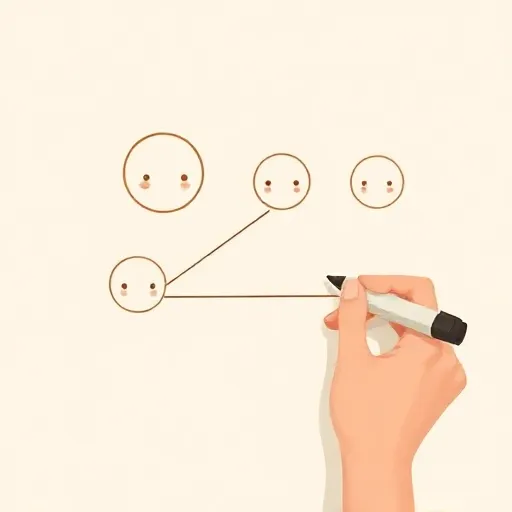
Imagine you’re holding a shield-shaped diagram. At three corners it has the words Father, Son, and Holy Spirit. Lines connect them to a center that says God. The line from Father to God says is. Same for the Son and the Spirit. But the lines between Father and Son, Son and Spirit, Spirit and Father all say is not.
At first glance it seems clear: Father is God. Son is God. But Father is not the Son. Yet if Father and Son are both exactly the same thing as God, then they must be exactly the same thing as each other. That’s the rule of identity — if A equals B, and B equals C, then A must equal C. (Mathematicians call this transitivity.) So the diagram appears to demand both that they are identical and that they aren’t. A contradiction.
This is the oldest puzzle inside the Christian doctrine of the Trinity — the claim that there is one God, but three divine “Persons” (Father, Son, and Holy Spirit). For over 1,700 years, thinkers have wrestled with how these statements can be true at the same time. The challenge isn’t just for believers. It’s a pure exercise in logic: can you describe something that is both one and three without making nonsense?
One‑self solutions: three ways a single person can be
The simplest way out is to say: maybe there aren’t really three separate thinking beings. Maybe Father, Son, and Spirit are three modes of one and the same divine self. A self is just a being that can know things, make choices, and have relationships. If you are a self, and I am a self, we are two selves. The Bible often describes God as a great self — a “He” who speaks, loves, and acts. So if God is a single self, how can there be three Persons?
Early modalists like Sabellius (active around 220) answered: the three Persons are simply different roles God plays in different periods of history. First God acts as Father, then he comes to earth as Son, then after Jesus ascends he operates as the Holy Spirit. That makes the three modes non‑overlapping — one after another. Most Christians rejected this because the New Testament shows Father, Son, and Spirit appearing together, like at Jesus’s baptism. Sabellius also seemed to say the modes weren’t an essential part of God’s innermost nature; they were just temporary ways he showed up.
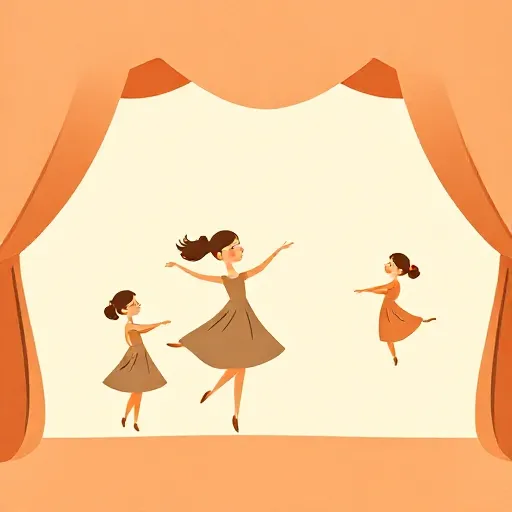
But not every one‑self theory is like Sabellius’s. The contemporary philosopher Brian Leftow (born 1952) offers a more sophisticated version. He asks you to picture a time‑traveler. Suppose the same dancer travels back to the stage again and again, so that at one moment you see a whole chorus line — every dancer identical to the same woman. Leftow says God’s life is something like that, except without time. God, in eternity, lives three complete “life strands” at once. In one strand he is unbegotten and fatherly; in another he is begotten and son‑like; in the third he is the Spirit. All three strands are the same single self — God — just as every dancer in the line is the same woman.
On this view, when we say “The Father is God” and “The Son is God,” we mean that each Person‑constituting life is that one self, just repeated or multiplied. “Father” and “Son” aren’t names of separate selves but describe which way God lives his life. So the diagram’s “is” statements work, and the “is not” statements merely mark distinct life‑strands, not distinct selves.
Critics push back. If the Son is identical to God and the Father is identical to God, haven’t we collapsed them into one? And if the Son prays to the Father, doesn’t that look like one self talking to himself? Leftow replies that time‑travel stories already show us how a single self can interact with another instance of itself without absurdity. Still, many feel the theory leaves too little room for the New Testament picture of a Son who has a genuine friendship with his Father.
Three‑self solutions: one God, but three minds

Another set of thinkers bites the bullet: there are three distinct selves in the Trinity — three centers of knowledge, will, and love. But they insist this doesn’t mean three gods. The challenge is to explain how three selves can still be “one God.”
The Oxford philosopher Richard Swinburne (born 1934) builds an argument from love. A perfectly loving being, he says, would never want to stay alone forever. Love is about giving, sharing, and being loved back. So if a divine Person existed all by himself, he would inevitably bring about a second divine Person to love and be loved by. Then he and that second Person, together, would bring about a third, so that their loving community would be complete. Swinburne argues that divinity itself makes exactly three Persons necessary — no more, no less. The Father eternally causes the Son to exist, and Father and Son together eternally cause the Spirit.
Where is the “one God” in this picture? Swinburne says the word “God” can be used as a name for the whole community — the Trinity. That community acts with a single will. But the community isn’t a self; it’s a whole made of three divine selves as parts. Many critics find this unsatisfactory. If each Person has the divine nature, why aren’t they three gods? Swinburne’s answer — that only the whole should be called “God,” and the pieces are “divine beings” — leaves some wondering whether he has simply accepted tritheism (belief in three gods) and changed the labels.
Another three‑self strategy is the relative identity theory. The philosopher Peter Geach (1916–2013) argued that identity itself is always relative to some kind of thing. It makes no sense, he said, to ask whether a and b are “the same” without specifying “the same what?”. The Father and the Son are the same God, but they are not the same Person. Just as you can say that the morning star and the evening star are the same planet (Venus) but are not the same phase-of-day appearance. If we insist on counting things by God rather than by Person, then there is exactly one God. But when we count Persons we get three.
This approach faces a serious objection: most people think identity is not relative. If Fluffy and Spike are “the same dog,” we assume both are dogs, and Fluffy and Spike are one and the same animal. A trinitarian who says Father and Son are the same God but not the same Person seems to be using “same” in an unusual, invented way. Defenders reply that the idea of identity being relative appears outside theology too — for instance, in puzzles about statues and lumps of clay. But the debate is far from settled.
When smart people say, “It’s a mystery — and that’s okay”

Some philosophers and theologians don’t try to build a neat model. They argue that the Trinity is a mystery — not just something not yet explained, but something in principle beyond full human understanding. This is Negative Mysterianism: we can repeat the approved sentences (“God is three Persons in one substance”), but we can’t turn them into a clear picture. Any analogy we use — a three‑leaf clover, a mind with its thought and its love — falls apart when you poke it. Gregory of Nazianzus, a fourth‑century theologian, finally gave up on analogies and decided to simply worship Father, Son, and Spirit without trying to “get” how they are one.
A stronger version, Positive Mysterianism, says the doctrine actually seems to imply contradictions, and that’s fine because God is so much greater than our minds. Maybe the statements “Jesus is God” and “Jesus is not the Father” clash in a way we can’t resolve, but God’s revelation is trustworthy despite the surface illogic. A few recent logicians have even argued that, in the case of God, some contradictions may be literally true — a view called dialetheism. This is a tiny minority position, but it shows how far the puzzle can drive people from ordinary logic.
Why a 1,700‑year‑old argument still matters to you

The Trinity debate isn’t just about a religious diagram. It forces us to think about identity, counting, and what it means to be a person. Can three things be “one” without being identical? Can a group act as a single “I”? These questions echo beyond theology. Think of a sports team that moves like a single organism, or a band that writes songs together and says the music “came from all of us, not any one.” Are they truly one agent, or just several people cooperating? The Trinity puzzle sharpens these everyday mysteries to the breaking point.
It also teaches you a philosophical skill: spotting when a theory is really changing the meaning of ordinary words. When someone says “it’s three and one, in different senses,” you’ll learn to ask which senses, and whether those senses fit together. That habit helps you evaluate big claims anywhere — in science, politics, or your own thinking. The Trinity may be a specific religious idea, but the mental muscles it exercises are universal.
Think about it
- If twins shared the exact same thoughts, feelings, and decisions at every moment, would they still be two separate people — or just one? Why?
- Suppose your best friend told you something that sounded completely contradictory. Could you believe her anyway, if her track record was flawless? Where would you draw the line?
- Can you think of one thing that is definitely “one” in one way but “many” in another, without being a contradiction? (Look around your kitchen or your classroom.)