What If the Most Important Decisions in Life Are Impossible to Make?
Can You Imagine the Parent You’ll Become?
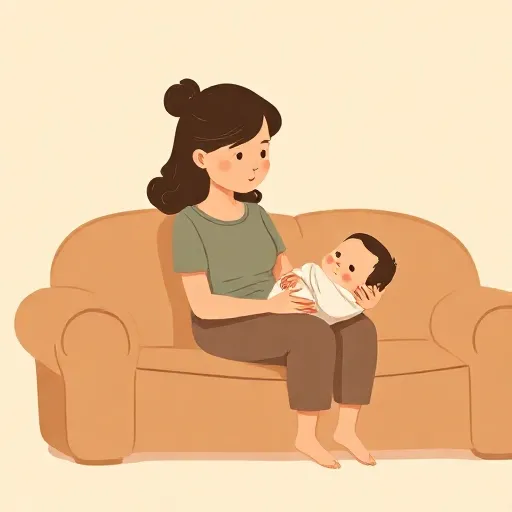
Imagine you’re fifteen and your older sister just had a baby. You watch her change nappies, laugh at tiny fingers, and hum lullabies. You guess what being a parent is like, but deep down you know you don’t feel what she feels. Now picture yourself, years later, trying to decide: do I want a child of my own? No amount of babysitting or listening to parents’ stories gives you the firsthand experience of holding your own crying baby at 3 a.m.
The philosopher L. A. Paul (a 21st‑century thinker) says this is no ordinary choice. Becoming a parent is an epistemically transformative experience: you can’t know what it’s like beforehand. It’s also personally transformative: it changes your deepest preferences and sense of who you are. If Paul is right, then one of the most important decisions in life might be one you can’t really make rationally. That unsettling idea sits at the heart of a huge debate in philosophy.
What Makes an Experience “Transformative”?
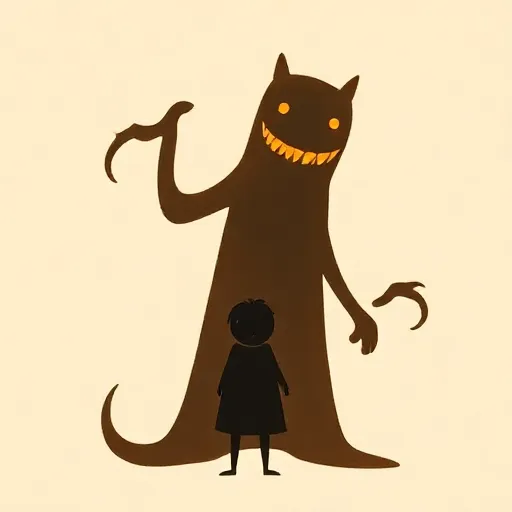
In her book Transformative Experience, Paul opens with a thought experiment. A vampire offers to turn you. You’d gain immortality and new powers, but you’d also crave blood and lose your old self. Could you rationally decide? No amount of reading vampire novels tells you what it really feels like to be one, and the transformation would replace your core identity. That extreme case helps us see why real‑life experiences are puzzling.
An experience is epistemically transformative when you can’t know its phenomenal character—what it is like to live through it—without having it yourself. Tasting vegemite for the first time, seeing colour if you’ve been blind from birth, or falling deeply in love all involve a kind of knowledge you can’t get from descriptions. An experience is personally transformative when it reshapes your core preferences, life goals, or the way you experience the world. The two often go together. Becoming a parent, changing religious beliefs, moving to a completely new culture, or suffering a great loss can all rewire who you are. Paul’s big claim is that such transformations create problems no standard decision‑making can solve.
Can You Know What It’s Like Before You Try?
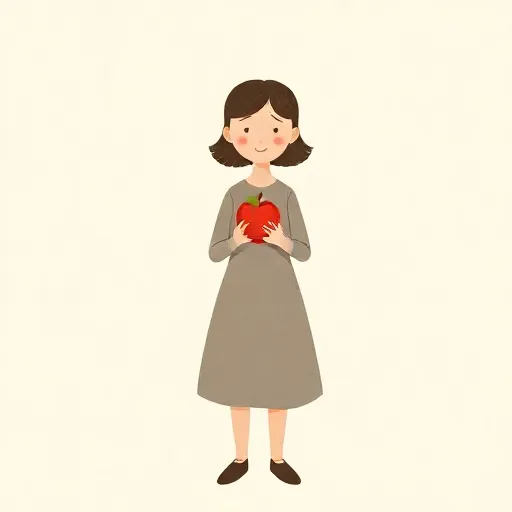
Philosophers have argued for decades about whether you can know what an experience is like before you’ve had it. In 1986, Frank Jackson (a 20th‑century philosopher) imagined Mary, a brilliant scientist who lives her whole life in a black‑and‑white room. Mary knows every physical fact about colour: wavelengths, how the eye works, what people say when they see red. Yet when she steps outside and sees a red apple for the first time, she learns something new—what red looks like. That suggests that “what‑it’s‑like” knowledge can’t be gained from facts alone. Paul applies this idea to transformative experiences: if you’ve never been a parent, you’re like Mary, and the experience will teach you something you just can’t know now.
Not everyone agrees. Some philosophers think you can build up a pretty good idea. Elizabeth Harman (a contemporary philosopher) says caring for a younger sibling or watching a close friend become a parent gives you strong clues. Meena Krishnamurthy (a contemporary thinker) argues that babysitting or raising a pet shares elements with parenting, so you can know something. Amy Kind (a contemporary philosopher) offers a different route: imagination. If someone has a good enough imagination, maybe they can gradually scale up from babysitting to picturing parenthood. Art and fiction might even help us approximate foreign experiences.
Paul pushes back. If your earlier experience was similar enough to let you truly know what parenthood is like, then that earlier experience was your transformative one—you’re not facing the unknown anymore. And for some transformations, like gaining a sense you’ve never had, no amount of imagination seems to work. Even the cleverest attempts at projection probably leave a gap. The debate stays alive: are we just bad at imagining, or is there a real wall between never‑having‑done‑it and knowing?
Is It Rational to Leap Into the Unknown?
Ordinary decision‑making works like this: you list possible outcomes, guess their values and probabilities, and pick the option with the highest expected value. But transformative experiences break both steps. If you don’t know what parenthood feels like, you can’t assign a subjective value to it—how much you’d like it, from your own point of view. And if the experience will change your deepest preferences, the future you might value things completely differently. The person making the decision and the person living the result are almost different selves.
The philosopher Derek Parfit (1942–2017) told a story about a young Russian nobleman who is passionately socialist. He knows that when he inherits a fortune later in life, his ideals might vanish. He tells his wife, “If I lose these ideals, I want you to think that I cease to exist.” The future rich man would be a stranger to his current self. That kind of split makes self‑interested choice impossible—why should the present you decide for someone you won’t even recognise?
Some thinkers have tried to patch the math. Richard Pettigrew (a contemporary philosopher) suggests collecting data about how most people’s preferences change after an experience, then weighting the preferences of your different future selves like a committee vote. Paul objects that this treats your future selves like third parties instead of an integrated, continuing you. Even if the numbers worked, they might feel wrong—decisions about parenthood or marriage aren’t like picking a stock.
If strict rationality is out of reach, maybe we can approach it differently. Paul herself suggests choosing for revelation: reframe the decision as “do I want to discover who I’ll become?” That way you choose the transformation for its own sake, not for a known outcome. Agnes Callard (a 21st‑century philosopher) proposes proleptic reasons—provisional reasons that aim at a good you only vaguely grasp, like someone learning to appreciate wine before they understand what they’re missing. You can start a transformative journey gradually, building understanding step by step. And Edna Ullmann‑Margalit (a 20th‑century philosopher) argues that rather than trying to be rational in the optimizing sense, we should aim to be reasonable: ease into big decisions in ways that minimise sharp breaks and keep a way out. Moving in with someone before marriage, for instance, reduces the leap.
Choosing for Others, Choosing for Yourself
These puzzles don’t only matter when you decide for yourself. They also matter when you decide for someone else. Take a real‑world example: parents of a deaf child must choose whether to get a cochlear implant—a device that can enable hearing—while the child is still very young. Growing up hearing or growing up deaf leads to profoundly different experiences and communities. The parents can’t know what either life is like from the inside, and whichever path they choose will help shape a different person. If they pick one, can the future adult ever complain? In a sense, that person wouldn’t exist without the choice. The same dilemma appears when judges issue long prison sentences, ignoring that people can transform, or when two people promise lifelong marriage while knowing they may change in unpredictable ways.
Understanding transformative experiences, then, isn’t just about making peace with your own big decisions. It’s about how we design a world that respects the fact that people can become genuinely new. The structures we build—schooling, laws, social expectations—make some transformations easy and others nearly impossible. A girl who grows up with only one model of who she can be faces a narrower future self. Philosophers remind us that the selves we might become are shaped by the choices we can imagine. Wrestling with the limits of knowledge and identity isn’t a problem to solve and forget; it’s a permanent feature of being human.
Think about it
- Think of a major decision you might face someday (moving far from home, choosing a career, committing to a relationship). If you can’t really know what your life will feel like afterward, does that make the choice irrational? Why or why not?
- If you had the chance to gain a brand‑new sense—like seeing colour for the first time—could you decide whether to do it based only on what other people tell you? What would be missing?
- When adults make life‑changing decisions on behalf of children—like medical treatments that might alter their identity—what kind of thinking should guide them, given that the future child can’t weigh in?