Are There Things About You That Couldn’t Possibly Be Different?
Could Your Little Sister Have Been a Cat?
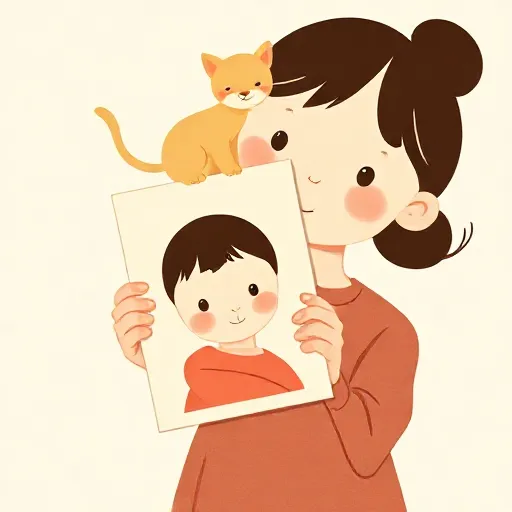
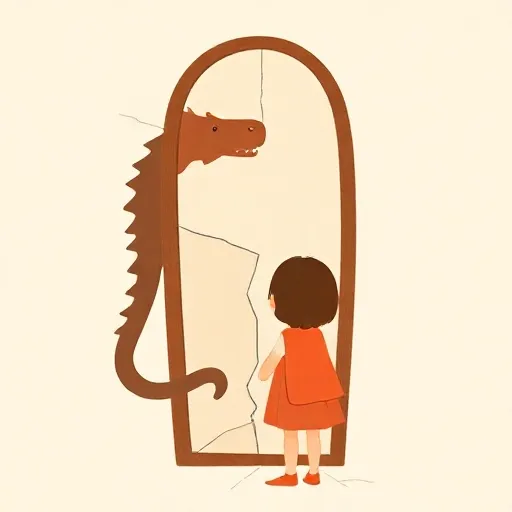
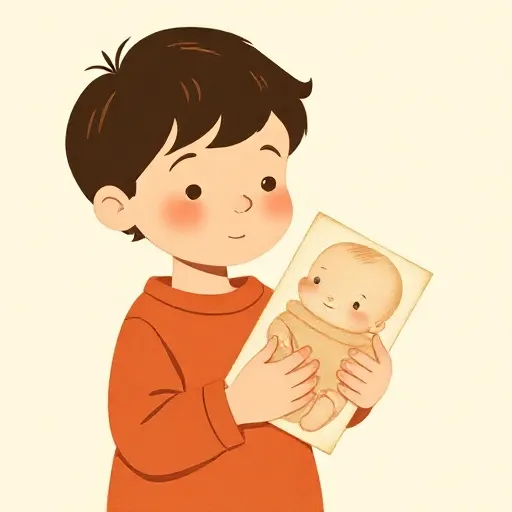
Imagine you are looking at a baby photo of your younger sister. You wonder: could she have been a cat instead? The idea feels impossible. If she were a cat, she wouldn’t be your sister at all. But why not? What about her could never change without her turning into a different being? Philosophers call the features that a thing cannot lack its essential properties. The features that could have been different — like her hair color or her mood — are accidental properties.
To make this idea precise, many philosophers use the tool of possible worlds. A possible world is a complete way the entire universe could have been. Some possible worlds are very different from ours: maybe one where elephants fly, or where you never learned to read. Others are close to home. The standard modal characterization (from “modality,” meaning possibility and necessity) says: an essential property of an object is one the object has in every possible world. An accidental property is one the object has in the actual world, but there is at least one possible world where the object lacks it.
So, is being human essential to your sister? According to the simple modal test, we look for a possible world where she exists as a human but might have been a cat. That seems easy to imagine — she could have been born a different species. So her humanity would be accidental, right? But wait: could a creature that is a cat really be your sister? Many people have the strong intuition that your sister could not have been a cat; the girl you know is essentially human. The simple modal picture stumbles here.
The Tricky Case of Emma the Dog
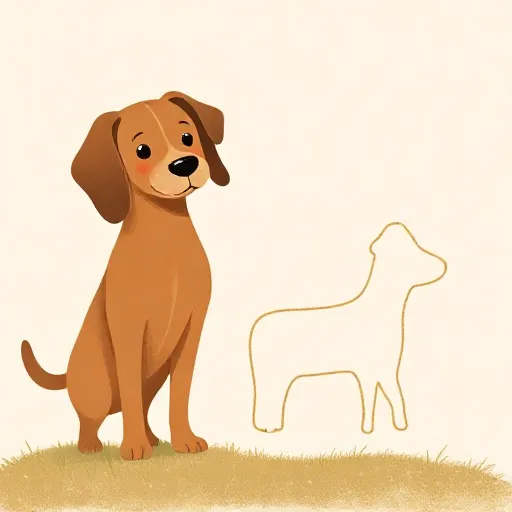
A sharper version of the trouble appears with a dog named Emma. Suppose Emma is a real dog, but she could easily have never existed — her parents might never have met. Now consider the property being a dog. To have this property, Emma must exist; you can’t be a dog if you don’t exist at all. In a possible world where Emma never exists, she lacks the property of being a dog. So, by the simple modal characterization, being a dog turns out to be an accidental property of Emma. That seems crazy — if anything is essential to a dog, it’s being a dog.
To fix this, philosophers tweak the definition: they say a property is essential to an object just in case the object has it, and necessarily, if the object exists then it has the property. This is the existence-conditioned modal characterization. For Emma, in every world where she exists, she is a dog. So being a dog counts as essential again.
But this fix has its own oddity. Notice that everything has the property of existing in every world where it exists. That makes existence itself an essential property of everything — your pencil, a cloud, you. The tweak rules out the idea held by some religious thinkers that only God has existence as an essential property. To avoid picking sides in that debate, some philosophers keep the simple modal characterization but treat existence as a special case: when we say “Emma is essentially a dog,” we really mean she essentially has the property being a dog if existent. Existence gets handled separately. Either way, the notion of an essential property requires delicate handling around the edges of existence.
Socrates, Prime Numbers, and the Messy Truth
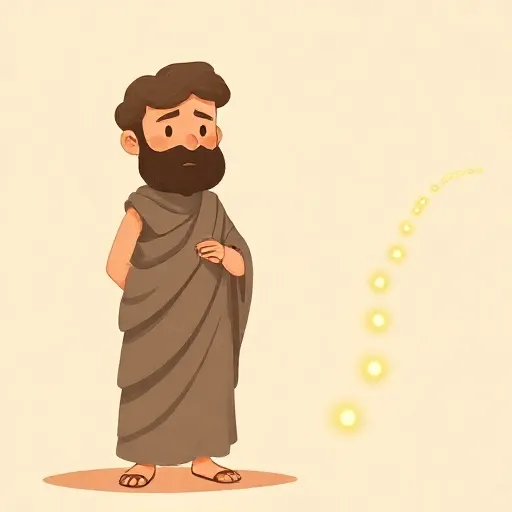
Even after handling existence, another problem lurks. Take a famous Greek philosopher, Socrates (470–399 BCE). It is a necessary truth that there are infinitely many prime numbers — no possible world exists where there are only finitely many primes. So, in every possible world, Socrates has the property being such that there are infinitely many primes. The simple modal characterization therefore counts that property as essential to Socrates. But does that really belong to what it means to be Socrates? Intuitively, prime numbers have nothing to do with the man’s identity. The contemporary philosopher Kit Fine (1946–) pointed out that the modal characterization is too generous: it treats many properties as essential that don’t touch the thing’s own nature.
Fine offers a different picture: the essential properties of an object are exactly those that belong to the object’s definition — what it is to be that very thing. The number 2, for example, is defined as the successor of 1; that seems essential to 2. But what is the “definition” of Socrates? Words and concepts have definitions, but a flesh-and-blood person does not, at least not obviously. This is a major challenge for Fine’s definitional approach.
A different alternative is the explanatory characterization: the essential properties of an object are its deepest explanatory features, the ones that explain why it has other properties. For instance, a carbon atom has six protons; that fact explains many of its chemical behaviors. So having six protons might be essential to a carbon atom. But what counts as “deepest explanation” can shift with our interests, making the distinction a bit wobbly. Still, these approaches show that the simple modal rule might miss what we really care about when we ask what makes a thing the thing it is.
From Your Parents to a Lump of Wax: What’s Really Essential
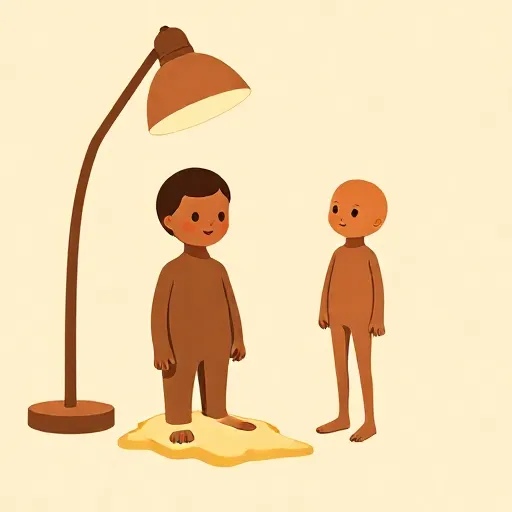
Even with the definitional puzzle unresolved, philosophers have proposed specific candidates for essential properties that feel deeply right. The philosopher Gottfried Wilhelm Leibniz (1646–1716) went to an extreme. He held maximal essentialism — the view that every property of a thing is essential. Change the smallest detail, and you would have a completely different object. Almost nobody believes that today. At the other end, a few philosophers defend minimal essentialism: only trivial properties, like being self-identical, are essential. Most thinkers, however, land somewhere in the middle.
Origin essentialism, defended by Saul Kripke (1940–2022) and others, says that an object could not have had a radically different origin. You, for instance, came from a particular sperm and egg. If those had been different, the resulting person would not be you — even if they looked exactly like you and had your name. Similarly, a wooden table could not have been originally made from a completely different block of wood.
Sortal essentialism holds that an object could not have belonged to a radically different kind. You are essentially a human being; you could not have been a credit card or a toaster. This seems obviously true to most people, though a few minimal essentialists think even that might be negotiable.
These essentialist claims pack a punch in philosophy. Consider a statue of a person made of wax, named Goliath. There is also the lump of wax, called Lump₁, that makes up Goliath. If the room gets really hot, the wax melts into a shapeless puddle. The statue Goliath would be destroyed — it’s essentially human-shaped, so it cannot survive melting. But Lump₁ would survive, because a lump of wax doesn’t need a shape to exist. So Goliath and Lump₁ have different essential properties: Goliath is essentially human-shaped, Lump₁ is not. By Leibniz’s Law (the principle that if two things are identical, they must share all the same properties), Goliath and Lump₁ cannot be the same object, even though they occupy the exact same space. This is a real puzzle that keeps metaphysicians busy.
Is It Even a Real Question? And Why It Still Matters
Not everyone agrees that it makes sense to ask what’s essential to an object “in itself.” The American philosopher W. V. O. Quine (1908–2000) famously argued that essences depend on how we describe things. Consider the number nine. If you refer to nine as “seven plus two,” then it is essentially greater than seven (because seven plus two must be greater than seven). But if you refer to nine as “the number of planets,” it is not essentially greater than seven — the number of planets could have been less. Quine’s point is that there’s no fact of the matter about whether nine, all by itself, is essentially greater than seven; it depends on which description you use. For Quine, essentialism rests on a confusion.
Essentialists reply that we can still ask about the object itself, apart from any description: could that very object — the number nine — have been less than seven? Intuition says no. The distinction between de re necessity (about the thing) and de dicto necessity (about the statement) captures this. Most philosophers today believe the anti-essentialist challenge doesn’t stick, but it forces careful thinking about language and reality.
So why does all this matter to you? Because asking about your essential properties is a way of asking who you really are. If origin essentialism is true, then you could not have been anyone else — you are, in a deep sense, irreplaceable. The statue-and-lump puzzle shows that even everyday objects have hidden layers of identity. And the debate about definitions and explanations draws a line between the features that just happen to be true of you (your favorite color, your height) and those that define you (your humanity, your origin). Wrestling with essential and accidental properties isn’t just a dusty academic game; it’s a journey into what makes each thing — and each person — uniquely itself.
Think about it
- If you found out that the people you call your parents are not your biological parents, would you still be the exact same person? What would change, and what would stay the same?
- Imagine a possible world where the sperm and egg that produced you instead combined to create a different child. Could that child still be you? Why or why not?
- A perfect clone of you, identical in every memory and thought, suddenly appears. Could the clone and you both be you? What essential property, if any, do you have that the clone lacks?