
Could You Have Had a Dragon? The Argument Over Shadowy Things
The Baby Dragon That Never Was

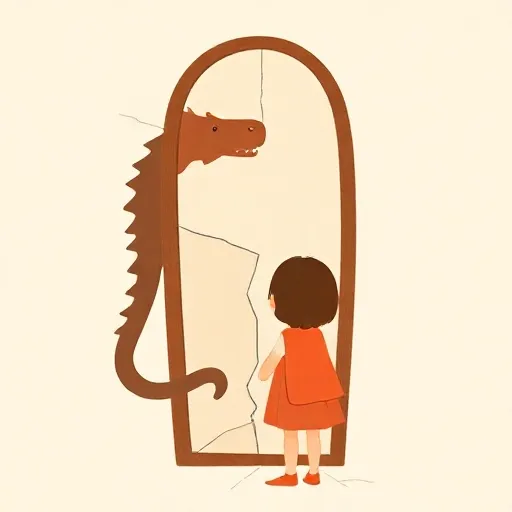
You announce, “I could have had a pet dragon named Ember.” If your parents had brought home a dragon egg instead of a goldfish, Ember would be warming your bed right now. But Ember never existed. So what were you just talking about? A real dragon in some shadowy corner of the world? Or just a thought that means nothing by itself?
This puzzle isn’t only about dragons. When people say that Pope Francis (whose family name is Bergoglio) could have had children if he hadn’t become a priest, they seem to talk about those possible children. But Francis has no kids. Are those children somehow “out there”? Philosophers call them merely possible things — not actual, not concrete, but still somehow part of what reality includes. The debate between those who believe merely possible things are real in some way and those who say they aren’t has been going on for more than a hundred years.
The Argument from “Could Have Been”
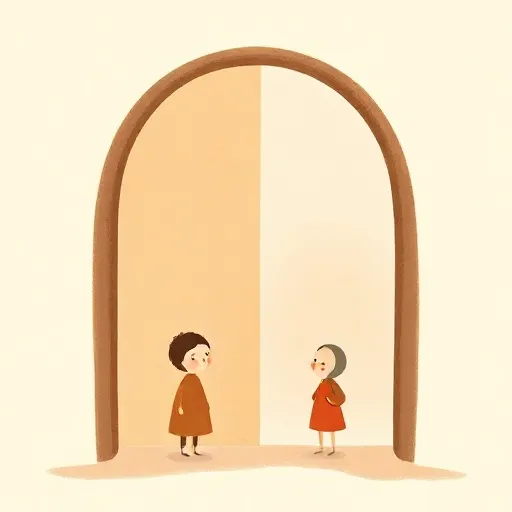
The strongest reason to think merely possible things exist is how we talk about them. When you say, “There could have been a new kind of dinosaur,” you seem to be describing a something — a dinosaur that isn’t actual but could have been. A possibilist is a philosopher who takes this seriously. They believe reality contains not just you, your goldfish, and the Eiffel Tower, but also possibilia — things that aren’t actual now but could have been, like Ember the dragon or Bergoglio’s possible children.
To make this tidy, possibilists often use the idea of possible worlds. Think of the actual world as the way everything really is. A possible world is a complete way things could have been. In one possible world, your parents bought the dragon egg and Ember is snoozing on your pillow. The possibilist says Ember genuinely is something in that world — just not something that happens to exist here. Our statements about what could have been become straightforward: “Ember could have existed” is true because in some possible world, Ember exists and is a dragon. That gives every “what if” a sturdy, almost scientific foundation.
An actualist denies this. They say there are no shadowy possibilia at all. Everything that exists, exists in the actual world, full stop. On its face that sounds like common sense. The trouble is, actualists have to explain what makes our “could have been” talk true without secretly pointing to possibilia. That turns out to be hard.
Quine’s Fat Man Puzzle: When Shadowy Things Get Messy
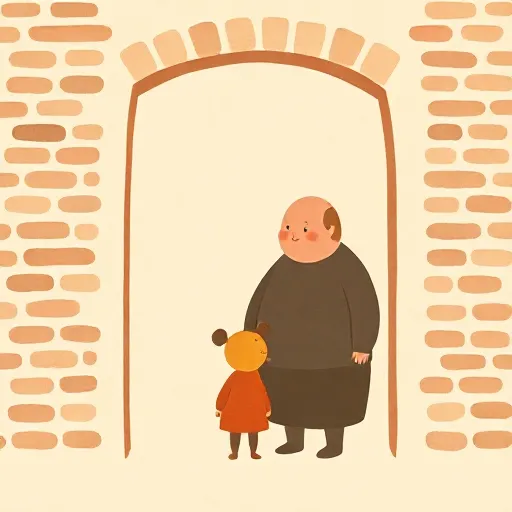
Even if possibilism sounds elegant, it runs into embarrassing questions. The American philosopher W. V. O. Quine (1908–2000) famously asked: take the merely possible fat man standing in a particular doorway, and the merely possible bald man in that same doorway. Are they two possible men, or one? How many possible men are standing there? It seems impossible to answer, and that suggests there is something wrong with the idea of possibilia.
However, later philosophers pointed out that Quine’s riddle assumes a merely possible fat man is actually fat, a man, and in the doorway. But a merely possible thing doesn’t actually have those properties — it only could have them. A merely possible bald man in that doorway is not bald, not a man, and not in the doorway. It is simply something that could have been all those things. Once you make that correction, the question loses its bite. Still, many actualists remain uncomfortable. They feel that the whole possibilist picture smacks of a ghostly universe where things sort-of exist, and they want to do better.
Plantinga’s Answer: Tags for Things That Might Have Been
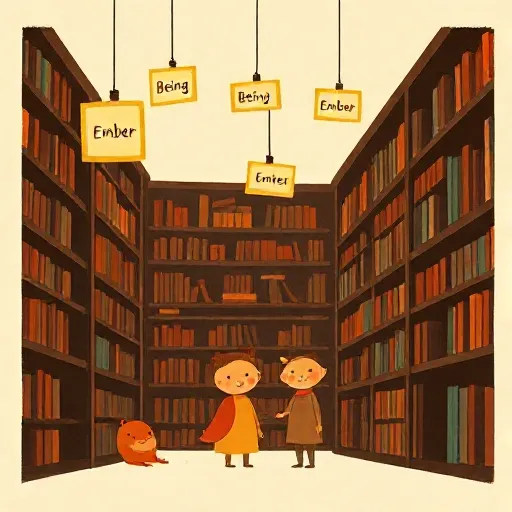
One powerful actualist reply was developed by Alvin Plantinga (born 1932). He rejected shadowy possibilia entirely and replaced them with ordinary abstract objects. Instead of impossible-to-find dragons that don’t exist, Plantinga said there are essences — properties that make something the very thing it is. Your own essence, for example, is the property that only you could have and that you couldn’t lose without ceasing to be yourself. The crucial move is that essences exist necessarily, like numbers, even when nothing has them.
Plantinga called a completely individual essence a haecceity (from the Latin for “thisness”). The haecceity being-Ember exists right now, as an abstract thing, even though no dragon ever exemplified it. When we say Ember could have been, we mean there is a possible world where being-Ember is coexemplified with the property being a dragon. That is, had that world been actual, there would have been a dragon with that haecceity. But nothing unreal needs to lurk in shadows; only the haecceity exists, and it exists entirely in the actual world. Plantinga’s clever swap gave actualists a way to meet the possibilist’s challenge with only real things — abstract properties — on the table.
Prior’s Strict Rule: No Facts About Nothing

The New Zealand logician Arthur Prior (1914–1969) went even further. He was a strict actualist: he not only denied that possibilia exist, he denied you can say anything true or false about something that doesn’t exist at all. For Prior, if Ember the dragon never existed, then there is no fact about Ember — not even the fact that it doesn’t exist. To talk about Ember at all, you must be talking about something that is, right now, a real individual.
This leads to surprising results. In Prior’s logic, the ordinary rule that “it’s impossible for a thing to be both round and square” still holds, but many familiar connections between necessity and possibility break. For instance, from “It’s not possible that Bergoglio is a proton” you can’t safely conclude “Necessarily, Bergoglio is not a proton,” because in worlds where Bergoglio doesn’t exist, sentences about him aren’t even available to be evaluated. Prior accepted these costs because he thought they preserved a hard‑nosed realism: there are only the things there are, and when you speak of them you must speak about actual individuals.
Why Imagining Still Matters

This dusty clash over dragons and popes might seem like something only a professor would care about. But it peeks out every time you imagine a story. When you read about a friendly hydra or plan a summer shortcut that you don’t end up taking, do those possibilities require a hidden warehouse of possible things? Actualists give us ways to say no: either by using abstract essences, as Plantinga did, or by insisting that only real objects can stand in judgments, as Prior did. Possibilists counter that these fixes are clunky and that simply accepting a broader universe of possibilia keeps our reasoning clean and honest.
The fight isn’t over. New versions of actualism appear each decade, and some philosophers still think possibilism comes out ahead. For you, the takeaway isn’t a settled answer — it’s a habit. The next time you say, “I could have been an astronaut,” you might pause and wonder: what am I actually pointing at? Something real? An abstract tag? Or am I just telling a useful story about the world? Thinking about that is what philosophy of possibility is all about.
Think about it
- If you imagine a friend who is half‑cat, half‑human, does that imagined friend exist in some way? What would it mean to say they “exist”?
- When you plan a weekend and consider two different places to go, are those possible plans real things, or only ideas inside your head?
- If a scientist says life could have existed on Mars, does that commit the scientist to believing in some kind of “possible life” that is already out there, or is it just a claim about what might have happened?