Could Something That Never Happened Still Be Real?
The Planet That Never Was

In the 1850s, astronomers thought they had found a new planet between the Sun and Mercury. They called it Vulcan. They drew its orbit, calculated its mass, and predicted when it would cross the Sun’s face. But Vulcan was never there. Every telescope search came up empty. It was a ghost planet—a mistake.
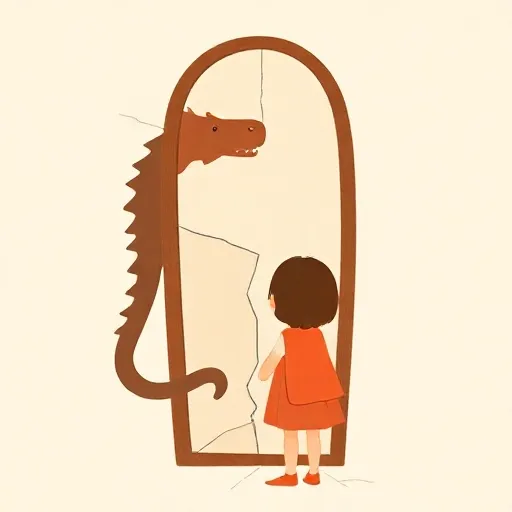
If Vulcan isn’t actually out there spinning around the Sun, does that mean it’s nothing at all? Or is Vulcan a possible object, something that could have been but isn’t? A possible object is just an object that is possible. An actual object is something that really exists, like your chair or your best friend. The surprising question philosophers ask is: do possible objects that aren’t actual exist in any way? This puzzle cuts straight into what we mean by “real.”
Possible Worlds: One Universe for Every Chance
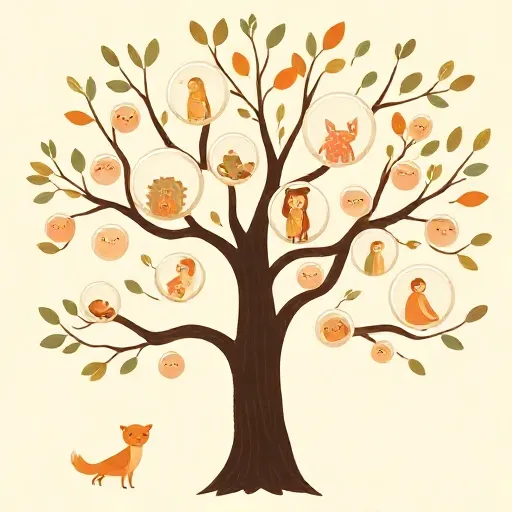
To make sense of sentences like “I could have been a pop singer,” philosophers often use the idea of possible worlds. A possible world is a complete, detailed “what‑if” story of the whole universe. The actual world is the way things really are. Imagine a world where you decided to wear a red shirt today instead of blue. That world is a possible world. In some possible world, you are a singer. In another, you are invisible. The framework helps us talk about possibility in a tidy way.
But are these possible worlds real places, out there somewhere, or are they just handy fictions we invent? That question divides philosophers into two big camps: possibilism and actualism. Possibilism says non‑actual possible objects and worlds are genuinely real. Actualism says only actual objects exist, and possible worlds are just representations made out of actual stuff—like sentences or ideas.
David Lewis: Worlds as Real as Our Own
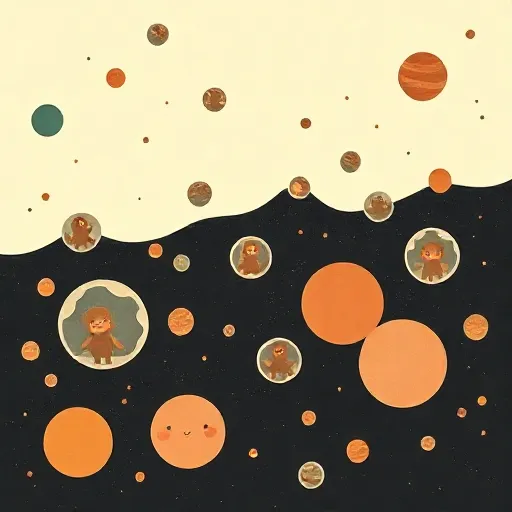
The most famous possibilist was David Lewis (1941–2001). He thought possible worlds are just as real and concrete as our own world. They are enormous spacetimes, crammed with planets, people, and animals, completely sealed off from us. You and I exist only in this world. In some other world, your counterpart—someone very like you but not identical—is a pop singer. Lewis called this modal counterpart theory. A counterpart is a similar person in another world who stands in for you.
Lewis also held an indexical theory of actuality. “Actual” is like “here” or “now”—it picks out the world we happen to be in. The actual world is the world we call “this one.” For a dinosaur in another world, that world is actual, and we are merely possible. So how things are “really” depends on where you are.
This picture comes with puzzles. If we say Vulcan exists in some possible world, which one? Many possible worlds contain a tiny planet near the Sun. Which of those planets is Vulcan? There seems to be no way to choose without a lot of guesswork. Also, if someone else—your counterpart—is a singer in another world, is that really you doing it? Philosopher Saul Kripke (b. 1940) pointed out that whether a perfect double leads a cult seems irrelevant to whether you could have led a cult. These difficulties make many philosophers look for a thinner, less lavish theory.
The Actualist Reply: Worlds Made of Words
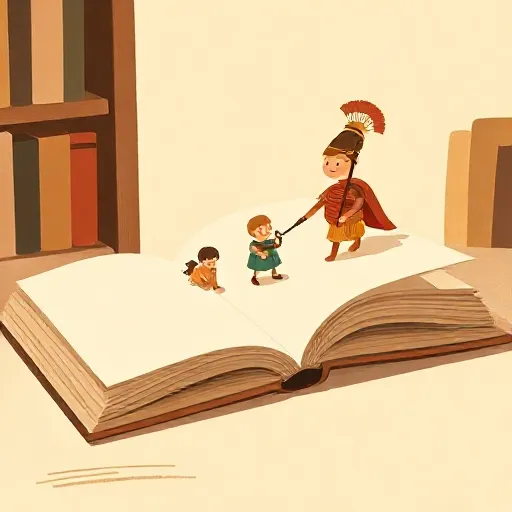
Actualists say possible worlds aren’t concrete places. They are representations—maximally consistent stories, collections of sentences, or other abstract descriptions. The actual world is the representation that correctly tells how the universe really is. This view is called actualist representationism. It avoids having to believe in an infinity of real universes. Instead, “Julius Caesar could have had a sixth finger” just means there is a consistent description that includes “Caesar has a sixth finger.”
But actualists face a sticky problem. Suppose Caesar possibly had an extra sixth finger that was never burnt, and that finger itself possibly got burnt. The second possibility points back to a finger from the first possible world. Where is that finger? In the actualist story, possible worlds are only words and concepts. There is no real finger in the description to point to. This is called the nesting problem.
Alvin Plantinga (b. 1932) offered a solution. He suggested that every object has an individual essence—a property that uniquely identifies it, like “being Julius Caesar.” The individual essence of Caesar’s possible sixth finger exists as an actual abstract property, even if the finger doesn’t. So when we talk about that finger possibly being burnt, we are really talking about its essence. But can an essence really float around without the object it belongs to? Many philosophers find this mysterious. Other actualists have tried different tricks, but the nesting problem remains a live headache.
Meinong’s Golden Mountain and Round Squares
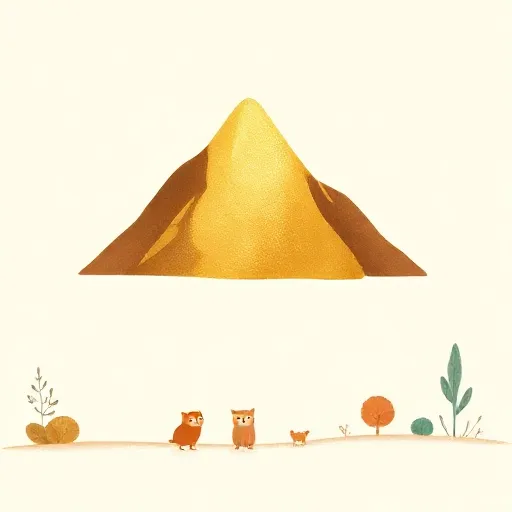
A different approach comes from Alexius Meinong (1853–1920). He thought that any description stands for an object, even if it doesn’t exist. “The golden mountain” refers to an object that is golden and a mountain, but it does not exist. Meinong distinguished existence from a broader status called subsistence. Abstract things like numbers subsist but don’t exist. Even impossible objects, like a round square, are real in this wider sense. This view is called Meinongianism.
Modern Meinongians like Terence Parsons and Edward Zalta (both contemporary) gave the idea sharper edges. Parsons says non‑existent objects have only the properties we assign them, nothing more. The golden mountain has exactly goldenness and mountainhood—no weight, no height. The round square has roundness and squareness, and since it doesn’t exist, no one has to worry that real contradictions happen.
Zalta draws a line between two ways of having properties. An object can exemplify a property (the usual way) or encode it (a second way, for abstract objects). The round square encodes roundness and squareness without exemplifying them, so there is no real conflict. For Zalta, all objects exist, but some are necessarily non‑spatial—they can’t be located in space. A non‑actual possible object, like a golden mountain, is just something that could be spatial but actually is not. This version fits neatly into actualism and dodges the puzzles that bothered Lewis.
Why Imaginary Things Matter to You

Fictional characters sharpen the debate. Is Sherlock Holmes a possible object? Many stories describe him, but no one has ever met him. If he’s nothing, then sentences like “Sherlock Holmes is admired by millions” sound false. Some philosophers argue that Holmes is an actual abstract object, created by Arthur Conan Doyle. Others, like pretense theorist Kendall Walton (b. 1939), say we are just playing a game of make‑believe when we talk about Holmes. We don’t need to add him to our inventory of real things.
This isn’t merely a dusty academic squabble. Every time you say “I could have been a goalie” or imagine a friend who doesn’t exist, you’re dipping into the same puzzle. What makes that “could have been” true? Is there a possible version of you somewhere, complete with a goalkeeper jersey, or is it just a story you tell yourself? Philosophers still don’t agree. Thinking about possible objects forces you to think about what reality itself is made of—and that is a question that belongs to everyone.
Think about it
- If a scientist could predict every choice you’ll ever make, would it still be fair to punish people for bad choices?
- Imagine a perfect friend. Does that friend exist somewhere, even if only in your mind? If so, what kind of existence is that?
- Is “Sherlock Holmes” a real thing? How would you argue with someone who says yes? How would you argue with someone who says no?