Can You Respect People While Thinking They’re Totally Wrong?
In 1598, a King Allowed a Religion He Hated
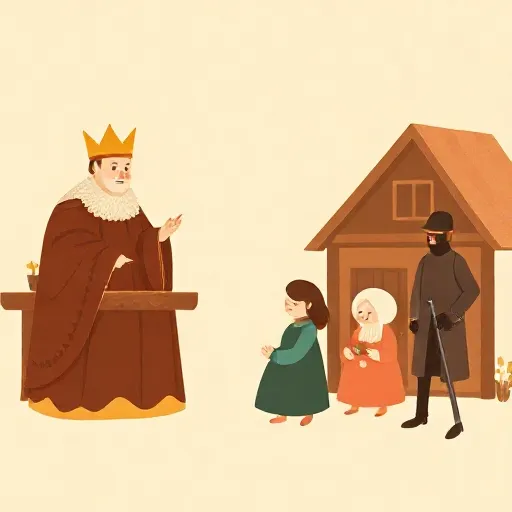
In 1598, King Henry IV of France signed a law called the Edict of Nantes. He was a Catholic who believed Protestant beliefs were deeply wrong. But his kingdom had been torn apart by religious wars, so he gave Protestants permission to practise their faith — only in their own homes and certain towns, never in public spaces or on equal footing with Catholics. They could exist, quietly, as long as they remembered their place.
That was toleration. Or was it? Henry’s subjects might have called it an insult dressed up as mercy. Later, the writer Goethe would say, “Tolerance should be a temporary attitude only: it must lead to recognition. To tolerate means to insult.”
So what is toleration, really? In philosophy, toleration happens when you accept a belief or practice you find objectionable — something you think is wrong or bad. Without this objection component, you wouldn’t be tolerating; you’d just be indifferent or approving. But objection alone isn’t enough. You also need an acceptance component: positive reasons that outweigh your negative judgment in this context. Those reasons might be practical (keeping the peace) or principled (respecting a person’s freedom). Finally, there’s a rejection component — a line beyond which you won’t tolerate the thing, because the reasons to reject it are stronger.
So toleration always lives between two boundaries. On one side, the realm of beliefs you share or at least accept easily. On the other, the realm of the intolerable — things you reject completely. Toleration occupies the tricky space in the middle, where you hold your nose but still say “okay.”
Why Tolerating Feels Like a Contradiction

If toleration asks you to accept what you find wrong, it seems to bend logic into a knot. Philosophers call these knots paradoxes of toleration.
First, the paradox of the tolerant racist. Imagine someone who believes certain groups are naturally inferior and doesn’t think they deserve equal respect. Some might say this person should “be more tolerant” — just don’t act on those prejudices. But that turns a hateful, irrational attitude into something that, if restrained, counts as a virtue. It treats the racist’s objection as an ethical judgment, when it’s really just prejudice. So asking a racist to be tolerant is a mistake. The solution isn’t tolerance; it’s overcoming those beliefs. This shows that toleration isn’t always the answer to intolerance. The objection component must be at least minimally reasonable, not rooted in blind hatred.
Next, the paradox of moral tolerance. If you object to something on moral grounds, but also accept it for moral reasons, you seem to be saying it’s morally right to tolerate what’s morally wrong. How can that be? Only if the acceptance reasons are of a higher order — for example, a moral commitment to let people make their own choices even when you think those choices are misguided. The paradox dissolves when you see that not all moral reasons are on the same level.
Finally, the paradox of drawing the limits. Many argue that those who are intolerant need not be tolerated. But who decides who is “intolerant”? In history, labeling a group as intolerant has often been an act of intolerance itself. A radical critique says that every time we draw a boundary of toleration, we’re being intolerant — so toleration collapses the moment it’s defined. To escape this, we must distinguish between (a) intolerance that rejects toleration as a norm altogether, and (b) refusing to endure someone else’s rejection of that norm. If we can justify that distinction in a fair, non-arbitrary way, toleration can still be a genuine virtue.
Four Ways to Live With Difference

People mean very different things by “toleration.” Philosophers describe four main conceptions of toleration that often coexist uneasily.
The permission conception is the oldest and most hierarchical. An authority or a majority allows a minority to follow its practices but only on the majority’s terms. The minority must accept an inferior position and stay within narrow, often private, limits. This was Henry IV’s model. It can be pragmatic (it keeps the peace cheaply) or principled (forcing conscience is wrong), but it always says, “You may exist as long as you know your place.”
The coexistence conception works when groups are roughly equal in power and see that fighting hurts everyone. They strike a compromise — a modus vivendi — for the sake of staying alive and pursuing their own goals. Toleration here is horizontal: each side tolerates the other, but only while the balance of power holds. If tomorrow one group becomes stronger, the truce may collapse.
The respect conception goes further. It demands that citizens see each other as moral and political equals, even when they deeply disagree about the good life. In the formal equality version, ethical differences are kept strictly private — for instance, banning religious symbols from public schools to keep the state neutral. The qualitative equality version points out that some forms of life need public expression, and that a rigid private/public split can favour one culture over another. Here, equal respect may require adjusting laws so that all can participate without hiding who they are.
Finally, the esteem conception asks for even more: not just respecting the other as an equal, but positively valuing some of their beliefs as ethically worthwhile, even while still thinking your own view is better. It’s like saying, “I admire parts of your tradition — they just aren’t as compelling as mine.” This strange mix of approval and reservation is called reserved esteem.
Which conception is right depends on the conflict at hand and the deeper values a society agrees on. By itself, toleration is normatively dependent: the concept doesn’t tell you why you should tolerate or where to draw the line — you need separate moral arguments for that.
A Short History of “Putting Up With” Beliefs
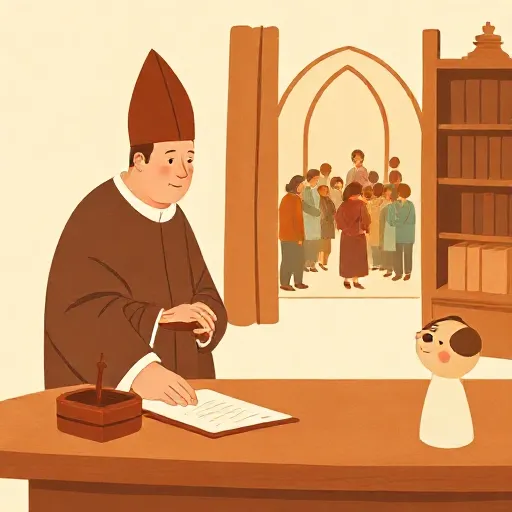
The puzzle of toleration has a long, twisting history. In early Christianity, thinkers like Tertullian argued that faith must come from inner conviction — crede non potest nisi volens, that is, no one can believe unless they will it. Forcing conscience seemed pointless and against God’s will. But then came Augustine (4th–5th century CE). Facing a church split, he reversed course: love for the erring could demand the use of force to bring them back to truth. He cited cases of people who had been compelled and later thanked their converters. Suddenly intolerance became a Christian duty.
Many centuries later, the French philosopher Pierre Bayle (1686) launched a radical challenge. He argued that moral reason — a “natural light” everyone shares — teaches principles of respect and reciprocity that no religious claim can override. Even atheists grasp these truths. Faith, Bayle insisted, rests on personal trust, not demonstrable proof, so it can never justify coercion. This was the first argument for universal toleration of all persons, believers or not.
The English philosopher John Locke, writing in 1689, took a different path. He anchored toleration in natural rights: the state guards “civil interests” like life and property, while the “care of the soul” belongs solely to each individual before God. Churches are voluntary clubs with no right to force anyone. But Locke drew sharp limits: no toleration for Catholics (whom he saw as owing allegiance to a foreign prince) or for atheists (who, he thought, destroyed the basis of social order).
In the 19th century, John Stuart Mill’s On Liberty (1859) expanded the debate beyond religion. His harm principle said the only reason to interfere with someone’s freedom is to prevent harm to others. Even false opinions should be tolerated, because debating them sharpens our understanding of the truth. And unusual “experiments in living” enrich human life. Toleration became a tool for learning, not just a truce.
Why Should We Tolerate? Two Big Answers
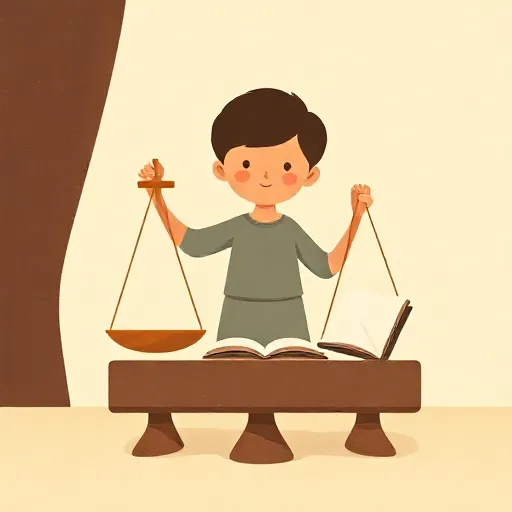
Modern philosophers keep arguing about the best justification for toleration. One ethical‑liberal (neo‑Lockean) view says we must respect people as beings capable of choosing and revising their own idea of the good life. That autonomy is precious; a life not freely chosen can hardly be a good one. But critics warn this can become a kind of perfectionism — treating other ways of life as inferior and even forcing people to be autonomous, which isn’t very tolerant of communities that value tradition over choice.
A second approach, inspired by Bayle, tries to stay neutral about what makes a life good. It centres on a principle of justification: any rule that will be enforced on everyone must be justifiable with reasons that all affected people can accept as free and equal persons. Ethical or religious reasons, however sincere, depend on a particular faith that others can reasonably reject. They belong to a realm “beyond reason” that can’t be proven like a geometry theorem. So such reasons may justify personal objection but never state coercion. Toleration, on this view, is the insight that your deepest ethical objections aren’t enough to make rules for everyone. The limit of toleration becomes the line where someone rejects the principle of justification itself — because at that point, they’re denying the very basis of living together as equals.
This leaves a big question: can any theory be “tolerant” enough not to become just another party in the conflict, while still being strong enough to set real limits?
From Royal Decrees to Your Lunch Table

Henry IV’s edict is now a museum piece, but the tensions he faced haven’t gone anywhere. Should religious headscarves be allowed in public schools? What about hate speech — do we tolerate it to protect free expression, or ban it to protect dignity? When a friend holds a belief you find hurtful, is it more tolerant to argue, stay silent, or walk away?
We live in societies of multiplying differences, where some groups demand recognition and others look at their neighbours with suspicion. Every day, young people navigate the boundaries between what they can accept, what they can barely tolerate, and what they must reject. Figuring out where those boundaries belong — and why — is the work of a tolerant life. And as Goethe hinted, the goal might not be to stay in tolerance forever, but to build something better: a world where people don’t just endure one another, but see each other as fully human.
Think about it
- If a friend believes something you think is harmful, is it more tolerant to argue with them or to leave them alone? What makes one choice better than the other?
- Imagine a club whose only rule is “no one who spreads intolerance can join.” If they refuse to admit someone with hateful views, are they being intolerant themselves? Where would you draw the line?
- Do you think a school policy that bans all religious symbols from the classroom is tolerant or intolerant? Who gets to decide what counts as a “private” belief?