What Are You Really Saying When You Call Something 'Wrong'?
A Bet in Ancient Athens

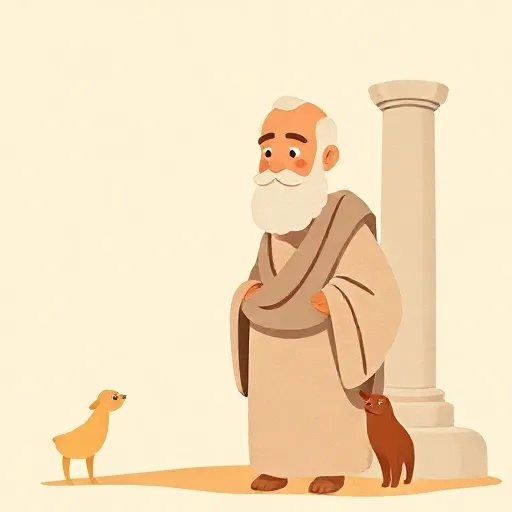
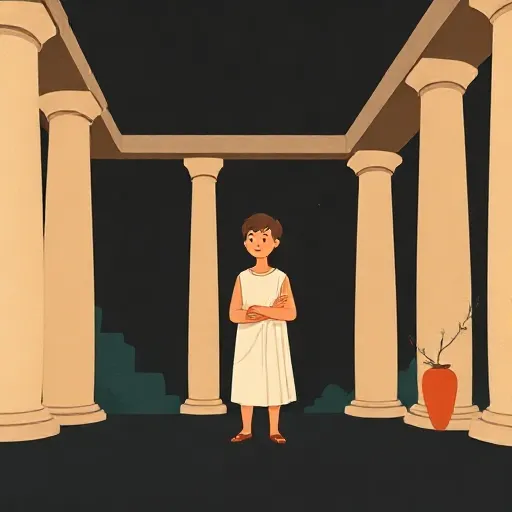
Around 380 BCE, in a house near the Acropolis, a young Athenian named Glaucon challenged his teacher Socrates. Glaucon’s brother Plato (c. 428–348 BCE) later wrote it all down. Glaucon argued that justice — being fair and doing the right thing — is nothing but a deal people make when they are too weak to bully others. Each of us naturally wants to take what we can and treat others unfairly, but we hate being victims. So, to avoid constant fear, we agree on a set of rules and call them “justice.” On this view, morality is a convention — a human invention, like traffic lights, designed to make life safer.
Socrates (c. 470–399 BCE) disagreed. He thought justice was not a human deal but an eternal standard, something as real as the sun, waiting to be discovered by reason. Their debate wasn’t about which specific actions are just; it was about what kind of thing justice is in the first place. That is the heart of metaethics — the branch of philosophy that steps back from arguing about right and wrong to ask: what does it even mean to call something right or wrong? Is morality an invention, a discovery, or something else entirely?
If God Says So, Is That Enough?

For centuries, many people thought morality came from a divine lawgiver. What makes stealing wrong, they said, is that God forbids it. But Plato, in a dialogue called Euthyphro, uncovered a puzzle that still troubles philosophers. He asked: Is something right because a god commands it, or does the god command it because it is right?
If you pick the first answer, then God could command anything — even cruelty — and it would become right just because God said so. That makes morality seem terribly arbitrary. If you pick the second, then rightness exists independently of God; God simply recognizes a standard that is already there. But then we still haven’t explained where that standard comes from or why it has authority. The dilemma shows that appealing to a higher power doesn’t settle the metaethical question; it only pushes the mystery back one step.
The Tasting Test: Moore’s Open Question
If morality isn’t a human convention and isn’t simply God’s will, maybe moral properties are just natural features of the world. Naturalism says moral facts are really natural facts — for example, “good” might mean “pleasurable” or “right” might mean “maximizes happiness.” David Hume (1711–1776) pointed out a logical gap: you cannot deduce an “ought” from an “is” alone. Knowing that an action causes pleasure doesn’t, by itself, prove you should do it; you need an extra moral premise.
G. E. Moore (1873–1958) turned this into a famous test. Take any naturalist definition, say “good equals pleasant.” Now ask: “I know this thing is pleasant, but is it good?” Moore argued this question is always open — you can ask it without sounding confused about the meaning of the words. In contrast, “This is a bachelor, but is he unmarried?” is a closed question; it shows you don’t understand the terms. Moore concluded that “good” cannot be defined as any natural property. Instead, goodness is a non-natural property — something that doesn’t fit into a scientific picture of the world. He thought we know such truths by a kind of rational intuition.
The trouble is that non-natural moral properties are mysterious. How could we ever prove they exist? And why do reasonable people disagree so much about them?
When ‘Wrong’ Is Just a Fancy Way of Booing

Moore assumed that calling something “wrong” states a fact — you are claiming the action has a certain property. But a family of views called non-cognitivism rejects that idea. According to non-cognitivists, saying “Lying is wrong” isn’t reporting a fact at all. You are doing something else: expressing an emotion, taking a stand, or telling people not to lie. “Lying is wrong” is less like “The sky is blue” and more like “Boo, lying!” This is expressivism: moral language gets its meaning from the attitudes it expresses, not from describing the world.
Expressivism neatly sidesteps Moore’s Open Question. There is no mysterious property of “wrongness” to puzzle over, because the statement isn’t trying to describe a property. It also explains why you can’t derive an “ought” from an “is”: no description of the world logically forces you to adopt a particular feeling.
Still, we argue about morality all the time and treat it as though it follows logical rules (“If stealing is wrong, and you stole, then you did something wrong”). Quasi-realists, like Simon Blackburn (1944– ), try to explain this. They say that while moral talk is fundamentally about expressing attitudes, we can legitimately speak of “moral facts” and “moral truths” — those are just different, equally expressive ways of making the same commitment.
Meanwhile, error theorists take yet another path. They agree with Moore that moral claims try to state facts about objective moral properties, but they argue that no such properties exist. So all positive moral claims — “charity is good,” “murder is wrong” — are systematically false, like claims about witches. The whole practice is built on a mistake.
Why It Still Bugs You
These debates can feel abstract, but they bite hard when you ask, “Why should I bother being good?” This was exactly Glaucon’s worry. If morality is just a convention or a feeling, what reason is there to follow it when you can cheat without getting caught? Glaucon suspected the only reasons would be fear of punishment or desire for a good reputation — and those disappear when no one is watching. Socrates tried to prove that being just is genuinely good for you, that a just person is happier regardless of consequences. But his argument depended on the idea that reason points to an objective good, which brings us right back to metaethical questions.
Even today, when a friend grabs the last cookie and you say “That’s not fair!”, you are stepping into this ancient puzzle. You feel the tug of fairness as if it were a real demand. But can you prove that fairness is real, rather than just a strong feeling you hope others share? If someone truly doesn’t care about fairness, is that person making a mistake like a math error, or are they just operating with different feelings? Your answer shapes whether you think moral disagreements can be solved by reason, or whether they are ultimately clashes of emotion settled by power or persuasion. And it affects whether you believe holding people responsible for their actions is justified, or whether we are, in the end, just name-calling. The question Glaucon and Socrates argued about is still open — and it’s under every “that’s not fair!” you’ve ever said.
Think about it
- Suppose a friend says “Stealing is wrong” and another friend says “Stealing is okay if you don’t get caught.” Is their disagreement more like disagreeing about whether Paris is the capital of France, or more like disagreeing about whether pineapple belongs on pizza? Why?
- If you could watch a recording of every decision you’ll ever make, would that mean you’re not free? What does that say about whether morality needs free will?
- Imagine a world where everyone felt disgust at the sight of blue flowers, but no one could explain why. Would blue-flower disgust be like moral wrongness? Could you say “Feeling disgusted doesn’t make it wrong” without appealing to something beyond feelings?