Is Your Lunch Choice Already a Done Deal?
The Fatalist’s Surprising Argument
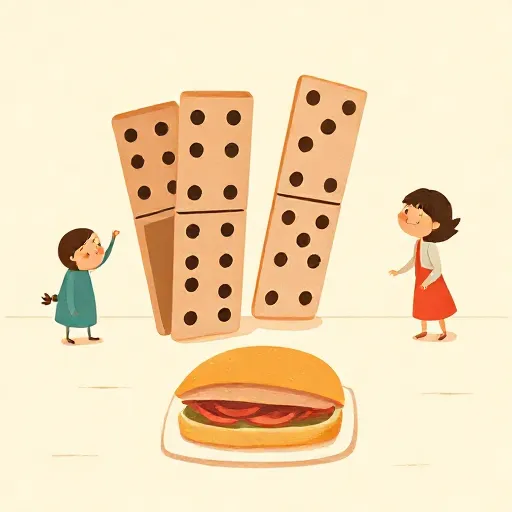
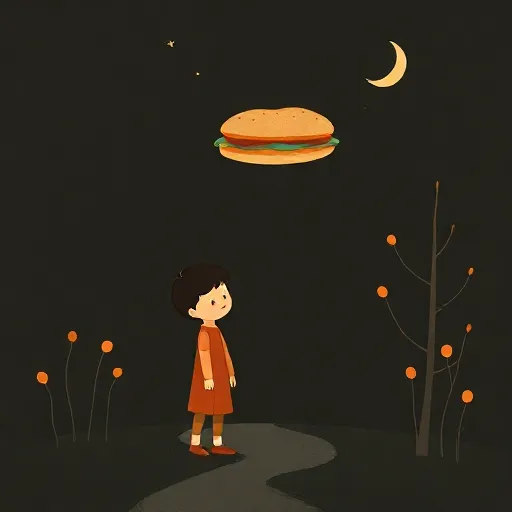
Picture this: tomorrow at lunch, you will walk into the cafeteria and pick either a pizza or a sandwich. Right now, it feels like an open choice. You can imagine yourself grabbing the pizza, or you can imagine choosing the sandwich. Both seem possible. But what if it’s already true — right now — that you will pick the sandwich? And what if it has been true since long before you were born? That would mean that, no matter how much you deliberate, the sandwich is already unavoidable. This unsettling idea is called fatalism.
Fatalism is the view that whatever will happen in the future is already unavoidable. No one can prevent it. Your lunch choice, next year’s weather, even big moral events — all are fated. The argument for fatalism uses only a few steps:
- There are propositions (statements) right now about everything that might happen in the future — like “You will eat a sandwich tomorrow.”
- Every proposition is either true or else false. This is sometimes called the Principle of Bivalence.
- If both (1) and (2) are true, then there is now a set of true propositions that correctly predict everything that will happen.
- If there is now a set of true propositions that correctly predict everything, then whatever will happen is already unavoidable. (You can’t make a true prediction turn out false.)
Therefore, whatever will happen is already unavoidable. The future is fixed.
The conclusion feels shocking. If fatalism is right, your sense of choosing freely is an illusion. You only feel like you could have done otherwise.
Can You Make a True Prediction False?

But many philosophers think the fatalist’s argument cleverly hides a weak spot: premise (2), the Principle of Bivalence. They say not all propositions are true or false right now. Propositions about the future that depend on choices (what philosophers call future contingents) are neither true nor false until the event actually happens.
Consider the proposition “You will have a sandwich tomorrow.” According to this Open Future response, that proposition has no truth value right now. It isn’t true yet, and it isn’t false yet. When tomorrow comes and you either eat the sandwich or don’t, then the proposition will become true or false. After that, it stays that way forever.
This response depends on a special idea about propositions. Some propositions are tensed, like “You are reading this sentence.” That proposition is true right now, but an hour from now it will be false. Its truth can change over time. Other propositions are tenseless, like “You read about fatalism on [full date].” A tenseless proposition never changes truth value; it is always true or always false. The Open Future defender says future contingents are best understood as tensed propositions. They have no truth value until the time they describe arrives. So the fatalist’s mistake is assuming that every proposition already has a fixed truth value.
Does the Future Even Exist?

The open future debate isn’t only about words and truth values. It also connects to a surprising question: do future objects and events exist at all? In metaphysics, the branch of philosophy that studies what exists, there are two big views about time’s ontology.
Presentism says that only the present moment and its objects exist. If you made a list of everything that exists right now, it would include you, your lunch, and the Taj Mahal, but not Socrates (who lived long ago) or any Martian outposts that might be built in the future. For a presentist, the future isn’t a place that’s already “there.” So it’s hard to see how there could be true propositions about the future. If nothing future exists to make those propositions true — if they lack a truth-maker — then they aren’t true now. Fatalism collapses because premise (1) (that there are propositions about the future) might be doubted, or those propositions simply aren’t true.
Eternalism, on the other hand, says that past, present, and future objects all exist equally. The universe is like a giant film strip where every frame is real. Socrates exists (though not “now” in the temporal sense), and so do future Martian outposts. Eternalists often pair this view with a theory where time is like space — a static, spread-out block. But even eternalists don’t have to accept fatalism. Some still think tensed propositions about the future lack truth values, or that the future is “branching” and no single set of truths exists. Still, the debate about existence shows how deep the argument goes.
McTaggart’s Puzzle: Is Time a Grand Illusion?

Just when you think the fight is between fatalism and an open future, a British philosopher named J.M.E. McTaggart (1866–1925) threw a thunderbolt: time itself might be unreal. In 1908, McTaggart argued that our ordinary way of thinking about time gets us into a logical mess.
He asked us to think about two ways of ordering events. You can order them by their A-series properties: being past, being present, or being future. Or you can order them by their B-series relations: earlier than, later than, or simultaneous with. McTaggart claimed that the A-series is essential for real time — because real change involves moments moving from future to present to past. But here’s the problem: no single moment can be all three. Being past, present, and future are incompatible properties. Yet every moment seems to have them: it is future, then present, then past. You might say: “Right, but not at the same time — it’s future now, present later.” But McTaggart replied that this only pushes the problem further back. You now need to explain the time flow of those new “now” and “later” moments, and so on forever. It leads to an infinite regress of contradictions.
McTaggart concluded that the A-series is contradictory, and since the B-series alone doesn’t capture real change, time is an illusion. Many philosophers reject his conclusion but agree his argument forces us to clarify what we mean by “passage.” If you’re an A-theorist who believes in genuine passage, you must solve McTaggart’s puzzle. If you’re a B-theorist (like many eternalists), you think time is more like space and that all events simply stand in unchanging earlier/later relations. Both sides gain support from physics, psychology, and everyday experience — and the debate is far from over.
Why It Should Matter to You

What does all this mean for your lunch choice tomorrow? Suppose you discover that fatalism is true. Would it make sense to stop deciding, since your future is already set? Philosophers point out that even if fatalism were correct, you still don’t know which future is fated. Deliberating and picking the sandwich might be part of the pre-written story. Feeling like you’re choosing could be part of that story, too.
On the other hand, if the future is genuinely open — if your choice helps bring one branch of time into existence — then your decisions have real weight. You are not just a domino falling; you are an author.
Psychologists have noticed that we all seem built to feel time passing and to treat the future as unsettled. B-theorists might explain this as a useful illusion shaped by evolution. Yet even if the universe were a static block, our experience of an open future may be what makes life meaningful.
In the end, the puzzle of fatalism touches your day‑to‑day sense of freedom. It’s a living question — not something settled. So the next time you stare at the pizza or the sandwich, you’re not just a hungry kid; you’re walking into one of philosophy’s most captivating mysteries.
Think about it
- If a scientist could perfectly predict every choice you’ll ever make, would your choices still feel like choices? Why or why not?
- If only the present moment exists, does it make sense to worry about tomorrow? What about being punished for something you haven’t done yet?
- Suppose a fortune teller says, “You will be a doctor.” If you later become one, was it fated? Could you have proved the fortune teller wrong by becoming a teacher?