Why Did Thoreau Live Alone in the Woods for Two Years?
The Experiment Begins
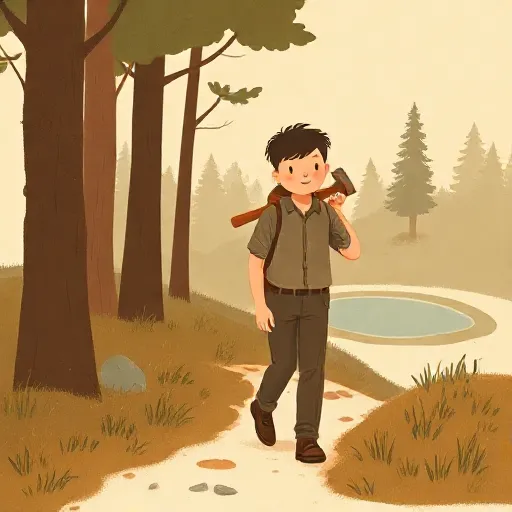
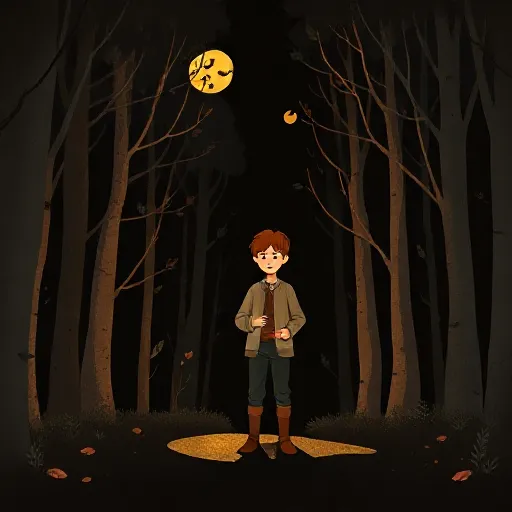
On July 4, 1845, a young man named Henry David Thoreau (1817–1862) carried an axe into the woods outside Concord, Massachusetts. He was not running away from home. He was starting an experiment. He wanted to find out what it really means to be alive. By the next spring, he had built a one‑room cabin on the shore of Walden Pond. For two years and two months, he lived there, growing beans, wandering the woods, writing in his journal, and thinking harder than most people ever do.
Thoreau was a friend of the famous writer Ralph Waldo Emerson (1803–1882). But he had his own ideas. He worried that most people were living what he called lives of “quiet desperation” — going through the motions, chasing money and stuff, and never stopping to ask what actually matters. His cabin in the woods was a deliberate attempt to strip life down to its essentials. He wanted to wake up, pay attention, and see the world as it really is.
His book Walden, published in 1854, tells the story of that experiment. It is not a lonely hermit’s diary. It is a call to live an examined life, to notice the value that already surrounds you, and to stop mistaking the unnecessary for the necessary.
Nature’s Inherent Worth
For Thoreau, the woods were not just a pretty backdrop. They held real, independent value — what philosophers call intrinsic value, meaning something is valuable for its own sake, not because we can use it. Emerson sometimes thought of nature as a symbol for higher spiritual truths. Thoreau pushed back. He believed the natural world itself is sacred and meaningful, here and now. You did not need to look past the pond or the pine tree to find the divine; the pond and the pine tree are the divine, if you learn to see them rightly.
That is why Thoreau urged people to never “underrate the value of a fact.” A seed, he pointed out, is more precious than a diamond — a diamond just sits there, but a seed contains the power to grow an entire forest. Even rain that spoils your gardening plans is good for the grass on the uplands, and what is good for the grass is good for you, too, though you might not feel it at the time. Nature is full of a creative wildness that does not depend on human plans. He called it “the primitive vigor of Nature in us” — a force that can push each of us to grow into our best selves.
This idea has a sharp edge. If nature has value all by itself, then trampling a wild meadow for a shopping center is not just a practical mistake. It is a failure to see what is really there. And the first step in learning to see is to pay a different kind of attention.
The Practice of Paying Attention
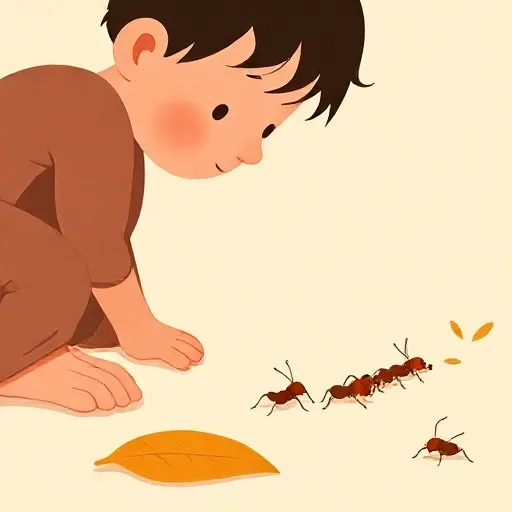
If Thoreau’s philosophy has a hero virtue, it is awareness. He wrote that the most important work you can do is “to carve and paint the very atmosphere and medium through which we look” — not just to make a few objects beautiful, but to transform the way you experience everything.
This is harder than it sounds. Thoreau noticed that he could walk through the woods and see almost nothing at all unless he trained himself to look. A child, he said, might pick a flower and see something the adult botanist no longer notices, because the child meets the world with fresh wonder. But awareness is not just about feelings. It shapes what you can actually know. Thoreau insisted that every observation is partly subjective: what you see depends on who you are, what you care about, and where you stand. That does not mean the truth is made up. It means the world reveals itself differently to a person who has cultivated the right kind of attention.
He was fascinated by science — he measured fish, recorded data, and filled journal pages with careful notes. Yet he worried that a mind trained only to weigh and count might miss the beauty of a living fish in its native stream. Pure number‑crunching, he thought, can become a kind of sleep‑walking. The point is not to abandon facts, but to stay awake to the significance of facts — to see the world with both precision and imagination. When you manage that, you are no longer trapped inside your own head; you are in a living relationship with the real, beautiful world.
The Courage to Disobey

Thoreau’s experiments were never just about trees and water. They led him straight into politics. Living simply at Walden gave him a clear view of how confused his society was about value. He saw his neighbors work exhaustingly hard to earn money they did not need, while calling a man who walks in the woods a “loafer.” Worse, he saw his fellow citizens politely ignore the great injustice of his time: slavery.
He did not stay quiet. Thoreau helped enslaved people escape as part of the Underground Railroad, spoke out against the Fugitive Slave Law, and defended the abolitionist John Brown when others called him insane. In 1846, he spent a night in jail for refusing to pay a tax that would help fund the Mexican‑American War and uphold slavery. That one night led to his famous essay Civil Disobedience. In it, he argued that when a law is deeply unjust, you have not only a right but a duty to resist it — peacefully, by refusing to cooperate.
His idea was simple but radical. You do not hand over your conscience to the majority. If the state tells you to do something wrong, you stop the machine by withdrawing your support. Later generations would pick up this idea: Mahatma Gandhi used nonviolent resistance to fight for Indian independence, and Martin Luther King Jr. cited Thoreau in his fight against segregation. Thoreau did not think government was always bad, but he believed no government could be just unless it respected the individual as a source of higher power.
Why a Pond in Massachusetts Still Matters

You may never build a cabin in the woods. But Thoreau’s challenge remains. He asked: What is truly necessary for a good life? How much of what you chase every day actually makes you happier, and how much is just noise that drowns out what you genuinely care about? He also asked what you owe to the world around you — the living land, the creatures in it, and the people who suffer under unjust systems that everyone else accepts as normal.
His answers were never comfortable. He thought nature has a claim on us that goes far beyond usefulness. He thought silence, solitude, and simple pleasures are not luxuries but conditions for sanity. And he thought that if you know a practice is wrong — bullying, cruelty, oppression — staying quiet is not neutrality; it is a choice to let the harm continue.
These questions do not belong to one century. Every generation has to figure out where its own “quiet desperation” hides, and what it would mean to wake up. You do not need a pond. But you do need to pay attention.
Think about it
- If you spent a whole day outside without any screens or gadgets, just looking and listening, what might you notice that you usually miss?
- Is it ever right to break a rule or a law if you believe it is deeply wrong? How would you decide?
- Thoreau thought that living with fewer things could make you happier. What would you be willing to give up — and what would be hardest to let go of?