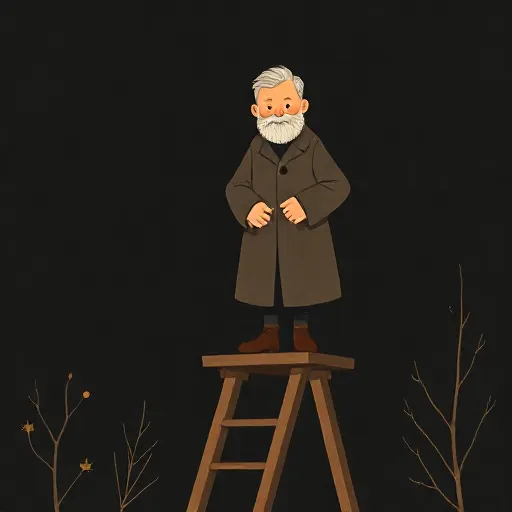
What Would You Die For? Thomas More and the Voice of Conscience
The Prison Visit: A Conscience Cannot Be Bent
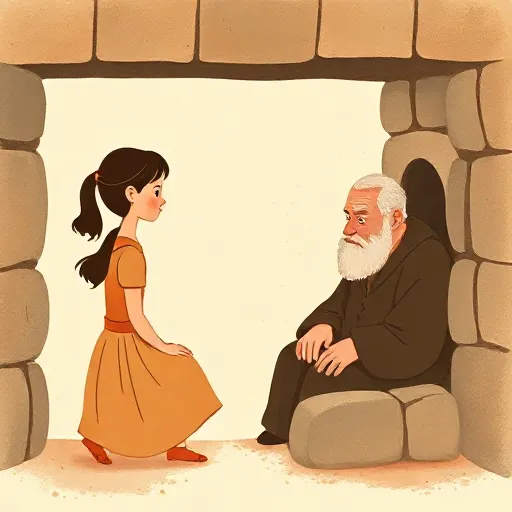
On a damp afternoon in 1534, Margaret Roper slipped into her father’s prison cell in the Tower of London. King Henry VIII had demanded that every important person swear an oath acknowledging him as supreme head of the church. Thomas More (1478–1535), once the king’s lord chancellor and a close friend, had refused. Now his daughter was pleading.
Margaret said that her father should just sign, because all his friends had done it and no one expected him to believe it in his heart.
More’s answer was gentle but firm. He told her a story—one of his famous merry tales. A juror named Company had been the only one on a jury to refuse a dishonest verdict. When the others grumbled, Company asked, in effect, “If I go to hell for going along with you, will you come with me for good company?” Company would not trade his conscience for company’s sake.
For More, a conscience was not just a feeling. It was a judgment about what was truly right or wrong, based on the deepest truths you had come to know. And once you were sure in your conscience, no threat, no promise, and no crowd should make you go against it. That idea shaped More’s entire life—and led him to the scaffold.
The Best Philosopher: Training for Death

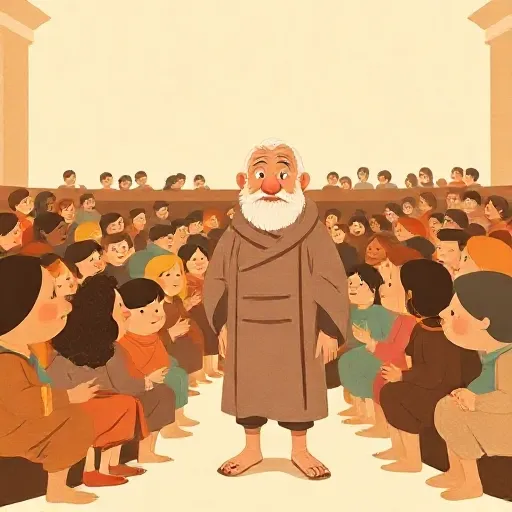
From his earliest studies, More loved the philosophy of Plato (c.428–348 BC) and Plato’s teacher, Socrates (c.470–399 BC). In a world full of noisy competition for money, power, and pleasure, Socrates had done something shocking: he stood still and asked hard questions. When Athens condemned him to death for it, he drank poison rather than say he was sorry.
More called Socrates “the best philosopher” and took a key idea from him. Philosophy, Socrates had said, is really a preparation for death. That does not mean being morbid. It means training your soul not to be ruled by bodily cravings and panic, so that you can keep your sights on truth and goodness—even when it costs you something.
More made this training his own. As a young man, he gave lectures on Augustine’s City of God, focusing on philosophy and history as much as theology. He translated the comic dialogues of Lucian (c.120–180 AD), which mocked arrogant fake philosophers, and he wrote poems about the battle between reason and fleeting desires. A wise person, he believed, would choose “glad poverty” over fortune’s false promises, just like Socrates. That inner freedom was his goal—a liberty no prison could take away.
Reason Must Rule Like a King
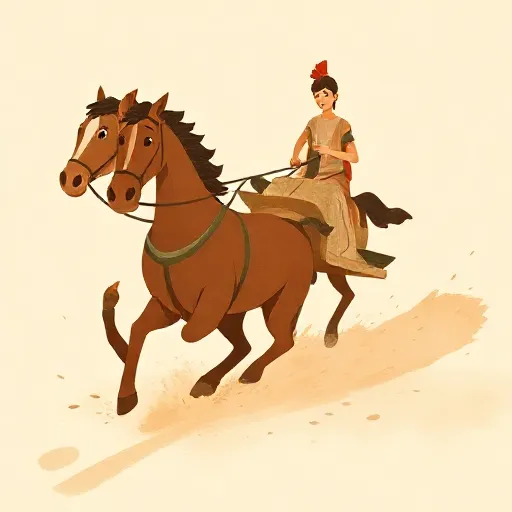
Inside every person, More argued, reason ought to reign like a king. He loved Plato’s image of a charioteer struggling to control two powerful horses—one noble, one unruly. Those horses stand for different parts of the soul. If reason holds the reins firmly, the soul moves toward virtue. But if the horses bolt, reason gets dragged along by passions and the whole person crashes.
More never claimed that reason alone is enough. Reason needs training, education, and—he was a devout Christian—God’s grace. That is why he insisted that his three daughters be educated just like his son, studying philosophy, medicine, and sacred literature. Only a well-schooled mind, he thought, can form a good judgment—a judgment that will not be swayed by the next loud voice.
He also saw law as reason made public over time. Laws about property are not random; they grow from collective reasoning and agreement. Yet More was realistic. In his Dialogue of Comfort he quoted the ancient moral philosopher Plutarch: some laws are like cobwebs. The little flies get trapped, while the big bumblebees break right through. Reason is no magic shield. It must be used constantly and backed by courage and community.
The Spiritual Battle: Taming the Horses

While locked in the Tower awaiting his own trial, More wrote his final Socratic dialogue, A Dialogue of Comfort against Tribulation. In it, terrified young Vincent seeks advice from wise old Antony as Turkish armies prepare to invade Hungary. Vincent’s fears mirror More’s own.
Antony does not just hand out tips. He leads Vincent on a long, careful journey of self-knowledge. Using images of steering a ship through a storm and guiding wild horses, Antony helps Vincent discover which “seeds” are planted in the garden of his soul and which need watering. Only after Vincent’s mind is calm does Antony finally address his deepest terror: torture and death.
More’s point is that reason can guide us only when the passions have first been steadied. That inner calm requires what he called a spiritual battle—the daily work of training your mind and will, like a gardener pulling weeds or a rider learning to use the bridle. And it demands something beyond reason: prayer and grace. God gave us reason, More believed, so that we can cooperate in our own self-government. But we cannot do it alone.
The Laughing Philosopher: Dialogue, Freedom, and Truth

Erasmus (1466–1536), More’s close friend, called him a second Democritus—the “laughing philosopher.” More had a sharp eye for the ridiculous. He loved Lucian’s comic dialogues because they exposed people who were absurdly sure of themselves without ever having examined their own souls.
More believed that truth is best pursued through open, respectful dialogue—not through force or bullying. In his most famous book, Utopia, a character named Raphael Hythloday (the name means “healer and nonsense-speaker”) debates a character named Thomas Morus (whose name means “fool”). The dialogue ends with riddles, not a tidy answer. More never tells readers what to think; he challenges them to think for themselves.
Even in government, More fought for free speech. As Speaker of the House of Commons in 1523, he asked the king to let members speak freely, because honest deliberation requires the safety to say what you really believe. He told Henry VIII that before making a drastic religious change he should consult not just his paid advisors but the wisest ancient theologians from across all of Christian history. For More, truth comes from the widest possible conversation, tested over centuries.
Why Your Conscience Still Speaks

You may never face a king who demands an oath. But you will face moments when the crowd wants you to do something you know is wrong—cheating, bullying, staying silent when someone is hurt. More’s philosophy says your conscience can be your most loyal guide—if you train it carefully.
That means reading, thinking, talking to wise people, and asking yourself: “Am I being ruled by reason or by fear of being left out?” More reminds us that no one can force you to go against a well-formed conscience, and that the hardest choices sometimes bring the deepest peace. He walked to the scaffold terrified, but his heart was light. He had spent a lifetime preparing his soul, sifting his reasons, and listening to the best minds across history. In the end, his conscience was the one thing worth more than his life.
Think about it
- If everyone around you agrees that something is okay, but deep inside you feel it is wrong, how would you decide what to do?
- Can a person’s conscience ever be mistaken? If so, how should we check it?
- Is it ever right to stay silent about your beliefs rather than risk losing friends or opportunities?