
Why Be Good When Nobody Is Watching? Plato’s Big Question
The Ring That Makes You Invisible

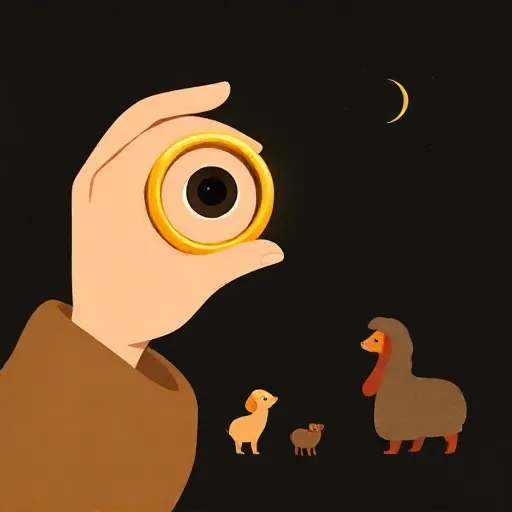
A shepherd once found a golden ring in a crack in the earth. When he twisted it, he became invisible. Nobody could see what he did. Soon he was slipping into the palace, stealing treasures, and killing the king. He had all the power he wanted, with no fear of being caught.
What would you do with that ring? Would you still keep your promises, return lost money, or play fair? That question is at the center of Plato’s great work, the Republic. Two thousand years ago, Plato’s brothers Glaucon and Adeimantus threw down a challenge: prove that being just is better than being unjust — not because you’ll get a good reputation, but because justice itself makes you happier. Socrates, the book’s hero, took on the challenge. The long answer he gave changed philosophy forever.
Socrates the Questioner: A Life of Confusion?
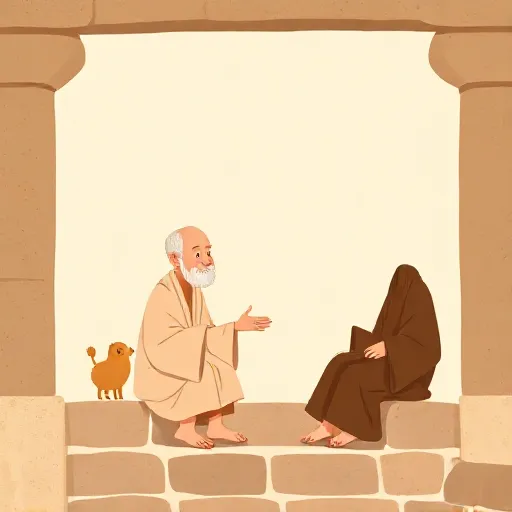
Before he built his big theory, Socrates (c. 470–399 BCE) spent his days in the marketplace of Athens doing something maddening. He’d ask a self-confident general, “What is courage?” Or a famous religious expert, “What is holiness?” At first the person would give examples — “courage is staying in your place in battle!” — but Socrates would poke holes until the expert was tied in knots. He called this cross-examination elenchos (eh-LEN-koss). It usually ended in aporia (ah-POR-ee-ah), a state of genuine puzzlement where nobody could give a clear definition. Socrates himself said, “The unexamined life is not worth living.” He was executed for annoying people so much.
Plato (c. 428–348 BCE), Socrates’ student, wrote early dialogues that show these bewildering sessions. They reveal that we often toss around words like “courage” or “moderation” without really knowing what they mean. Something is missing: you can’t just list brave actions; you need a single idea that holds them all together. The search for that idea pushed Plato toward the thought that there must be perfect, invisible models — Forms — of all the things we value: Courage Itself, Justice Itself, Beauty Itself.
A City in Your Soul: Justice as Inner Harmony

So what is justice? Plato got clever. He said: look at a whole city before you look at a single soul. A city, he argued, forms because no one can survive alone — we need farmers, builders, soldiers, and leaders. Each person should do the one job they’re naturally suited for. That principle, “one person, one job,” leads to three classes: workers who produce food and goods, soldiers who defend, and a few thinkers who rule. When everyone minds their own business, the city is just.
The soul, Plato claimed, works the same way. He divided it into three parts: reason (the thinking part), spirit (the part that feels anger and pride), and appetite (the hungers for food, pleasure, and money). In a just person, reason rules, spirit is its loyal ally, and appetite obeys. That inner harmony is what Plato called the four cardinal virtues: wisdom in reason, courage in spirit, moderation — the agreement that reason should lead — and justice as the overall balance.
Plato didn’t stop there. He said the only way a city could ever be truly happy is if its rulers were philosopher-kings — people who have trained their minds to see the Forms and, most of all, the Form of the Good, the source of all value. Until philosophers rule, “cities will have no rest from evils.” Harsh? Maybe. But the point was that knowledge of what is really good must guide our choices, not just cleverness or appetite.
The Ladder of Love: Climbing Toward Beauty

Why do we want to be just? In a separate dialogue, the Symposium, Plato gave a more personal answer. He described an old priestess named Diotima who taught Socrates that all living things — including you — want to live forever. Since we can’t, we try to make something that will outlast us: sometimes children, sometimes great deeds or works of art. This drive is a kind of love (Greek eros), a restless desire for what is beautiful and good.
Diotima described a scala amoris (ladder of love). You start by loving one beautiful person. Then you notice beauty in many people, then in a lovely mind, then in whole systems of law. At the top, you catch a glimpse of the Form of Beauty itself — something that never changes or fades. That vision, Plato hinted, is what makes a life truly good. The climb isn’t fast and it isn’t lonely; it’s a shared upward journey with friends who also crave wisdom.
Measure, Music, and the Good Life

In his later years, Plato kept circling the idea that what is good is always something measured. In the Philebus, he argued that everything in the universe belongs to one of four boxes: limit (an exact number or proportion), the unlimited (things that just go “more and more,” like heat without a stop), the mixture of both, and reason as the cause that creates the right mix. Health is a mixture — the right amount of hot and cold, dry and moist. A soul that is happy is also a mixture: knowledge and true, pure pleasures blended in due proportion.
That obsession with measure (Greek to metrion) spilled into the Timaeus, where Plato described a world-soul built from mathematical ratios, like a grand musical scale. The cosmos, he thought, is ordered and beautiful, not random chaos. If you want to be happy, you have to mimic that order inside yourself. You can never achieve perfect balance once and for all — humans are always leaking, always hungry, always changing — but you can keep recalibrating, like tuning a lyre each morning.
Plato’s Challenge to Us Today

Plato’s world can seem far away. Yet his question hasn’t faded: is there a recipe for a happy life, and does it require being a whole, well-ordered person rather than a jumble of urges? He refused to pretend that any single virtue or single pleasure was enough. You need wisdom to know what matters, courage to stick with it, moderation to keep pleasure in check, and justice to hold it all together.
The next time you notice a battle inside yourself — one part wants to scroll forever, another wants to finish the project the right way, and a third just wants to win an argument — you’re living Plato’s puzzle. He didn’t hand us a ready-made formula with exact numbers, but he left us a map: measure what you desire, mix it with real knowledge, and never stop asking what truly deserves the top spot in your soul.
Think about it
- If you had the ring of invisibility and knew nobody would ever find out, would you act any differently? What does your answer say about what you value — reputation or a just character?
- Plato thought a just soul is like a city where all three parts get along. Can someone be happy if one part (say, anger or ambition) is always bossing the others around?
- Why might studying things like math or music, which are about order and pattern, help someone become a better person? Can you spot “measure” in a choice you made this week?