
What Happens When Your Conscience Points the Wrong Way?
A Split Self: The Ancient Idea of an Inner Judge

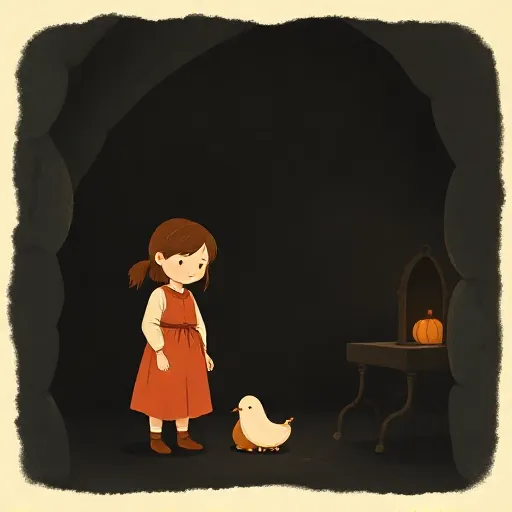
You’re lying in bed after a day when you said something cruel to a friend. You can’t sleep because a voice inside keeps replaying what you did. That voice knows your secret and won’t let you forget it. You feel split in two: one part of you that did the bad thing, and another part that stands apart, watching and judging.
Over 2,400 years ago, Greek playwrights first gave this feeling a name: syneidesis (sin-eye-DEE-sis), which meant “shared knowledge with oneself.” In Latin it became conscientia, the root of our word conscience. At first, this inner watcher was only a witness, not a judge. It testified to what you had done, but it didn’t tell you whether it was right or wrong.
The writer C. S. Lewis (1898–1963) later called it an “inner witness.” Your conscience was like a shadowy accomplice who simply reported your deeds. It didn’t hand down moral rules. You were supposed to know right from wrong in some other way. Still, the idea of being your own observer planted a seed: humans could turn back on themselves, becoming both the one being judged and the one holding the scales.
St. Paul Makes It Law: From Judge to Lawgiver

Centuries later, a man named Paul (ca. 5 CE–ca. 64/67 CE), one of the founders of Christianity, transformed the idea. Paul still believed in the inner witness, but he gave it a crucial new job: conscience could now issue commands. It became a legislative conscience — an internal lawgiver.
Paul explained that even people who don’t know God’s written laws can still do what the law requires, because “the requirements of the law are written on their hearts.” Their consciences bear witness to this inner law, sometimes accusing them, sometimes defending them (Romans 2:14–15). On Paul’s view, the foundation of right and wrong is an objective natural law, accessible to everyone. Conscience is just its subjective voice inside you.
Paul also introduced a startling twist: conscience can be mistaken, and yet you must still follow it. He gave a real-life example. Some early Christians worried that eating meat that had been sacrificed to pagan idols was sinful. Paul argued that since the idols aren’t real, the food itself is harmless. But if a person’s conscience wrongly tells them it is sinful, they must obey that inner voice anyway. An erring conscience still binds. In one stroke, conscience became both a guide and a potential pitfall.
The Spark That Can’t Be Snuffed Out: Jerome’s Synderesis

In the 4th century, a monk named Jerome (ca. 347–420) made a strange discovery while reading the prophet Ezekiel. Ezekiel described a vision of four heavenly creatures, each with four faces: a human, a lion, an ox, and an eagle. Many people linked the first three faces to Plato’s three parts of the soul — reason, spirit, and appetite. But the eagle puzzled everyone.
Jerome proposed that the eagle stood for a “spark of conscience” (scintilla conscientiae) — a tiny, fiery point that never goes out. He gave it a new name: synderesis (sin-der-EE-sis). This spark, he said, is what makes even the worst sinner still feel their sinfulness. It was not quenched even in the heart of Cain, the first murderer.
Yet Jerome noticed a problem. Sometimes people seem to lose all shame. Their conscience appears to vanish. Jerome admitted that conscientia can “lose its place.” But he also insisted that synderesis can never be lost. That raised a huge question: if synderesis and conscience are different parts of the soul, how do they fit together?
Medieval Minds Debate: Can Your Conscience Go Wrong?
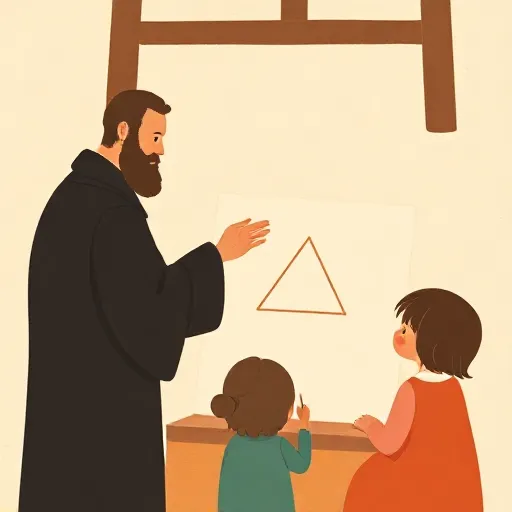
By the 12th and 13th centuries, the puzzle had exploded. The theologian Peter Lombard (1095–1160) included Jerome’s puzzling passage in his textbook, the Sentences, and soon every scholar had to comment on it. The first to tackle the problem head-on was Philip the Chancellor (ca. 1170–1237).
Philip asked: is synderesis a power of the soul, like sight, or a habit, like a tendency to tell the truth? He settled on a middle ground, calling it a “habit-like power” — an inborn disposition that always aims at the good. Conscience, he said, is what happens when you apply that universal pull to a specific situation. He used a chilling example. Imagine a universal rule from synderesis: Everyone who falsely claims to be the Son of God should be put to death. That rule is always right. But then your reason might apply it to a particular person — say, “This Christ fellow is falsely claiming to be the Son of God.” If that minor premise is wrong, your conscience will conclude, “Put him to death.” Your conscience has erred, but you felt obliged to follow it.
Later, Thomas Aquinas (1224/25–1274) refined the picture. He called synderesis an infallible natural habit that grasps the very first principles of the natural law, like “do good and avoid evil”. Conscience, however, is an act. It takes a general principle, adds a fact, and reaches a conclusion — a practical syllogism. If the minor premise is faulty, conscience errs. Still, Aquinas held that even an erroneous conscience binds you. Whether it excuses you depends on whether your ignorance is invincible (you couldn’t have known better) or vincible (you could have and should have known). His example: a man who honestly mistakes a woman for his wife and sleeps with her acts from invincible ignorance — he’s excused. But if you could have found out the truth and didn’t, you’re guilty.
Ockham’s Surprising Move: When Error Is Virtue

In the 14th century, William of Ockham (1287–1347) shook the whole debate. He abandoned the idea of synderesis entirely. Perhaps he thought all habits must be acquired by repeated actions — an inborn habit made no sense to him. Or perhaps he believed that the moral law depends only on God’s will, and God could, if he chose, make murder right tomorrow. If moral rules are not fixed in nature, an inborn knowledge of them would be pointless.
Ockham still believed in conscience, and he still held that you must always obey it. He also kept the distinction between vincible and invincible ignorance. But he went a crucial step further: he argued that following an invincibly erroneous conscience is not merely excusable — it is virtuous. You actually earn merit by doing it. He pictured someone walking down the street who sees a person who seems desperately poor. The general rule “help everyone in extreme need” kicks in. The passerby gives money. Later it turns out the person was a rich fraud. For Ockham, that act, done out of love and a sincere conscience, is good and pleasing to God. Ignoring your conscience, even an erring one, would be a mortal sin. In Ockham’s world, the state of your heart when you choose matters enormously.
Why This Ancient Spark Still Matters
We no longer use the word “synderesis,” but the questions these thinkers raised are still with us. Every time you face a moral dilemma — should you tell a painful truth? Is it okay to break a promise to avoid hurting someone? — you rely on an inner sense of right and wrong. That sense sometimes guides you perfectly. Other times, you look back and realize you were mistaken. Yet you had to decide in the moment.
The medievals show that morality isn’t just about getting the right answer. It’s also about the state of your heart when you choose. If you ignore your conscience, you betray something deep in yourself. Even an erring conscience, followed in honest good faith, might count for more than a correct action done for selfish reasons. The tiny spark — whether you call it conscience or something else — is part of what makes you human. So the next time you lie awake after a bad choice, remember: you’re part of a long, long conversation about why that voice speaks, and whether it can ever lead you astray.
Think about it
- Have you ever done something you felt was right, only to find out later it harmed someone? Did you still feel responsible? Why or why not?
- If God could change the moral rules tomorrow and make stealing right, would your inner sense of fairness change too, or does something inside you resist?
- Can two people both follow their consciences and end up on opposite sides of a conflict? What does that suggest about the nature of conscience?