Can a Rulebook Tell You the Right Thing to Do?
The Old Hope: Applying Big Moral Theories

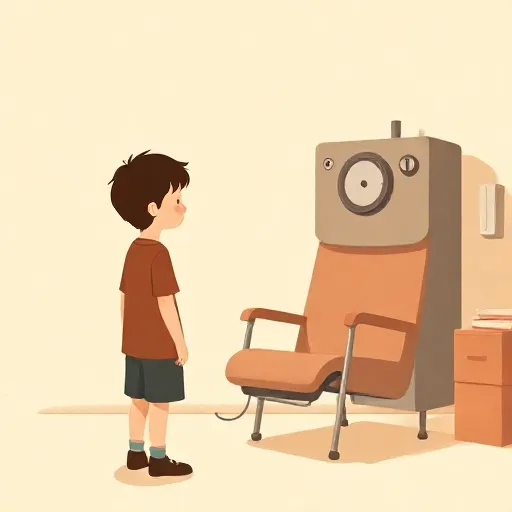
It is late at night in a hospital. A 14-year-old patient named Mia needs a blood transfusion, but her family says that their faith forbids it. The medical team believes she might die without it. What should they do?
Questions like this belong to bioethics, the study of right and wrong in medicine and biology. In the early 1970s, when bioethics was born, many philosophers were full of hope. They already had powerful moral theories — big, organized ways of thinking about good and bad, right and wrong. The idea was simple: take your favorite moral theory, lay it over a real-world problem, and read off the answer. That hope is often called the applied model of applied ethics.
Three huge theories dominated the toolbox. Consequentialism says that what makes an act right is its results — roughly, you should bring about the best overall outcome. A doctor who refused Mia a transfusion would ask, “Will letting her die produce more good than saving her?” Deontology, by contrast, insists that some actions are required or forbidden no matter their results. A deontologist might argue that a capable person’s free refusal must be respected as a duty, even if death follows. Virtue ethics looks not at acts alone but at character traits — honesty, compassion, courage — and asks, “What would a wise and caring person do here?”
Early bioethicists used these high theories eagerly. Alan Donagan built a Kantian case for informed consent. Tristram Engelhardt applied libertarian ideas to health care. Joseph Fletcher pressed utilitarian thinking onto a wide range of medical puzzles. The attraction was real: a theory gives you a single, coherent lens. When everyday moral instincts conflict, a theory promises to break the tie, much as a referee settles a sports dispute. It also offers systematic justification — if someone demands, “Why did you do that?” you can point to a clear chain of reasoning.
But the romance with high theory soon cooled. The first blunt problem is which theory? A utilitarian and a deontologist can look at the same transfusion case and prescribe opposite actions. Defending one theory against all others turns out to be wrenchingly difficult. Even inside a single camp, there are bitter fights — act-utilitarians square off against rule-utilitarians, and not all Kantians agree on what the categorical imperative permits.
Then there is the sheer fuzziness of real life. High theories are built at an altitude where details blur. Norman Daniels, a philosopher who worked on health care justice, eventually admitted that theoretical principles alone are too coarse for actual policy making. A theory might approve several different decisions at once, leaving a doctor or a government with no final nudge. And when a clinical ethicist walks into a hospital room and starts explaining Kant to the family and nurses, the audience is likely to be lost rather than persuaded. The old hope was not wrong; it was just incomplete.
The Great Compromise: Four Principles for Everyone
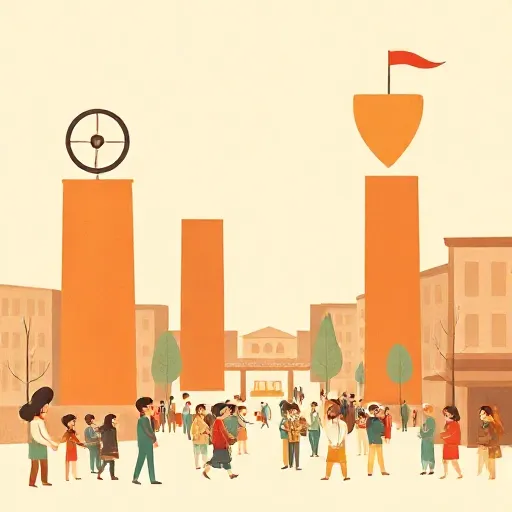
If big theories were too divisive, what could take their place? In 1979, Tom Beauchamp and James Childress published a book that reshaped bioethics. They proposed four mid-level moral principles:
- Autonomy: people should direct their own lives and choices.
- Beneficence: actively do good and help others flourish.
- Nonmaleficence: avoid causing harm — the ancient “first, do no harm.”
- Justice: give each person what they are due, sharing burdens and benefits fairly.
These four principles, they argued, do not require you to believe in a single high theory. Beauchamp described himself as a rule-utilitarian, Childress as a Christian deontologist — yet they agreed on the list. Their framework was designed for a pluralist, secular society where people bring different basic commitments.
Where do the principles come from? Not from a grand deduction, but from what Beauchamp and Childress call the common morality. This is a set of norms they believe all morally serious people share — rules like “tell the truth,” “keep promises,” and virtues like honesty. Its authority, they say, is historical: these norms have helped human communities flourish across very different times and places.
The method is not a one-way street from principle to case. Early editions of their book gave the impression of a top-down march: theory justifies principles, principles justify rules, rules justify judgments. The authors now explicitly reject that picture. They embrace reflective equilibrium, a method where your responses to real cases and your principles work on each other like two people tuning a guitar. You might start with a principle (“respect autonomy”), see that it leads to a troubling result in a concrete case, and then adjust either the principle or your reading of the case, going back and forth until the whole set feels balanced.
This hybrid approach blends two very different ideas. The back-and-forth is a coherentist strategy — nothing is untouchable, everything must fit together. But the common morality is treated as a foundation, fixed enough to anchor the whole project. Critics have poked at exactly this mixture. John Arras asked: if the common morality is itself a set of considered moral judgments, why is it shielded from the revising back-and-forth? And once you fully embrace wide reflective equilibrium, where no type of commitment — not case intuitions, not background theories, not principles — gets automatic priority, the notion of a “principle-centered” approach starts to blur. Principles become just one more thing that might need rethinking.
Even so, the four-principles framework became bioethics’ closest thing to a common language. It gave clinicians and policy makers a manageable checklist, without asking them to settle the war between Kantians and utilitarians first.
The Case-by-Case Approach: What’s the Story?

Not everyone was happy with even mid-level principles. Some thinkers argued that what really guides moral thought is not a ladder of principles descending onto a case, but the case itself. This approach is called casuistry, or case-based reasoning.
The basic move is analogical. When you face a hard situation, you look back at a similar, already-settled case, recall what was decided, and ask whether the differences between then and now matter enough to change the verdict. A hospital ethics committee might say, “Remember the Evans case from three years ago? The patient was a teenager, too, and we honored her refusal. What’s different here?”
Casuistry comes in two flavors. A moderate version still uses principles — not as deduction machines, but as helpful summaries that let you spot what is morally relevant across cases. A radical version insists that principles are purely after-the-fact descriptions of our case responses. On that view, principles have no independent power; they are just our best guess at what we already do when we face concrete choices.
Proponents point out that casuistry fits the rhythm of real medical thinking. Doctors and nurses already reason with cases. It also seems promising for a pluralistic society, because people who disagree about high theory can often agree on a specific case outcome without agreeing on why. The philosopher Stephen Toulmin recalled serving on a national bioethics commission where members clashed over ultimate principles yet reached consensus on one difficult case after another. That pattern suggested that the applied model — theory first, answer later — was describing something that rarely happened.
But the approach has its own cracks. Deciding what counts as a case — and what counts as a faithful description of it — is not a neutral act. A male-dominated medical culture might frame “the issue” in ways that sideline women’s experiences. Radical casuistry, if it leans entirely on analogies from past decisions, can become morally conservative. It may struggle to criticize a tradition, because the tradition itself supplies all the reference points. And as critics note, analogical reasoning still needs some compass — principles, or at least settled values — to tell you which similarities matter and which do not.
When Stories Do the Heavy Lifting

A further step away from theory-led bioethics is narrative ethics, which puts storytelling at the center. Its core idea is that moral meaning does not lie in abstract rules alone but in the particular, tangled shape of a human life. A principle like “respect autonomy” sounds vital, but you only grasp what respecting this person’s autonomy demands by hearing her story — what she values, what she fears, what she has already endured.
Narrative approaches take several forms. One treats stories as a supplement: you keep your principles and your reflective equilibrium, but you fill the “cases” with rich, first-person narratives rather than thin medical summaries. Another ties morality to the historical identity of a community — think of the physician’s role shaped by the Hippocratic Oath, a narrative that reaches across centuries. A third, more radical version sees narrative as a replacement for the whole project of moral justification. Here, there is no final proof that one tradition or story is right over another; the goal is to keep the conversation open, especially for those whose stories are usually silenced.
Critics ask a sharp question: how exactly does a story justify a decision? A beautifully told narrative can be internally coherent and still recommend something cruel. The demand of bioethics is not just to understand but to evaluate — to say that a policy or an action is right or wrong. Narrative alone can feel like a sail without a keel, drifting whichever way the wind of emotion blows. Yet even the critics rarely say stories should be ignored. The deeper point is that principles without narrative are blind; narrative without principles may be aimless.
Seeing Through a Feminist Lens

A feminist approach to bioethics is not merely a different topic; it is a different way of framing every topic. It foregrounds questions that other styles can sideline: Whose experience counts? Who holds power? Which concepts are quietly coded as masculine or feminine?
Susan Sherwin’s work on abortion illustrates this. Instead of starting with “what is the moral status of the fetus?” — a question that can float far above real lives — a feminist lens focuses on the fact that pregnancy happens inside women’s bodies and reshapes women’s lives in ways no abstract principle can fully capture. The most morally urgent feature, from this perspective, is not a general rule about personhood, but the particular vulnerability and agency of the person whose body is involved.
Feminist thinkers also examine the very tools of bioethics. The idea of a single common morality, for instance, can sound like a neutral starting point. But if the “common morality” is described by a small group of experts, it may crowd out the insights of those on the margins. The method of standpoint theory suggests that the most socially disadvantaged people often see aspects of a situation that the powerful miss. A bioethics that ignores that may be tidy, but not true.
Even long-standing conceptual pairs — reason and emotion, public and private — come under suspicion. Reason has historically been linked with men, emotion with women, and the male-coded side has been treated as more serious. Margaret Little points out that traditional moral thinking downplays emotion as a source of moral understanding, even though a doctor’s compassion or a parent’s fierce protectiveness can be exactly what reveals the right thing to do. Feminist bioethics argues that a just public framework cannot be built by pretending that relational, emotional, and bodily realities are irrelevant.
The approach is not a single theory; feminist bioethicists disagree on many things, including whether physician-assisted dying should be legalized. But across that variety, the method shares a theoretical nerve: it refuses to separate moral reasoning from the living, gendered, power-laden world in which decisions actually unfold.
Why This Still Matters in Your Own Life

You may never have to decide about a blood transfusion for a dying patient. But you already do bioethics without the name. When you argue with a friend about whether a school rule is fair, you are balancing the kind of principles Beauchamp and Childress describe. When you say, “Last time we had a situation like this, we handled it differently,” you are doing casuistry. When you explain a conflict by telling what happened from your side, you are a narrative thinker. And when you notice that some people’s voices keep getting ignored, you are asking a feminist question.
The story of moral theory and bioethics is not a story of one method winning. It is a story of discovering that real decisions are too tangled for a single kind of tool. High theory can give you deep reasons but often cannot choose between two decent policies. Mid-level principles can organize a conversation but may paper over genuine disagreement. Cases can ground you in reality but can also trap you in the past. Stories can make you wise to particular pain, but a good story is not automatically a good guide. Feminist commitments can reveal hidden bias, yet they do not automatically settle the right action.
What philosophy offers is not a magic answer machine, but a sharper sense of what you are doing when you try to find an answer. That is worth knowing. The next time you face a messy, morally serious choice — whether about a promise, a punishment, or who gets the last word — you will not be empty-handed. You will have a whole toolkit, and a much older conversation, walking into the room with you.
Think about it
- If a group of people with very different beliefs can agree on a concrete decision — say, “we should not lie to this patient” — does that make the decision right, or does it just mean people found a comfortable compromise?
- Imagine a patient’s story tugs your heart in one direction, but a clearly stated principle points the other way. What should you do first? Can you imagine a situation where rethinking the principle is the wiser move?
- Think of a rule at your school or in your community that everyone follows but that you suspect ignores the experience of some group of people. How would you use the ideas of casuistry, narrative, or feminist standpoint to start a serious conversation about changing it?