Can You Fight for Freedom and Still Be a Terrorist?
A Blade in the Square
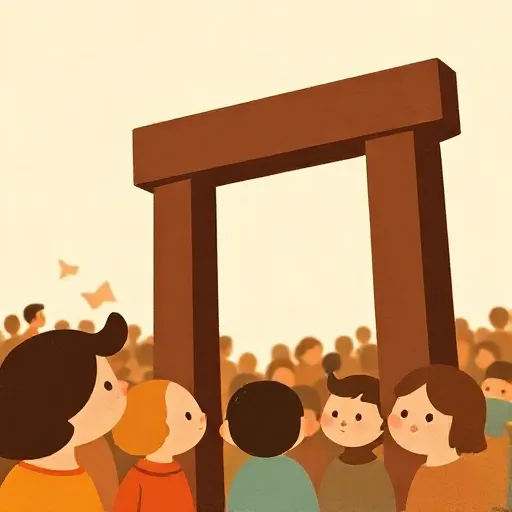
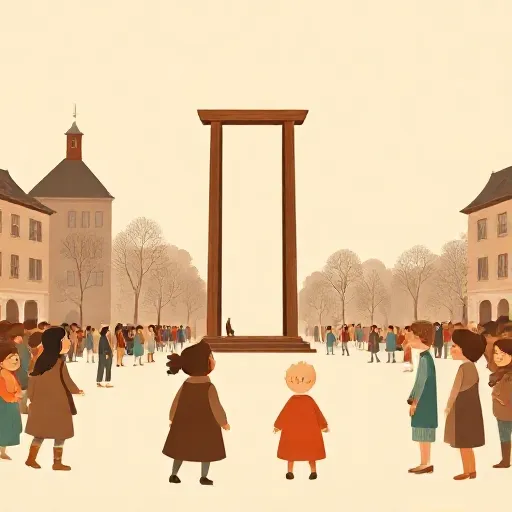
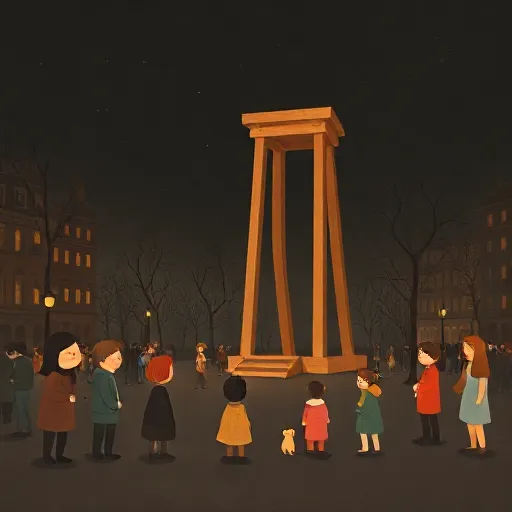
Paris, 1794. In the crowded square, a heavy blade falls with a thud. For months, the new French government has used public executions to keep power. They call it terrorism—and they are proud of it. Their leader, Maximilien Robespierre (1758–1794), says terror is “an emanation of virtue.” Without terror, he believes, the revolution cannot survive its enemies. The goal is not just punishment. It is to reshape all of society by making people so afraid they obey without question.
This is where the word “terrorism” begins. Back then, it meant the state using fear to control its own citizens. The Jacobins, the revolutionary group in charge, set up special courts that ignored normal rules of justice. Anyone could be accused. The accused had few rights. Punishment was almost always death. The terror was meant to be a teaching tool: only those with republican virtue were safe. It lasted less than a year, but it burned the word into history—and into the minds of everyone watching.
The Bomb and the Deed

By the 1880s, the meaning of terrorism shifted. Revolutionaries no longer controlled a state. They fought against states they saw as oppressive. Some anarchists and nationalists believed words and petitions had failed. So they turned to propaganda by the deed: dramatic acts of violence meant to shock the powerful and inspire the powerless. They didn’t have armies. Their weapon was a bomb, a pistol, or a knife aimed at a single high-ranking official.
Unlike the Jacobins, these revolutionaries mostly chose their targets carefully. Russian groups like the People’s Will argued you could only kill an official if he was deeply responsible for injustice. They avoided killing bystanders. In their minds, they were political assassins, not terrorists. But the public and the press called them terrorists anyway. The word began to carry a heavy insult. No one called themselves a terrorist anymore. They were freedom fighters. The label you used depended entirely on which side you chose.
A Definition Built on Fear
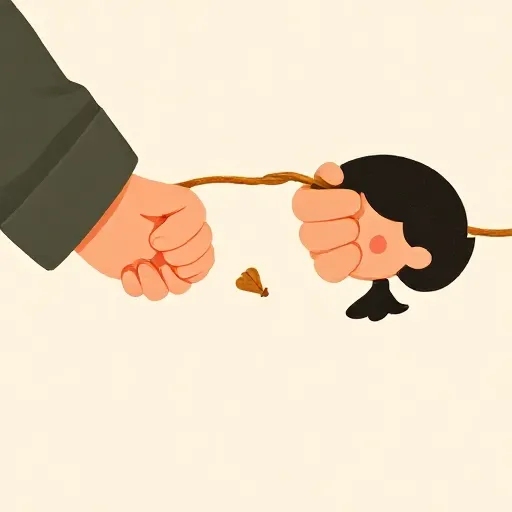
So what is terrorism, really? Despite all the political shouting, philosophers notice two core pieces in almost every use of the word: violence and intimidation (causing great fear). Terrorism uses violence not just to harm bodies, but to send a message: change your behavior, give up your fight, obey—or worse will come. That message is aimed at a wider audience, beyond the actual victims.
But here comes the big split. Some definitions are wide. They include any violent act meant to intimidate for a political goal, whether done by a state or a rebel group, whether hitting soldiers or civilians. Other definitions are narrow. They add a crucial extra rule: terrorism must target non-combatants or innocent people—those who are not directly involved in the violence or the oppression. On a narrow definition, the Russian revolutionaries who killed officials might not be terrorists, because their victims were government agents. On a wide definition, they were.
Why does this matter? Because if you define terrorism as violence only against ordinary, uninvolved people, then a lot of historical acts we call terrorism no longer fit. And that changes how we judge them. It’s the difference between calling someone a war criminal and calling someone a soldier. The definition you choose shapes the moral verdict before you even start arguing.
Is It Ever Justified?
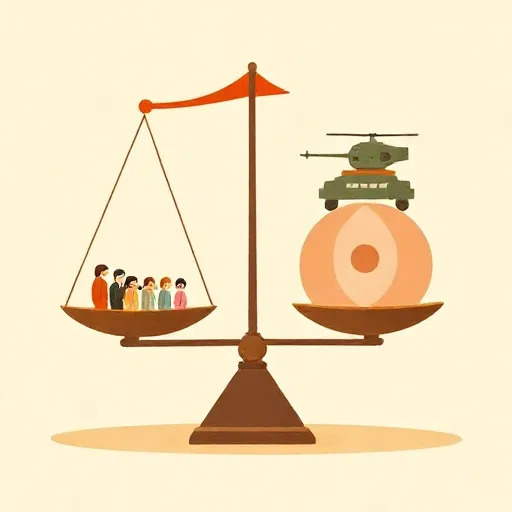
If terrorism means killing innocent people to create fear and force change, can it ever be right? Many philosophers say no. They start from a simple moral idea: you must not use innocent human beings as tools. When a bomb kills random shoppers in a market, each victim is treated like an object, not a person. They had done nothing to lose their right to life. That’s why even many revolutionaries in the 19th century refused to target bystanders. They still had a moral line.
Yet some thinkers leave the door open a crack. Consequentialists judge actions only by their results. For them, terrorism is not wrong in itself; it’s wrong only if it leads to worse outcomes on balance. A philosopher like Kai Nielsen (1926–2021) argued that if a small amount of terrorist violence could end a massive injustice—like colonial rule or genocide—and nothing else would work, then it might be justified. But he also warned that terrorism almost never succeeds on its own. It often makes things worse.
Others hold a nonconsequentialist view. They say some acts are wrong even when the consequences might be good. Still, they ask: what if a whole people faces extermination? Michael Walzer (born 1935) described a supreme emergency—a moment when a community is about to be destroyed utterly, and the normal rules of war cannot save it. In such an extreme case, he argued, bombing enemy cities to terrify the population into surrender might be the only hope. But he set the bar very high. Once the immediate threat passes, the killing of innocents becomes murder again.
The majority of philosophers, however, believe the bar is too dangerous to lower even in a supreme emergency. They warn of a slippery slope: if you allow even rare exceptions, soon every desperate group will claim its cause is an emergency. They argue we must keep the rule absolute: deliberately killing innocent people is always wrong. The debate remains fierce, with no winner yet declared.
Words That Shape Who We Are

So why does this old argument still matter to you? Because every time you hear the word “terrorist” on the news, in a video game, or in a conversation, someone has made a choice. They have decided—consciously or not—which definition to use, which side to favor, and which acts to condemn. The word is not a neutral mirror of reality. It carries a story about who is right and who is wrong.
Understanding this doesn’t mean you have to pick a side. It means you can pause and ask: Who is being called a terrorist? Who is doing the calling? Are they targeting soldiers or shoppers? What do they hope to achieve? By asking these questions, you become harder to manipulate. You notice when a label is being used to shut down debate rather than open it. You learn that big, scary words can hide complicated truths.
Philosophy won’t hand you a perfect definition of terrorism. But it gives you something better: the habit of looking closely at the words that push your emotions around. That’s a skill that works on any playground conflict, any political argument, and any story that tries to tell you who the monsters are.
Think about it
- A group fighting against a cruel government bombs a café, hoping to scare people into demanding change. Are the bombers freedom fighters or terrorists? Does your answer change if you support their cause?
- If a country is about to be completely destroyed and its leaders bomb enemy cities to save themselves, could that ever be acceptable? What if they try everything else first?
- The word “terrorist” is often used as an insult to discredit an opponent. Can we invent a neutral term for political violence—one that doesn’t already take a side? Why or why not?