Can You Be Evil Without Being a Monster?
A Man in a Glass Booth

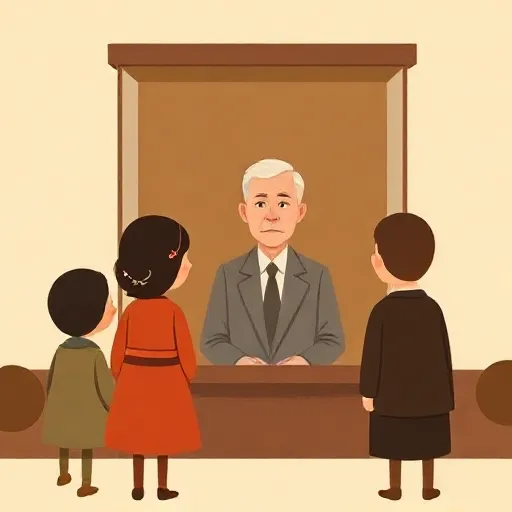
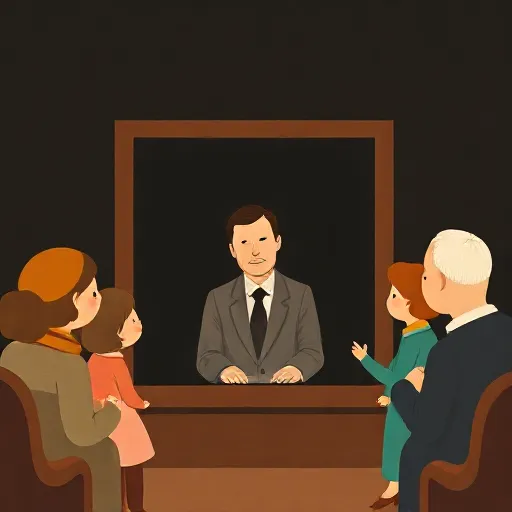
In 1961, a courtroom in Jerusalem. A man sits inside a booth made of bulletproof glass. His name is Adolf Eichmann. During World War II, he organized the transport of millions of Jewish people to death camps. Now he is on trial.
In the audience sits Hannah Arendt (1906–1975), a German-Jewish philosopher who fled the Nazis and now lives in America. She is reporting on the trial for The New Yorker magazine. She has spent years studying totalitarianism — the form of government that turned Nazi Germany and Stalin’s Soviet Union into machines of terror. She expects to see a monster.
But the man in the glass booth is not a monster. He is bland, ordinary, strangely shallow. He speaks in clichés. When he tries to explain himself, he cannot string together an original thought. What strikes Arendt most is not cruelty or hatred. It is something more puzzling: he seems unable to think. Not unintelligent — but unable to look at anything from another person’s point of view.
This observation sent Arendt on a philosophical journey that would last the rest of her life. How can someone do monstrous things without being a monster? And what does that tell us about the way we live together — or fail to?
When Terror Becomes the Rule

Before the trial, Arendt had already written The Origins of Totalitarianism (1951). In it, she argued that totalitarianism was something brand new in history. It was not just a more extreme version of tyranny or dictatorship. It broke every political and legal tradition that came before it.
What made it new? First, totalitarianism runs on ideology — a single big idea that claims to explain everything. In Nazi Germany, the ideology was about racial struggle. In Stalin’s Russia, it was about class struggle. The ideology pretends to be scientific. It says: we are not choosing to do these things; we are simply obeying the laws of history.
Second, the government is deliberately chaotic. Arendt discovered that totalitarian states are not orderly pyramids. They are mazes of competing institutions with shifting hierarchies — so nobody can be sure who is in charge, and nobody can be held accountable. Above the maze sits the secret police, the real center of power.
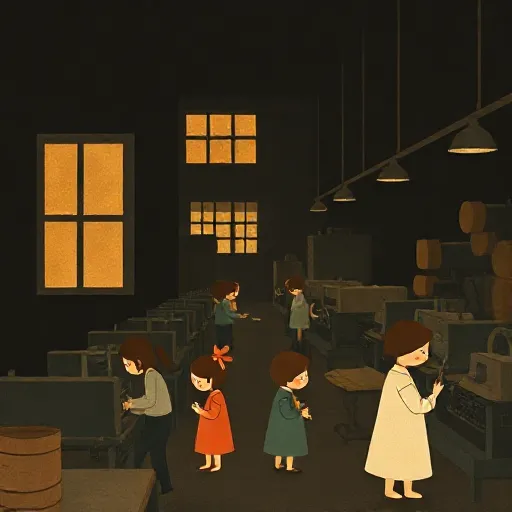
Third, the camps. Arendt called the concentration and extermination camps the “true central institution” of totalitarianism. They were, she wrote, laboratories where the regime tested its core belief: that everything is possible. The goal was not just to kill. It was to erase what makes someone a person — their spontaneity, their uniqueness, their ability to act in unexpected ways. The camps aimed to turn human beings into interchangeable bundles of reactions. The ultimate aim was to make people superfluous — to prove that human beings do not really matter.
Arendt believed that understanding totalitarianism is urgent. Only by grasping how it works can we judge whether something in our own time serves totalitarian goals or not.
Three Ways to Be Human
After writing about totalitarianism, Arendt asked a deeper question: what does a truly human life look like? Her answer came in The Human Condition (1958). She divided the active life — what she called the vita activa — into three basic activities: labor, work, and action.
Labor is everything you do to stay alive. Eating, cleaning, farming, caring for your body. Labor never ends — you eat, and tomorrow you are hungry again. It produces nothing permanent. All animals labor. When you labor, you show that you belong to the human species, not who you are as an individual.
Work is different. Work builds things that last. A carpenter making a table, an architect designing a school — these are acts of work. The things we make outlast us and create a stable, shared world of objects and institutions.
Action is the highest of the three. Action means speaking and doing things in front of other people, not for survival or to produce an object, but to reveal who you are. When you stand up and say what you believe, when you join others to build something new, you are acting. Action answers the question every person silently poses to the world: “Who are you?”
Action depends on two things: freedom and plurality. Freedom, for Arendt, is not just picking between options. It is the ability to start something new, to do the unexpected. She called this natality, from the word for birth. Every baby born is a new beginning. Action carries that same energy into adult life. Plurality means that we are all distinct — no two people are interchangeable. Action only makes sense with others, just as a performance needs an audience.
This is why action is fragile. A table can last centuries. A courageous speech vanishes the moment it is spoken — unless someone remembers it and turns it into a story. Arendt believed the ancient Greeks valued poetry and history so highly because storytellers rescue action from oblivion.
Action has two built-in dangers. First, you can never predict where it will lead. Once you act, you set off a chain reaction, and nobody controls the outcome. Second, action is irreversible — you cannot undo a deed the way you rebuild a faulty chair. The remedies, Arendt argued, come from within action itself. To handle unpredictability, we have the power of promise — we bind ourselves to a course of action and create stability. To handle irreversibility, we have the power to forgive — we release each other from the unintended consequences of what was done.
The Space Where Freedom Appears
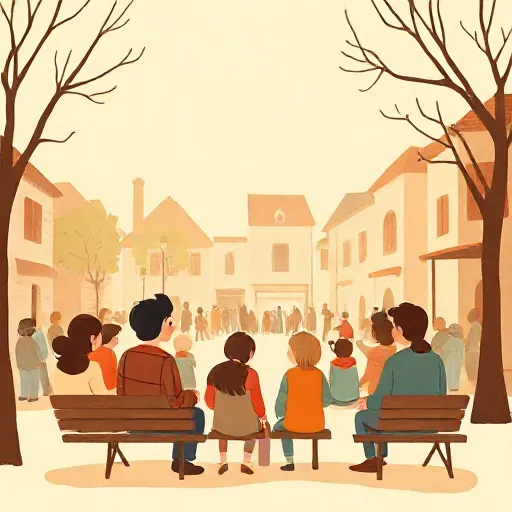
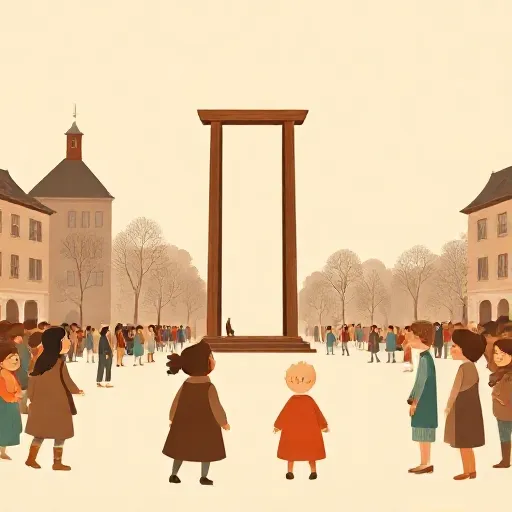
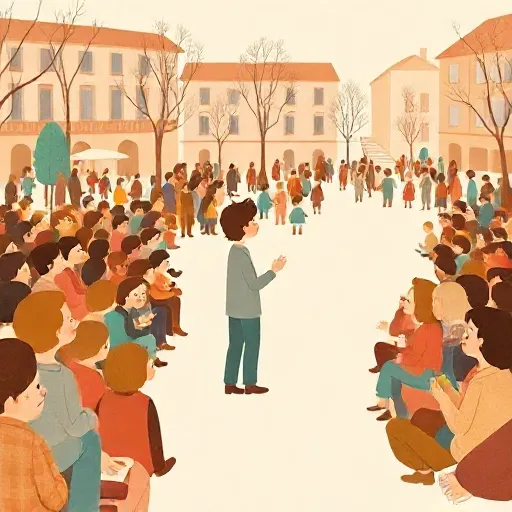
For Arendt, action cannot happen just anywhere. It needs a public space — what she called the space of appearance. This is anywhere people gather to speak and act together: a town hall, a protest march, a student council meeting. The space of appearance is not a permanent building. It comes into being whenever people act in concert, and it vanishes when they stop.
Politics, in Arendt’s view, is something humans build. It is artificial, not natural. Political equality is not a fact of nature — it is something we create and protect through institutions. For this reason, Arendt rejected the idea that ethnic or religious identity should be the basis of political community. What matters is that you show up as a citizen, not where your family came from.
Arendt also drew a sharp line between public and private interests. The public interest is not the sum of everyone’s private wants. It concerns the shared world that was here before you were born and will remain after you are gone. Sometimes that shared interest conflicts with what you privately want. Being a citizen means caring about more than your own comfort.
When people act together for a public purpose, Arendt called the result power. Power is not the same as strength (which belongs to individuals) or violence (which relies on coercion). Power arises from consent and persuasion. It is what keeps the public realm alive. And it disappears the moment people stop showing up.
Evil Without Monsters

The Eichmann trial changed Arendt’s understanding of evil. In her earlier work, she had described the evil of totalitarianism as radical evil — evil that destroys human plurality and makes people superfluous. But Eichmann did not fit that picture. He was not a demon. He was, she wrote, thoughtless. His “inability to think” meant he could never see a situation from anyone else’s perspective. He simply repeated slogans.
Arendt called this the banality of evil. The phrase caused a firestorm. Many readers thought she was downplaying Nazi crimes or excusing Eichmann. She was doing neither. She supported his death sentence and believed he was fully responsible. What she meant was that monstrous deeds do not require a monstrous personality. They can be done by people who have simply never learned to ask themselves: What am I really doing?
This led Arendt to explore the moral importance of thinking. Thinking, for her, is the silent dialogue you have with yourself. It is not the same as knowing facts or being clever. It is the habit of examining what you are doing and why. When you think, you cannot help but produce conscience as a side effect — because you realize you have to live with yourself afterward. If you do something wrong, you can walk away from other people. But you cannot walk away from yourself.
Thinking prepares the ground for judgment — the ability to look at a situation from more than one angle. Arendt borrowed a phrase from Immanuel Kant (1724–1804): the enlarged mentality. To judge well, you must train yourself to imagine how the world looks from where someone else is standing. The more perspectives you can hold in your mind, the more valid your judgment becomes. Eichmann had no enlarged mentality. He could only see through his own narrow keyhole.
Arendt believed that in times of crisis, thinking stops being a luxury. When old rules collapse and everyone around you is rushing in the same direction, the habit of thinking for yourself is the only thing that can keep you from being swept away.
Why This Still Matters

Arendt died in 1975, leaving her final book unfinished. But the questions she raised are far from settled. Every generation faces moments when the crowd is moving one way and something inside you hesitates. Those are the moments when thinking — the quiet conversation with yourself — becomes the most important thing you can do.
The space of appearance is not guaranteed. It has to be rebuilt, over and over, by people who care enough to show up. A classroom discussion. A family meeting. A group of friends deciding what they stand for. These are not small things. They are the places where freedom becomes real — where you discover who you are by acting and speaking among others.
Arendt would ask you: are you just laboring and consuming, or are you showing up? Are you repeating whatever you heard last, or are you thinking for yourself? The world you share with other people depends on your answer.
Think about it
- If you do something wrong because everyone around you is doing it, are you still responsible? Where do you draw the line?
- Can you think of a time when you spoke up in front of others and felt like you were really seen? What made that moment different from just chatting with a friend?
- Are there places in your own life — at school, online, in your neighborhood — that work like a space of appearance? What would it take to create one if it doesn’t exist?