Why You Had to Read Every Aristotle Book Before You Could Read Plato
A Pile of Scrolls at the Academy
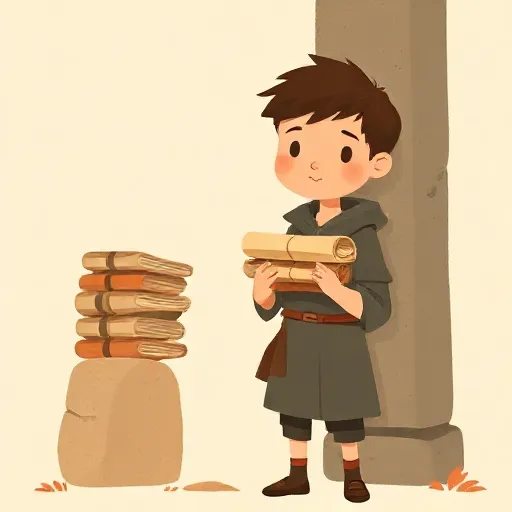
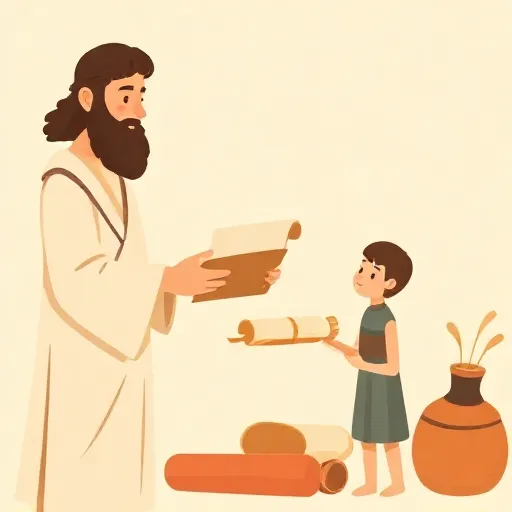
In the spring of 430 CE, a nineteen-year-old named Proclus stepped off a ship in Athens. He had come to study at the newly revived Academy, the school that claimed to carry on the spirit of Plato, who had died nearly 800 years earlier. The head of the Academy was now a tall, famously handsome man named Syrianus (c. 375–437 CE). Proclus expected to plunge straight into Plato’s dialogues. Instead, Syrianus handed him a list of books by Plato’s most famous student: Aristotle (384–322 BCE).
The reading plan was brutal. In under two years, Syrianus guided Proclus through almost the entire collected works of Aristotle — logic, ethics, politics, physics, and what they called theological science (we now call it metaphysics). Only after that gruelling preparation would Syrianus allow Proclus to open the “higher mysteries” of Plato. Why would the leader of Plato’s own school force a young philosopher to swallow so much Aristotle?
Why Aristotle, Not Plato?
Syrianus had a plan, and it was not friendly to Aristotle. He saw the works of Aristotle as a mental training ground. Aristotle’s logical treatises taught you to spot bad arguments, his physics described the visible world, and his ethics analysed human behaviour. All of that was useful, but it stayed on the surface. The real truths, Syrianus thought, lay beyond the physical world — and only Plato could take you there.
The catch was that Aristotle had spent a lot of effort attacking Plato’s ideas. Syrianus did not want his students to ignore those attacks. He wanted them to know every objection inside out, so they could see exactly where Aristotle went wrong. Syrianus called Aristotle daimonic — clever, sharp, but still stuck at a lower level of understanding — while Plato and the Pythagoreans rose to a divine level. The goal was to master Aristotle’s tools, then use them to prove that Plato was right all along.
Aristotle’s Attack on the Blueprints of Reality
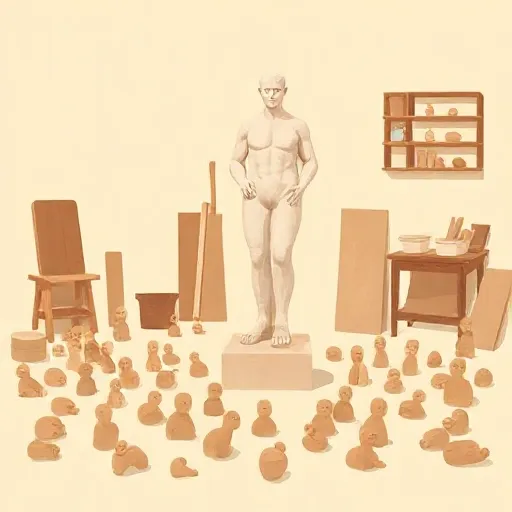
To understand Syrianus’s mission, you need to know what Aristotle attacked. Plato believed that everything in our world — people, trees, chairs — is an imperfect copy of an eternal, perfect Form. The Form of Tree is not a tree you can touch; it is the pure blueprint of “tree-ness” from which all actual trees get their shaky existence. Forms are not just ideas in our heads; they are the true causes that make things what they are.
Aristotle fired back. He argued that Forms are useless duplicates. If you need a Form of Tree to explain why a tree is a tree, why not say the essence is inside the tree itself, made of matter and form together? Worse, Aristotle pointed to a famous puzzle: the Third Man Argument. If a human being is a copy of the Form of Man, and the Form itself is also “a man” (the most perfect one), then what makes both the Form and the physical person ways of being “man”? You would need a third man to explain that, and a fourth, and so on forever. For Aristotle, this showed that Forms were a broken invention.
A Ladder from the One to the Dust
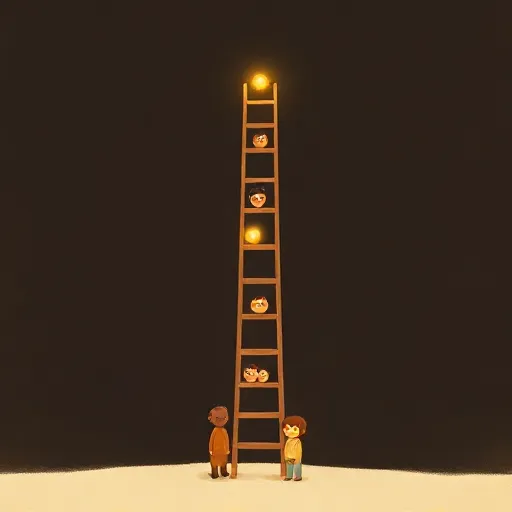
Syrianus did not just swat away Aristotle’s objections. He built a breathtaking picture of the entire universe, one that would dominate later philosophy.
At the very top sits the One — completely simple, beyond existence itself, so pure that you cannot even say it is something, because that would make it two things (a thing plus a property). The One is the source of everything, but it cannot be described, only approached through silence. Below the One unfolds the realm of Being, where the perfect Forms live together in a unified, unchanging mind-like order. That is the level of pure “what-it-is-ness” — the home of blueprints like Justice, Beauty, and Tree.
From Being steps down Soul. Soul is alive, moving, and it bridges the eternal Forms and the physical world. It gives life to bodies and carries the captured images of the Forms — what Syrianus called dianoetic forms — inside itself. Those are the true objects of human knowledge. Finally, at the bottom, we find physical things, glued together with matter. They flicker in and out of existence, never fully real, always shifting.
Syrianus insisted that this entire ladder was already hidden in the second part of Plato’s dialogue Parmenides, which most readers saw as a dry logical exercise. He read it as a sacred map of reality — a secret revealed only to those who had earned the right to see it.
How Syrianus Escaped the Infinite Mirror
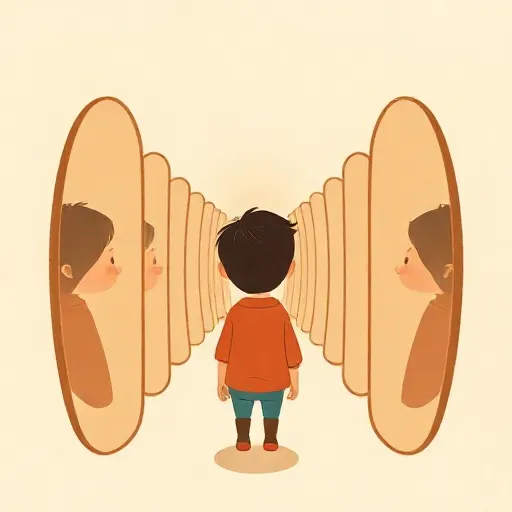
That Third Man puzzle? Syrianus thought it crumbled once you understood how Forms work. Aristotle assumed that the Form of Man is a man in exactly the same sense as Socrates or your friend. If that were true, you really would need a third thing to link them. But Syrianus replied that the Form is not one more thing of the same kind. It is the paradigm — the perfect, productive blueprint — while ordinary men are its pale, imperfect images. They share the same name only in the way a sculpture and its clay copy do: the statue is the model, and the copies depend on it entirely, without being the same kind of thing. The Form of Man causes humans to be human; it is not another human standing next to them. So the infinite regress never starts.
This refinement — the model‑copy relation — allowed Syrianus to keep all of Plato’s Forms without swallowing Aristotle’s critique. He could even agree that the physical world contains true substances, just dependent, second‑rate ones.
Why a 1,500‑Year‑Old Argument Still Matters

Proclus went on to become the greatest philosopher of the late ancient world, and he constantly credited Syrianus. Through Proclus, Syrianus’s ideas trickled into medieval Islamic, Jewish, and Christian thought. The ladder of being — from the unspeakable One down to the dust — became a standard picture of reality for centuries.
But there is something closer to home. Syrianus modelled a skill that every twelve‑year‑old already uses without knowing its name: serious, charitable engagement with the person you disagree with. He did not ignore Aristotle or call him names. He read every book, learned every argument, and only then tried to show why Plato soared higher. Whether you are arguing about a video game strategy or whether homework should be abolished, the same rule applies — first, master the other side’s strongest case.
Think about it
- If a teacher told you to read ten thick opponents’ books before ever reading the thinker you admired, would you do it? What might you gain, and what might you lose?
- Syrianus believed the physical world is just a shadow of a perfect, invisible reality. Can you think of something in your own life that feels more real or important than the physical objects around you?
- Is it more powerful to argue against someone’s ideas by poking holes in them, or by first proving you understand them perfectly — even if that means spending years inside their books?