
Can You Go Beyond Your Duty—And Is That a Good Thing?
The Firefighter’s Choice: Duty or Something More?
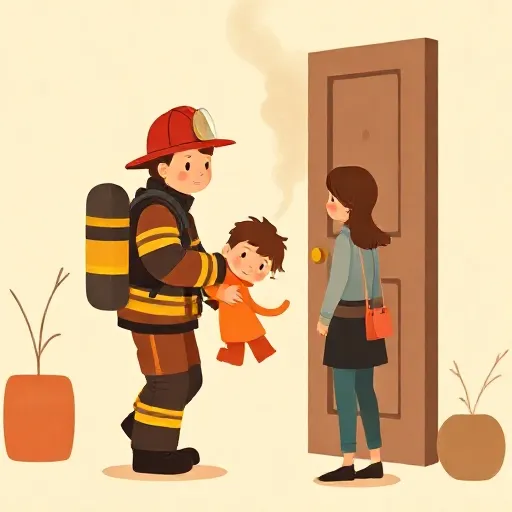
Imagine you are standing near a burning building. A volunteer firefighter rushes in, risking terrible burns, and pulls out a trapped child. Afterward, everyone calls her a hero. But when a reporter asks about it, she shrugs: “I only did what I had to.” Was she right? Did she just do her duty — or did she do something extra, something she didn’t have to do at all?
This is the puzzle of supererogation (soo-per-er-oh-GAY-shun): actions that are morally good but not required. Supererogation lies at the crossroads of two faces of morality. The axiological face is about goodness, ideals, and virtues — being kind, brave, or generous. It’s open-ended; you can always be more compassionate. The deontic face is about what you must do: duties, rules, obligations, like not lying or keeping a promise. The deontic is fixed: you either keep a promise or you break it. But what if you do something far more generous than any rule demands? That’s where supererogation begins.
When Saints Piled Up Extra Goodness: The Catholic Idea
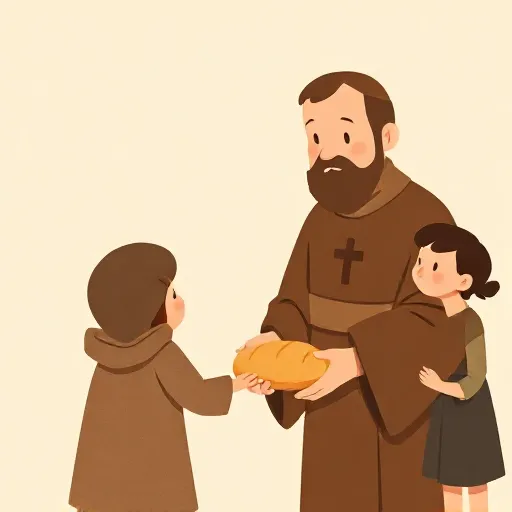
The idea has very old roots. In the New Testament, Jesus tells a wealthy young man to keep the commandments to gain eternal life, but adds that if he wants to be perfect, he should sell what he has and give to the poor. Early Christian thinkers saw two levels: precepts (commands everyone must follow, like “do not murder”) and counsels (advice for those who want to go beyond, like radical poverty or lifelong chastity). Thomas Aquinas (1225–1274) developed this into a full doctrine. Precepts are universal duties; counsels are for the few with the strength and calling to pursue perfection.
Acts beyond the precepts, called works of supererogation, earned “superabundant merit.” The Catholic Church taught that saints — and especially Jesus — piled up far more merit than they needed for their own salvation. That extra merit was stored in a spiritual treasury. The Pope could grant it to ordinary believers to reduce their punishment for sins, a practice that developed into indulgences. By the late Middle Ages, people could even pay money to the Church to receive this remission. The system made supererogation a powerful — and controversial — institution.
The Reformers’ Explosive Objection: No One Can Do More Than Required
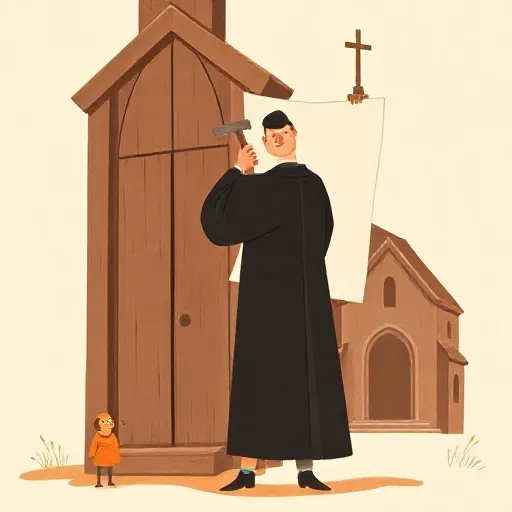
In the 16th century, the Protestant Reformation erupted, and supererogation came under fierce attack. Martin Luther (1483–1546) and John Calvin (1509–1564) believed that God’s demands are so high that no human can fully obey them, let alone go beyond. Every truly good action is still a duty, and salvation is a pure gift of divine grace — not something earned by “super-meritorious” works. Luther saw indulgences as a corrupt abuse. For him, even the bravest act of martyrdom was strictly obligatory. The reformers erased the two-tier distinction. There is no separate realm of supererogation; morality is one uniform demand, and everyone falls short.
Curiously, the reformers’ own logic contained a twist: if humans can never fulfill God’s commands, then God’s forgiveness is itself a free, unearned gift — something that looks remarkably supererogatory on God’s part.
A 20th-Century Philosopher Revives the Puzzle

The theological debate cooled, but the philosophical puzzle didn’t disappear. In 1958, the British philosopher J.O. Urmson (1915–2012) wrote a short, ground-breaking paper. He argued that the traditional three-box classification of moral actions is too poor. The boxes are: obligatory (you must do it), permitted (you may do it or not), and forbidden (you must not do it). But consider a soldier who throws himself on a live grenade to save his squad. That act is not forbidden; it’s not merely permitted. Yet failing to do it is not wrong either. You are not required to give your life. Urmson called such actions saintly and heroic. He revived the forgotten term “supererogation” for actions that are good to do, but not bad not to do — morally praiseworthy, yet not obligatory.
Philosophers quickly began refining. Some wanted the category to include small favors, like holding a door. Others insisted that only costly, heroic acts capture the unique moral merit. A few explored a mirror image they called suberogation: actions that are bad to do but not good to avoid (like rude but not immoral behavior). But most agreed that truly vicious acts are never morally permitted, so the symmetry is weak.
Three Camps: Is Supererogation Real or Just a Trick?

The central puzzle is often called the paradox of supererogation: if an action is genuinely good, how can it be optional? Throughout history, three broad answers have formed.
1. Anti-supererogationists deny that supererogation exists. They rely on the good-ought tie-up: whatever is good, you ought to do it. If you have the best reason to act, you have a duty; not doing so is blameworthy. The philosopher Immanuel Kant (1724–1804) held that moral law applies equally to everyone — you can’t make yourself an exception. Many utilitarians also say that maximizing overall happiness is always required. From this view, the soldier who jumped on the grenade did exactly what duty commanded. You might praise her courage, but the act itself was not optional.
2. Qualified supererogationists agree that some acts seem beyond duty, but they explain them as duties of a weaker kind. For instance, they might be imperfect duties — duties that don’t specify exactly when or how much you must do, like helping the needy. Or they could be duties that apply only to people with special gifts, or duties where we are excused from punishment because enforcement would be too harsh. On this view, supererogation isn’t truly beyond duty; it’s just duty with exemptions.
3. Unqualified supererogationists insist that supererogatory acts are valuable precisely because they are optional. The freedom to go beyond what anyone can demand expresses personal generosity, love, and a special kind of giving. Just as a gift isn’t really a gift if it’s forced, heroic sacrifice and forgiveness lose something if they become duties. This camp emphasizes that morality isn’t just a checklist; it leaves room for grace, personal care, and relationships that are warmer than justice alone allows.
Everyday Supererogation: Charity, Volunteering, and Forgiveness
You can see the tension in ordinary life. Charity: if you give your lunch money to a homeless person, is that a moral demand, or a free gift? Some argue that justice requires you to share anything beyond your basic needs with those in greater need. Others reply that charity must be voluntary to be meaningful. Volunteering for a risky medical trial or staying late to help a neighbor are often seen as supererogatory; no one can demand you take such risks. Yet anti-supererogationists might say that never volunteering is a moral flaw — meaning some volunteering is really an imperfect duty.
Forgiveness is an even trickier example. When a bully genuinely apologizes, is it your duty to forgive? Many philosophers say yes, once the apology is sincere. But what about forgiving someone who isn’t sorry? That seems supererogatory — a gift of grace that you are completely free to give or withhold. Unqualified supererogationists treasure this optional quality; it’s what makes forgiveness capable of being touching, even astonishing.
Why It Still Matters: The Gift of Going Beyond

You might wonder why a medieval theological fight matters to a 12-year-old today. It matters because you face supererogation-like choices all the time. When you go out of your way to cheer up a friend who is sad, or you forgive a sibling who never said sorry, you are doing something extra. Are you simply fulfilling a hidden duty, or are you giving a free gift? The answer shapes how you view yourself and others. If supererogation is real, morality isn’t just a grim list of demands — it leaves space for personal grace, heroism, and the kind of goodness that no one can force you to perform. That can make friendship warmer and communities closer. But if everything good is a duty, then failing to be a hero might make you blameworthy — a heavy thought.
Contemporary thinkers still wrestle with the boundaries. They ask: if you risk your life to save one child from a fire, and you can save a second at no extra risk, is saving both now a duty? The debate doesn’t have a knockout answer, but it reminds us that the “higher flights” of morality — the second mile — are often what move us most.
Think about it
- If you risk your life to save a stranger, is it fair to call your action “optional”? Or would you feel that you simply had to do it?
- Can you imagine a world where every good deed was a strict duty, with punishment for not doing it? Would you want to live there?
- If a friend forgives you even when you haven’t apologized, does that make the forgiveness more meaningful, or does it feel like they’re letting you off too easily?