Do Moral Rules Need a Supreme Commander?
When the Captain Shouts an Order…
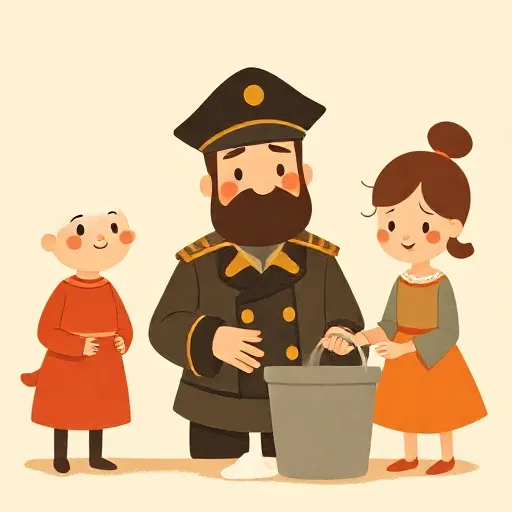
Imagine you are on a ship. The captain barks, “Swab the deck!” You don’t want to do it, but you feel you have to. Why? Because an authority commanded it. Now multiply that authority by infinity: some philosophers say that all moral duties—the things you really ought to do, like not stealing or keeping a promise—come from a command, but from the ultimate commander: God.
That view is called theological voluntarism about obligation. It claims that what makes an action morally required is that God, in some way, wills or commands it. The idea has been around for centuries. It raises big questions: If God commands something, is it automatically right? Could God have commanded the opposite? And if being good just means “doing what God says,” then what does it mean to say God is good? This article explores those puzzles—not to settle them, but to see why they still keep philosophers awake at night.
What “Commanded by God” Really Means
Philosophers who work on this question are doing metaethics—the study of what moral words like “wrong” and “obligatory” mean, and what sort of facts (if any) they point to. Metaethical theological voluntarism is not a sermon. It is not telling you, “You really ought to obey God.” That would be a normative claim—a claim about which duties exist. Metaethical voluntarists want to say something deeper: the property of being morally required just is (or is caused by, or best understood as) being commanded or intended by God. You can accept that claim even if you are not a theist. An atheist could say: “The concept of moral obligation is tied to the idea of a divine command; since I don’t think God exists, I don’t think anything is morally obligatory.” That’s a consistent position, and it shows how careful we have to be: the view is about what morality is, not first of all about what God wants.
The most famous recent defender of this kind of view is Robert Adams (born 1937). He argued that the meaning of “obligatory” doesn’t itself mention God—it’s just the idea of something you must do—but that the real property out in the world that makes an act obligatory is the property of being commanded by a loving God. Others, like Philip Quinn (1940‑2004), explored different versions. The details matter enormously.
Three Reasons This Idea Seems Promising

Why would anyone think moral right and wrong depend on God’s will? Not just because they are religious. Three broad lines of thought keep pulling thinkers back to voluntarism.
First, history. Some concepts we use for morality—like “obligation” and “sin”—grew up inside religious communities. For certain philosophers, that means these concepts don’t make full sense outside that setting. It is not just a coincidence; the ideas might be essentially theistic, like a key that only turns in a lock that belongs to a church.
Second, theology. If God is all-powerful and perfectly good, it seems strange if God had to obey moral rules that were already there, independently, before God could even look at them. Many have argued that God’s freedom and supreme authority require that the moral law flows from God’s own choices, not from some independent standard that God must follow. Otherwise, they worry, God would not be the creator of all that matters.
Third, metaethics proper—the attempt to make sense of features of morality that everyone, theist or not, finds puzzling. Consider the sheer normativity of morals—the way that an “ought” feels different from a plain fact like “the sky is blue.” John Mackie (1917‑1981), an atheist, and George Mavrodes (1926‑2019), a theist, each argued that if God exists, this spooky “oughtness” could be explained (as God’s command), but if God doesn’t exist, it becomes unintelligible. Then think about impartiality: morality demands that we take a point of view that isn’t just selfish. But the universe doesn’t have a point of view. A perfectly loving God, though, would have a point of view that cares equally about everyone, which could ground the impartiality we sense in moral demands. Likewise, the overridingness of morality—the idea that moral duty trumps what you happen to feel like doing—is easier to explain if it comes from a being who can ensure that acting morally is always, in the end, what you have strongest reason to do.
These arguments don’t prove theological voluntarism. But they show why, for many, the view looks like a powerful hypothesis that deserves to be taken seriously.
Command or Will? And Why Water Is H₂O
Theological voluntarism isn’t one tidy formula. It leaves three choices that matter.
Which act? Does obligation depend on God’s actual command—a speech act like the captain’s order—or on God’s inner willing that you do something? Adams argued that an unexpressed divine wish isn’t enough; you need a real command to create obligation, partly because obligations feel social, like demands that one person makes on another. Others point out that spouses often feel bound by each other’s intentions without being formally ordered around. The debate is alive.
What sort of property? Most voluntarists today don’t claim that everything moral—like kindness, courage, or goodness—comes from God’s will. They restrict the view to the obligation family: right, wrong, required, permitted. The idea is that obligations seem especially social, as if someone always has standing to hold you accountable, whereas virtues like bravery don’t work like demands. So goodness might still be a real feature of things that doesn’t depend on God’s command.
What’s the connection? This is the really technical question. Adams eventually held a reduction view: the property being wrong just is the property being contrary to a loving God’s commands, in the same way that water is H₂O. You don’t know it just by thinking about the word “wrong”; it’s a discovery about the world. That allows people who never mention God to still use “wrong” correctly, because they’re pointing at the same property without knowing its underlying nature.
The Two Toughest Challenges: Goodness and Arbitrariness
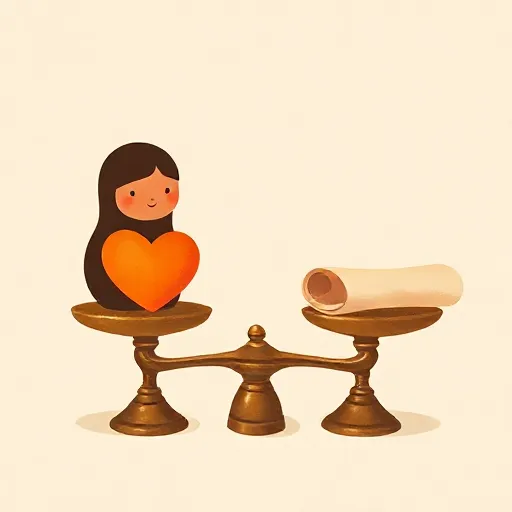
Even the most careful versions of theological voluntarism face stubborn objections.
God’s goodness. If right and wrong are defined by God’s commands, then it seems God can’t be called good in a rich, praiseworthy sense. “God commands what God commands” doesn’t sound much more impressive than “a captain follows his own orders.” Adams responded by unhooking God’s goodness from commands entirely: God is good because God is supremely just, benevolent, faithful, and loving—virtues that aren’t themselves created by commands. For Adams, you only get a plausible picture if the God who commands is already a loving and just God. That move works only if you restrict voluntarism to obligations, leaving other moral properties outside its reach.
Arbitrariness. If God simply picks which acts to require, and those acts become obligatory because of that picking, then God’s choice seems worryingly arbitrary. Why forbid murder rather than chirping? The standard reply, again, is that God has moral reasons—like justice—to command what He does. Those reasons are not themselves commands, but they guide the commands. Of course, that still may leave some room for divine freedom; not every detail of morality need be forced by reasons. But many philosophers think a little slack is harmless, since our ordinary moral duties already depend on all sorts of contingent, even fluky facts (who you happened to promise what, for instance).
A newer worry is whether the whole project is adequately motivated. If, to escape the objections, you admit that all moral properties except obligation are independent of God’s will, then why think obligation requires God? Some philosophers, like Erik Wielenberg, argue that human communities can hold each other accountable just fine, and that moral duties don’t need a divine lawgiver to make them binding. The social nature of obligation, they say, can be accounted for without taking it all the way to God. The voluntarist thus has to explain what is so special about obligation that only God can give it.
Why It Still Matters for You
You might never set foot on an 18th‑century sailing ship, but you deal with commands and authority all the time: parents, teachers, laws. When you feel you really must do something—not just because you’ll be punished, but because it’s morally wrong otherwise—does that feeling trace back to some authority, or is it just built into the act itself? If you discovered tomorrow that there is no God, would hurting someone for fun still be wrong, and why?
Theological voluntarism presses on these questions by asking what kind of fact a moral “must” is. If you think obligations are like the captain’s order—something that exists only because someone with authority issued it—then you’ll be drawn toward some version of the view. If, instead, you think some actions are just bad in themselves, then you’ll likely resist it. The debate is far from settled, but it makes you more careful about what you mean when you say, “That’s not fair.” Because one of the oldest arguments in philosophy is lurking right behind a simple sense of duty.
Think about it
- If a rule is only binding because an authority commands it, could that authority ever be wrong about what it commands? How would you know?
- Suppose a loving God existed and commanded you to tell a small lie to protect a child. Would telling the lie be good, or just unavoidable? Does your answer change if there is no God?
- Imagine a world where nobody believes in any god. Could the people in that world still have genuine moral obligations, like a duty not to break promises? What would make those duties real?