Does Everything Have a Reason? The Big Philosophical Question
Three Prices for the Same Cucumbers? That’s When You Demand a Reason
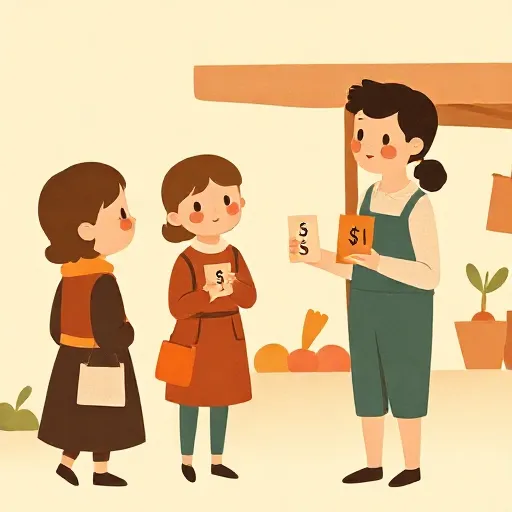
Imagine you walk up to a farmers’ market and pick out a few cucumbers. The seller says, “Five dollars a pound.” You pay, even though it feels a little steep. But before you leave, two other people ask the exact same question. To one, the seller says, “A dollar a pound.” To the other, she says, “Ten dollars a pound.” Right away, you want an explanation. Maybe there’s a simple reason — perhaps you and the ten-dollar customer belong to a group that’s often treated unfairly. Or maybe the seller is just playing a weird game. But if there’s no good justification at all, something feels wrong. When facts don’t come with reasons, we protest.
Philosophers call that protest the Principle of Sufficient Reason, or PSR for short. The idea is simple: every fact, no matter how small, must have a reason why it is true and not otherwise. The PSR says there are no brute facts — facts that just sit there with no explanation at all. In its strongest form, the PSR demands an answer for absolutely everything, from the wobble of a leaf to the very existence of the whole universe.
For centuries, thinkers have argued about whether the PSR is really true, what it commits you to, and where the chain of “why” questions finally stops. Two towering philosophers — Spinoza and Leibniz — made the PSR the engine of their entire systems. Another, Émilie du Châtelet, gave a vivid defense that still feels fresh today. And the puzzle at its heart, about where explanations end, remains one of philosophy’s greatest trouble-makers.
Spinoza: Even Non-Existence Needs a Reason

Baruch Spinoza (1632–1677) was one of the first thinkers to give the PSR a starring role. In his earliest published work, a 1663 book on Descartes, he laid down an axiom: “Nothing exists of which it cannot be asked, what is the cause (or reason), why it exists.” But Spinoza didn’t stop there. He applied the PSR to non-existence as well. If something does not exist, there must be a reason for that, too. A square-circle doesn’t exist because its own definition is contradictory — that’s its reason. So when Spinoza argued that God must exist, he used the PSR on both sides of the balance: if God did not exist, there would have to be a reason for his non-existence, but no such reason can be found, so God exists necessarily.
This move was enormously powerful. The PSR, in Spinoza’s hands, became a tool for proving that there is only one substance (God or Nature), that every event is determined, and that there is only one possible world — the one we already live in. If two possible worlds existed, he thought, there would be no sufficient reason why this one exists rather than the other. The PSR wouldn’t allow that kind of dangling fact.
Yet Spinoza also had to face a tough problem: if every fact needs a reason, what about the reasons themselves? He was comfortable with both an infinite chain of causes and a single self-explanatory being. Inside each attribute (roughly, each fundamental way the world is — like thought or extension), finite things are caused by other finite things in a chain that goes on forever. That’s fine. But the entire infinite chain still needs a reason for existing, and Spinoza said that reason is God, a being whose very nature guarantees its own existence. We’ll return to this choice when we look at the great trilemma.
Leibniz: Every Truth Has a Hidden Reason
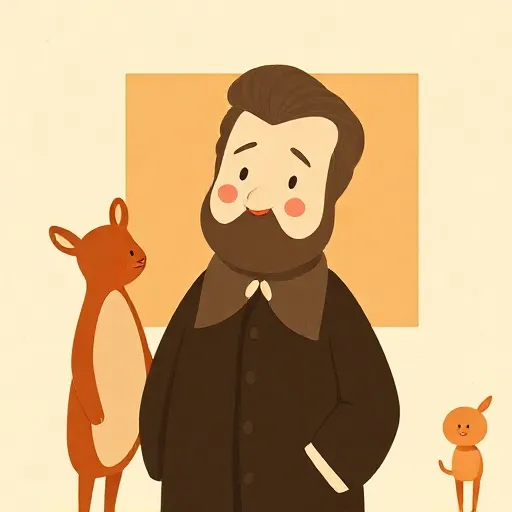
Gottfried Wilhelm Leibniz (1646–1716) gave the PSR its name and made it one of the two “great principles” of reasoning, right alongside the principle of contradiction (the rule that nothing can both be and not be in the same way at the same time). In his famous Monadology he wrote that no true or existent fact, no true assertion, can be found without there being a sufficient reason why it is thus and not otherwise, although most of the time these reasons cannot be known to us.
Leibniz explained why even ordinary historical statements must have a reason by picturing every truth as a kind of conceptual nesting doll. He thought that the concept of the predicate is always contained in the concept of the subject. The statement “bachelors are unmarried” is obviously true because the idea of “unmarried” is already inside “bachelor.” But Leibniz claimed the same holds for “Caesar crossed the Rubicon.” The concept “crossed the Rubicon” is buried somewhere inside the complete concept of Caesar. A finite human mind can’t unpack it all the way, but an infinite mind — God — can see the connection instantly. That connection is the sufficient reason.
He used the PSR to prove that God exists, too. If the universe contained only contingent beings (things that could have failed to exist), the whole collection of them would still be contingent and would lack a reason. So there must be a necessary being — God — whose existence is self-explanatory and which grounds the rest. Leibniz also argued that no two distinct things could be perfectly alike, because then God would have no reason to treat them differently, and the PSR forbids a chooser lacking a reason. This Identity of Indiscernibles led him to deny that space is an absolute container full of indistinguishable points. Space, he said, is just a system of relations between bodies — otherwise God would have no reason to put the universe here rather than there.
Du Châtelet: The Room That Might Turn Upside Down
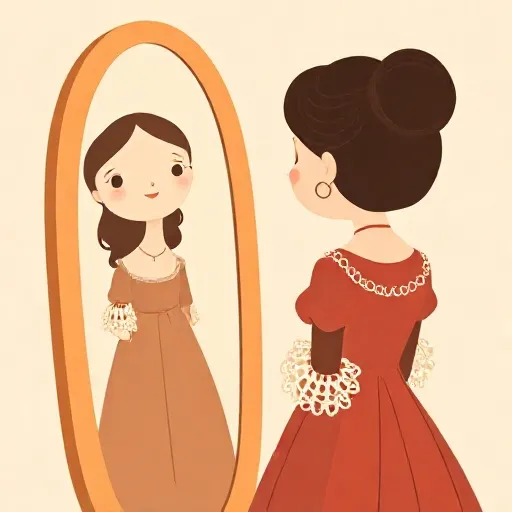
Émilie du Châtelet (1706–1749) wrote a physics textbook for her son that turned into a serious work of natural philosophy. She placed the PSR alongside the principle of contradiction as the bedrock of all knowledge. Her cleverest argument wasn’t a logical proof from definitions; it was a thought experiment about what life would be like if the PSR failed.
Imagine, she said, that something could happen without a sufficient reason. You leave your room tidy, and you’re certain no one has entered. But without the PSR, you could never be sure the room wasn’t thrown into chaos for no reason at all. Books could leap from shelves, chairs could flip, all by themselves. The very fact that we trust things to stay roughly the same from one moment to the next — that identical-looking weights on a balance prove equality, that a locked door keeps a room undisturbed — shows we really do assume the PSR, all day long. For Du Châtelet, this wasn’t a proof that the world must obey the PSR, but it was a powerful reason to treat it as a non-negotiable rule for thinking clearly: if you gave it up, everyday certainty would vanish.
The Infinite Why and the Fork in the Road

If every fact needs a reason, then you can ask “why?” about that reason, and then about its reason, and so on. This is the Agrippan Trilemma (named after the ancient skeptic). It presents three options, and none looks comfortable: (1) stop answering with a brute fact — a fact that simply has no explanation; (2) accept an infinite regress, where the chain of reasons never ends; or (3) find a self-explanatory fact, something whose very nature contains its own reason. The PSR, in its unrestricted form, forbids brute facts. So proponents must pick between an unending chain and a self-explaining starting point — or some careful combination of the two.
Spinoza’s system combined both. Finite things form an infinite causal chain within each attribute, but the entire chain is grounded in God, whose essence is self-existent. Leibniz, too, saw God as a necessary being that explains the whole series of contingent things. For Leibniz, contingent truths could also be seen as involving an infinite analysis that never quite reaches an identity — a chain that converges without ending. More recently, some philosophers have introduced autonomous facts that are not the kind of thing that even needs an explanation (like facts about essences), hoping to halt the demand for reasons without brute stubbornness. The debate over which horn to grasp is still alive.
So, Does This Mean We Aren’t Free? And Why It Still Matters
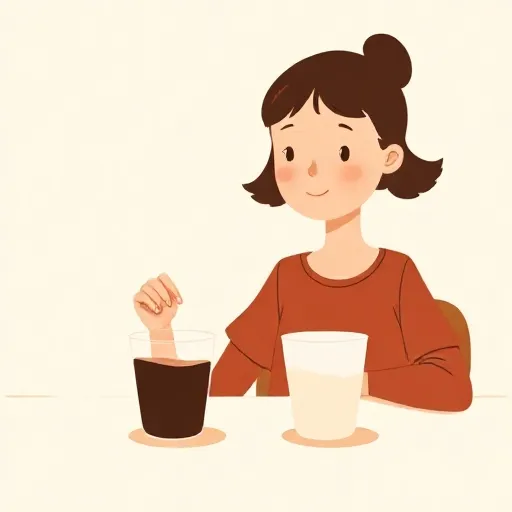
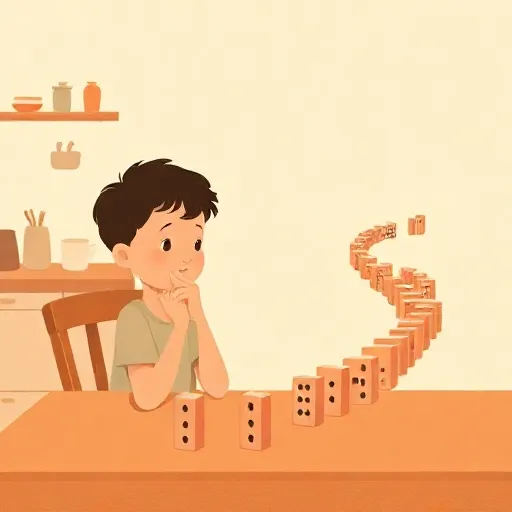
The PSR isn’t just an old puzzle in dusty books. It shapes how you think about your own choices and about the whole world. If every fact — including every human decision — has a sufficient reason, then your choice to pick chocolate ice cream rather than vanilla must be fully explainable by prior causes, whether they’re your brain states, your past experiences, or events stretching back long before you were born. That pushes hard against the feeling that you could have chosen otherwise. Are you truly free, or are you just a domino in a chain that started before you existed? The PSR forces this question.
It also drives one of the most famous questions anyone ever asks: why is there something rather than nothing? If the PSR holds, the existence of the universe itself demands a reason. That line of thinking has led philosophers and scientists to propose everything from a necessary God to a multiverse that contains every possibility, so no one universe needs a special reason to exist. Even if you never pick a side in the great debate, noticing your own hunger for explanations — and where that hunger might lead — changes how you see the world. The next time you ask “why,” you’ll know you’re not just being annoying; you’re tapping into a question that has driven some of the deepest thinking in history.
Think about it
- If you could trace every event in your life back to its causes, would you ever find a first “why” that has no further reason, or would the chain go on forever? What would each answer mean about the kind of world you live in?
- Imagine a world where some things happen for no reason at all — a book jumps off a shelf, a glass suddenly cracks, with no cause. Could you ever make reliable plans in such a world?
- If a scientist could perfectly predict every choice you will ever make, based on a complete map of your brain and your past, would it still be fair to hold you responsible for your actions?