Can Reason Alone Tell Us How to Live? Leo Strauss’s Quiet Question
A Secret Message Hidden in Plain Sight

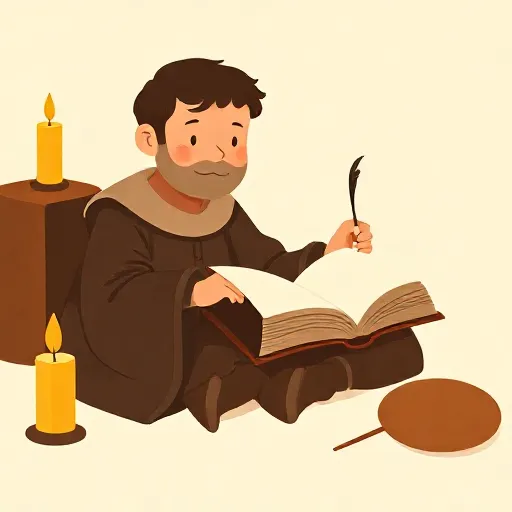
In 1931, a young Jewish scholar named Leo Strauss (1899–1973) sat in a Berlin library, puzzling over a book written nearly eight hundred years earlier. The book was the Guide of the Perplexed by the great medieval thinker Moses Maimonides (1138–1204). On the surface, it seemed to say that religion and philosophy fit together nicely. But Strauss could not shake a feeling: the arguments kept tripping over themselves, and the conclusions did not match the evidence. Then he noticed something. Maimonides had deliberately planted contradictions. A careful reader who read between the lines would find a hidden teaching — one that hinted religion and philosophy might never be fully reconciled.
Strauss called this kind of writing esotericism: an author says one thing on the surface but secretly points a thoughtful reader toward a deeper, more dangerous idea. For Strauss, esotericism was not a trick. It was a serious response to a serious problem: a society that punishes people for saying what they really think. He argued that writers like Maimonides, Judah Halevi, and even Baruch Spinoza used this technique, not to deceive honest people, but to protect themselves and to keep the most explosive questions alive. Strauss would spend his life arguing that this forgotten way of writing held a crucial lesson for the modern world — a world that, he believed, was in deep trouble.
The Modern World Loses Its Moral Compass
Strauss was born into an orthodox Jewish home in a small German town. As a young man he believed in political Zionism, and he studied philosophy in a Germany that was rushing headlong into crisis. He watched liberal democracy falter as the Nazis rose to power. The catastrophe was not just political, in his eyes. It was philosophical. Modern thought, he argued, had set out to free humanity by making reason the final judge of everything — including religion and morality. But that project had backfired.
He called the result the theologico-political predicament of modernity. The early modern philosophers, such as Thomas Hobbes (1588–1679), tried to separate religion from politics. They hoped that science and reason alone could build a just and stable society. But Strauss saw a grim chain reaction. First, modern thinkers raised reason so high that anything not provable by science — like moral truths, a sense of the noble, or the idea of a good life — came to seem like mere opinion. Then, in reaction, later philosophers claimed that all human beliefs are just products of their historical moment. Strauss called this final position historicism: the view that there are no timeless moral standards, only different standards for different ages. If that were true, how could anyone honestly say that the Nazis were wrong, and not just “wrong for us”? The liberal state, which refused to take sides on deep questions of value, suddenly had no answer when values themselves were under attack.
Reason and Revelation: An Unending Standoff
The deepest layer of the predicament, Strauss believed, was the quarrel between reason (which he liked to call by the ancient name Athens) and divine revelation (which he called Jerusalem). Most modern thinkers assumed that science had refuted religion long ago. Strauss disagreed. To refute the claim that God revealed a binding law to human beings, reason would have to produce a complete explanation of the world and human life — a perfect philosophical system that left no mysteries. But no such system exists, and Strauss suspected none ever could. Therefore, he argued, philosophy cannot prove that revelation is impossible. At the same time, revelation does not claim to rest on the kind of public proof that reason demands. It asks for obedience and trust, not logical demonstration. The two sides simply start from different places.
This standoff is troubling for philosophy. If a person cannot prove that the life of reason is the right life, then choosing philosophy over revelation starts to look like a leap of faith — exactly the thing philosophy prides itself on avoiding. Strauss wrote that “the mere fact that philosophy and revelation cannot refute each other would constitute the refutation of philosophy by revelation.” He was not saying that revelation wins. He was saying that philosophy must live with a permanent, uncomfortable question mark over its own foundation. A philosopher who takes this seriously will be more honest about the limits of reason.
The Wisdom of Ancient Moderation
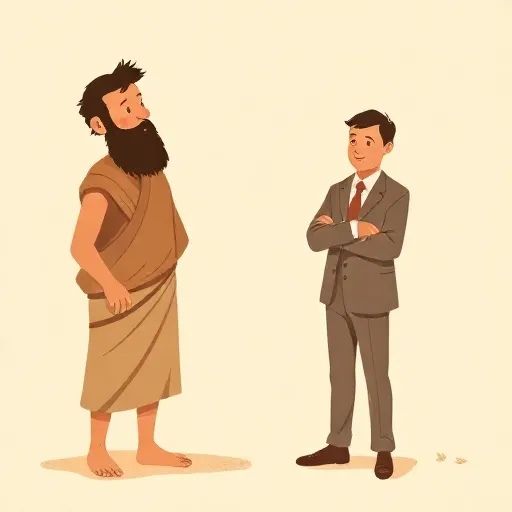
To understand how things went wrong, Strauss set up what he called the quarrel between the ancients and the moderns. Pre-modern thinkers, he believed, were more realistic about what politics and philosophy could accomplish. They knew that society would always need laws, customs, and even myths to hold together. The philosopher, in their view, was a rare seeker of truth who would never feel entirely at home in any city. That tension was not something to fix; it was something to live with.
Strauss especially admired the moderation of Socrates (c. 470–399 BCE). Socrates did not try to sweep away the opinions of ordinary Athenians and replace them with a perfect system. He started from those opinions, because they contain “the most important vestiges of truth which are within our reach,” Strauss wrote. Philosophy was not a set of finished doctrines but a restless, questioning way of life. The ancients recognized that “the problems are always more evident than the solutions.” The modern ambition to turn philosophy into a kind of super-science, Strauss thought, led first to overconfidence and then to despair — the despair of saying that nothing can really be known at all.
Nowhere was the mismatch clearer than in morality. Strauss used a startling image from the medieval thinker Judah Halevi, who observed that even a gang of robbers must have rules of justice among themselves. A robber band punishes stealing from other members; it does not punish stealing from outsiders. Natural reason, Strauss argued, might only be able to supply the minimum morality needed for any group to survive. A truly universal morality — one that says you must not harm anyone, not just members of your own tribe — has a much harder time standing on reason alone. For Strauss, this was the point at which revealed law, the kind that comes with a divine command, showed its moral strength. He did not argue that revelation is true, only that a person who cares deeply about absolute morality might long for it.
The Lost Art of Reading Between the Lines

All these threads come together in Strauss’s insistence that we relearn how to read. When Maimonides wrote his Guide, he faced a dilemma. He wanted to explore the philosophical foundations of the law, but he also knew that revealing too much could undermine obedience to that law among ordinary people. So he wrote a surface that is full of small puzzles. The public teaching — that reason and revelation fit together — kept the community stable. The hidden, radical teaching — that they might be irreconcilable — was meant only for the few who could handle it without losing their moral bearings.
Strauss did not invent this practice; he believed he was recovering it. And he did not recommend that everyone start writing in code. He was interested in what esotericism reveals about the relationship between thought and society. Theory and practice, he argued, are in necessary tension. A thinker who denies that tension either hands philosophy the job of running everyone’s life — which it cannot do — or gives up on philosophy altogether. Esotericism, as Strauss understood it, is a way of preserving both sides: a public world that needs stable laws, and a private space where the most radical questions can be pursued without tearing society apart.
Why This Still Matters: Living with the Big Question Mark
Maybe you have been in an argument where someone says, “That’s just your opinion,” and nothing seems to move forward. Strauss would say that feeling points to the very problem he spent his life studying. Modern societies prize reason, freedom, and individual choice. But they often struggle to explain why some things — cruelty, injustice, contempt — are wrong in a way that is not simply a matter of taste or culture. Strauss did not offer a tidy answer. Instead, he asked whether we have lost something by assuming that all questions about the good life can be settled by science or left to personal preference.
Recovering the kind of moderation he admired would mean admitting that reason has limits, that the most important questions remain open, and that traditions, including religious ones, may carry insights that purely rational arguments cannot reach. It would mean reading old books patiently, listening for voices that were not free to speak openly, and taking seriously the thought that a good society needs more than clever arguments — it needs shared habits, loyalties, and a sense of the noble that reason alone may not supply. That, Strauss believed, is not a reason to despair. It is a reason to keep thinking, carefully and humbly, about how we ought to live.
Think about it
- If a philosopher discovers an idea that might deeply upset many people, should she share it openly or find a careful, indirect way to express it?
- Can reason alone show that it is always wrong to harm an innocent person, or do we need something beyond reason to anchor that truth?
- If you cannot prove that your deepest beliefs are the right ones, should you still hold them — and how do you decide when to change your mind?