What If Being "Reasonable" Made You Less Free?
A Philosopher Who Fled the Nazis Asks: Has Reason Betrayed Us?

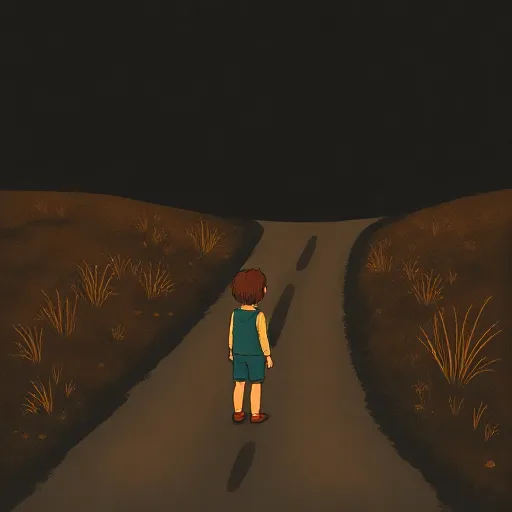
Imagine you are in your room, scrolling through videos, watching shows, and listening to songs that all feel perfectly made for you. It is comfortable, but something feels a little too easy. The philosopher Theodor Adorno (1903–1969) spent his life wondering whether the very habits of thought that make life safer and more predictable could also turn us into passive followers. He was a German thinker who had to flee the Nazis because he was Jewish and on the political left. When he looked at the modern world, he did not see a steady march toward freedom. He saw a world “radiant with triumphant calamity” — a phrase he used to describe an enlightened earth that had, somehow, produced mass murder, brutal propaganda, and entertainment that numbed the mind.
Adorno was a leader of the Frankfurt School, a group of scholars who mixed philosophy with sociology and psychology. He wanted to understand why humanity, instead of entering a truly free and fair society, was “sinking into a new kind of barbarism.” The problem, he argued, was not too little reason. It was that reason had become a machine for control, and unless we noticed the trap, we would stay locked inside it.
The Dialectic of Enlightenment: When Freedom Turns into a New Cage
Together with his friend Max Horkheimer, Adorno wrote a book called Dialectic of Enlightenment (1947). The word dialectic here means a back-and-forth process where one thing eventually turns into its opposite. Their bold claim was that enlightenment — the big historical push to replace myth and superstition with clear, calculating reason — does not simply defeat myth. Instead, it carries a hidden danger: it can petrify into a new kind of mythological thinking that treats everything as something to be measured, predicted, and dominated.
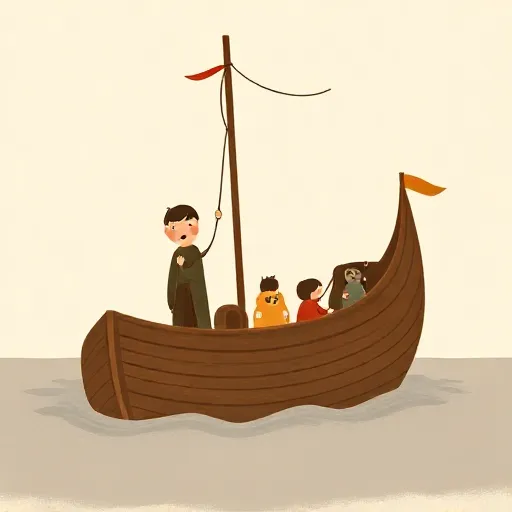
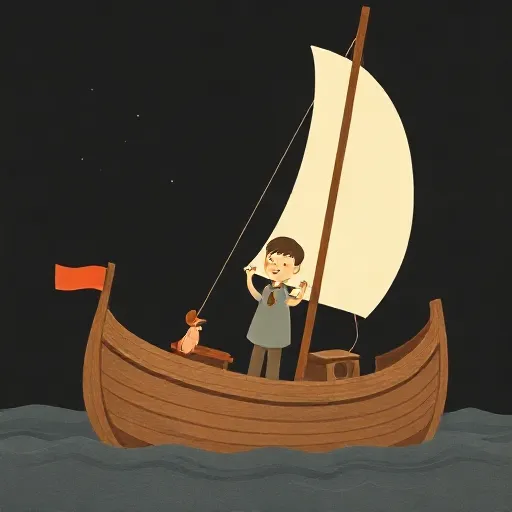
To make this idea concrete, the authors retold the ancient Greek story of Odysseus and the Sirens. The Sirens were creatures whose singing was so beautiful that sailors would steer toward them and crash on the rocks. To survive, Odysseus ordered his rowers to plug their ears with wax, while he had himself tied to the mast. As they rowed past, he heard the song but could not move. For Adorno, this is a perfect picture of what happens when self-preservation rules everything. The rowers cannot enjoy anything; they simply work. Odysseus gets the illusion of pleasure but remains a prisoner of the ropes. The human self, in order to survive a dangerous world, must turn itself into a rigid, unfeeling thing. That, Adorno believed, is the dark logic of instrumental reason: thinking that only cares about the most efficient means to an end.
The scariest part is that this logic does not stay on a ship. It spreads into how we treat nature, other people, and even our own emotions. Everything becomes something to be controlled or managed. The promise of freedom gets replaced by a world where everything must fit into a neat, calculable box.
The Culture Industry: Are You Really Choosing?
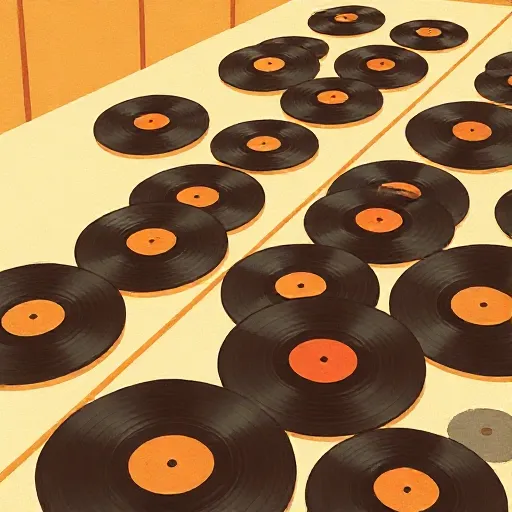
Adorno did not think this was just a big abstract theory. He saw it operating every day in what he called the culture industry. Unlike folk art that grows out of a community, the culture industry is a system of film studios, radio stations, and magazines that produces entertainment for the masses. Adorno argued that movies, popular music, and television shows are not simply harmless fun. They follow the same logic as any factory: they are standardized, designed to be predictable, and meant to produce a predictable response in you.
A hit song, he noted, is often more valuable for the profit it brings than for its artistic quality. Even more troubling, he thought that people listen regressively — they latch onto a catchy beat or a single sound effect without ever engaging with the music as a whole. You feel entertained, but you are not being challenged. Over time, this trains you to accept whatever is put in front of you. The line between culture and the everyday world blurs, Adorno wrote, and people get used to an “idolization of the existing order.” You might see through the trick, but because it is comfortable, you go along anyway. In this way, even your private feelings start to be shaped for you.
The Authoritarian Personality: Why Do People Want a Strong Hand?
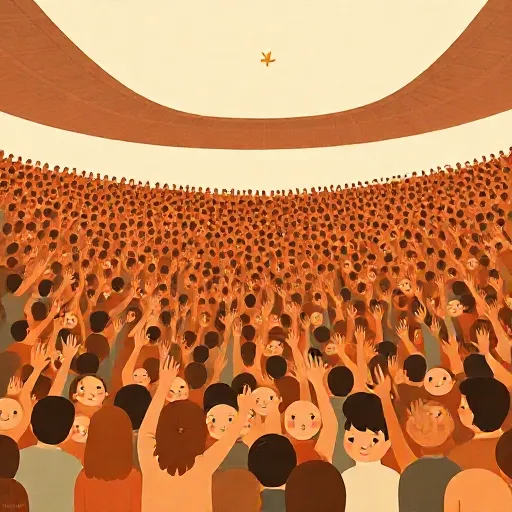
If society is so tightly managed, what happens to the individual? Adorno and his colleagues pursued this question in a famous study published as The Authoritarian Personality (1950). They were trying to understand why ordinary people would support fascist movements. Through in-depth questionnaires, they uncovered a personality type that seemed especially drawn to autocratic leaders. People who scored high on what they called the F-scale (F for fascism) tended to be rigidly conventional, submissive toward strong authorities, and aggressive toward anyone seen as different or weaker.
Adorno believed that this personality type did not appear out of nowhere. It grew in a society where a child’s experience of authority — from parents, schools, and media — no longer produced a strong, independent self. Instead, it produced a self that was hollow, quick to obey, and desperate for someone powerful to identify with. A person with this “authoritarian” structure cannot tolerate ambiguity or genuine difference. Unconsciously, they turn their own fear and rage onto groups that seem to stand for what they have had to repress, a mechanism that Adorno linked to antisemitism and other forms of mass hatred. For him, the rise of the authoritarian personality was not just a psychological fact; it was a political emergency hidden inside a modern, rational society.
Can Art and Thought Break the Spell?
All of this might sound hopeless, but Adorno never thought the situation was completely sealed. He placed a fragile hope in two things: certain kinds of difficult art, and a style of thinking called negative dialectics.
Genuine modern art, he argued, does not try to offer a pretty escape. Instead, it holds up a broken mirror. By refusing to make easy sense, a dissonant piece of music or an abstract painting forces you to confront the tensions and contradictions that the smooth surface of the culture industry hides. Art, Adorno wrote, is “the social antithesis of society.” It does not give you a political program, but it can make you feel, in your body, that something is deeply wrong — and that ache might be a beginning.
Negative dialectics is his name for a way of thinking designed to do something similar with concepts. Ordinary thinking wants to capture everything under a single label: this thing is X, and that is all it is. Adorno calls this identity thinking. Negative dialectics pushes back. It looks for what a concept leaves out, the non-identical remainder that never fully fits. When you think in contradictions — noticing, for instance, that the very rules meant to protect freedom can crush it — you make thought bump against its own limits. That collision, Adorno hoped, could open a tiny crack where a more just and reconciled world could be glimpsed. He summed this up in a famous demand: after Auschwitz, the new imperative is “to arrange their thoughts and actions so that Auschwitz will not repeat itself, so that nothing similar will happen.” Reason, he insisted, must remember the suffering in actual bodies and refuse to smooth it over.
Why This Matters Today: Becoming a Thinking Self
Adorno was often accused of being gloomy, but his work is really an invitation to pay closer attention. He believed that a truly democratic society needs people who are mündig — mature, capable of thinking for themselves, and unwilling simply to “go along with it.” That does not happen automatically. It requires resisting the pressure to treat every online trend, every algorithm-picked song, and every loud authority figure as though it were just natural and inevitable.
The next time you notice that ten different shows use exactly the same plot twist, or that a political speech sounds suspiciously like an advertisement, you are standing in Adorno’s world. The question he leaves with you is not “What should I enjoy?” but “What is this experience doing to me, and who benefits if I never ask?” That question, he thought, is the first small, stubborn step out of a very old cage.
Think about it
- If a streaming service uses formulas to design a series that keeps you watching, are you really choosing to watch it, or is the choice being made for you? Does it matter?
- Adorno thought that even sensible rules can end up treating people like objects. Can you think of a rule at your school that keeps things orderly but also treats everyone as if they are the same? Is that always a bad thing?
- If you knew that a catchy song you love was created by a team of people who tested every note to trigger your brain, would the song still feel like yours? Why or why not?