The Philosopher Who Thought the World Was a Bad Tragedy
A New Boss at the Academy
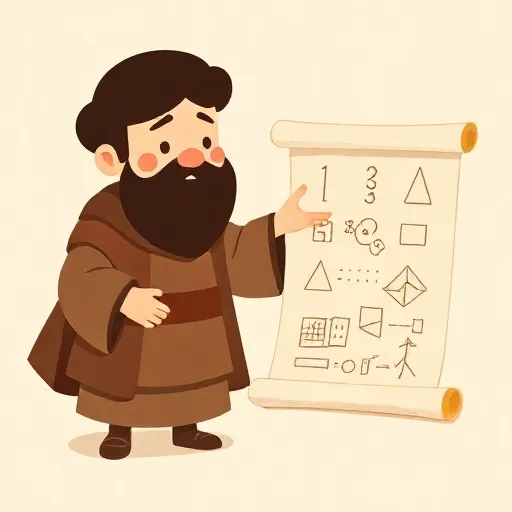
When Plato died in 347 BCE, his nephew Speusippus (c. 410–338 BCE) became the head of the Academy, the most famous philosophy school in Athens. Everyone expected Speusippus to carry on Plato’s teachings. Instead, he turned them upside down. He rejected Plato’s central idea—the Theory of Forms—and built a universe that looked more like a badly written play than a single, grand story. That image is not mine; Aristotle (384–322 BCE), who studied alongside Speusippus, complained that his world was a “bad tragedy” because its parts did not connect. Speusippus didn’t mind. He thought reality really was a series of separate episodes, each with its own rules.
Saying No to the Forms
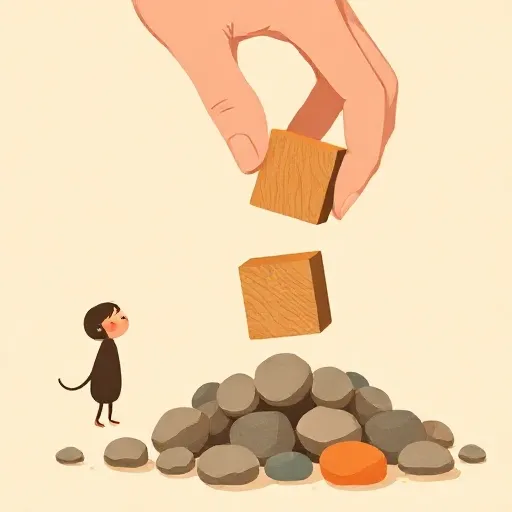
Plato had argued that everything we see around us—a chair, a horse, a just law—gets its features from a perfect, eternal Form that it participates in. A horse is a horse because it shares in the Form of Horseness. Speusippus said no. He denied that such Forms exist at all. According to Aristotle, Speusippus accepted only mathematical numbers—the ordinary numbers we count with—and threw out Plato’s formal numbers, which were supposed to be the Forms of numbers. For Speusippus, there was no such thing as an ideal “threeness” floating beyond the world; there were just the many collections of three units that mathematicians manipulate. This was a bold break: the Academy’s new leader dismantled his uncle’s masterpiece.
Pillars With Gaps: The Episodic Universe
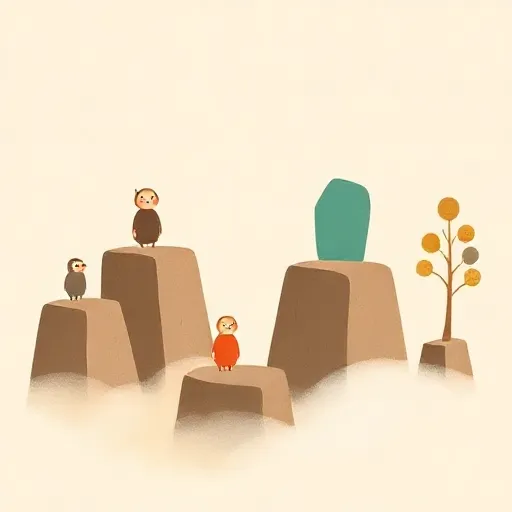
Speusippus did not just erase the Forms. He built a world arranged in layers, each with its own pair of principles (the basic starting materials or causes that make a layer what it is). Aristotle reports four main layers: numbers, magnitudes (geometrical objects like lines and circles), souls, and perceptible bodies (the ordinary things we see and touch). For the number layer, Speusippus’s two principles were the One and Plurality (sometimes just called the Many). The One acts like a generator that brings order, and Plurality is the stuff that gets ordered. Other layers had their own distinct principles—he gave magnitudes one set, souls another, perceptible bodies yet another.
The crucial twist was that these layers had no causal influence on one another. If numbers vanished, magnitudes would still exist. If magnitudes disappeared, souls and bodies would be fine. Aristotle fumed that this made nature a string of disconnected episodes, like a bad tragedy where scene four has nothing to do with scene one. Later thinkers, including Theophrastus (c. 371–287 BCE), repeated the complaint. Yet Speusippus may have thought this separation was a feature, not a bug. Each layer could then be studied with its own methods—mathematics for numbers, geometry for magnitudes, and perception-based inquiry for bodies—without one bleeding into the next.
The One That Is Not Even a Being
Now things get even stranger. In Plato’s world, the highest principle—the Form of the Good—is also the source of goodness for everything else. Speusippus rejected that too. He followed what scholars call the Principle of Alien Causality: the cause of something being F is not itself F. If the One is the cause of all beings, then the One itself is not a being. If the principles for numbers cause numbers to exist, those principles are not themselves numbers. This is why Speusippus denied that the Good sits at the top. Instead, goodness and beauty show up later, like flowers blooming at the end of a plant’s growth. Aristotle says Speusippus compared it to plants and animals: seeds are not beautiful, but the full-grown organism is.
This idea has sparked centuries of debate. Some ancient reports, preserved by the later philosopher Proclus, claim that Speusippus said “the One is higher than being and is the source of being.” If that is accurate, Speusippus was dreaming up a principle that lies completely beyond existence—a move that would later become central in Neoplatonism. Not all scholars agree; many think those later sources rewrote Speusippus to fit their own ideas. But whether or not he went that far, his Principle of Alien Causality forced a sharp separation between a cause and what it produces, a puzzle that keeps reappearing in philosophy.
Happiness as Calm, Not as Pleasure
Speusippus carried his suspicion of “the Good as a first thing” into ethics. He argued that pleasure is not the good. In fact, he and most of the Old Academy said that pleasure and pain are two evils opposed to each other, and the real good is the middle state between them. That middle state is untroubledness (in Greek, aochlesia): a quiet, stable condition where you are not pulled around by desires or distress.
This put him directly against a fellow philosopher named Eudoxus, who argued that pleasure is the good because all creatures seek it. Speusippus replied that we should look not at what all animals chase, but at what the best human beings aim for—and they aim at being untroubled, not at maximizing thrills. Aristotle tells us Speusippus also attacked pleasure with several arguments: every pleasure is a process of restoring a natural state, not the goal itself (just as building a house is not the same as having a house); the wise avoid pleasures; pleasures block thinking; and children and wild animals chase pleasure, which suggests it is not the mark of a good human life. His ideal of calmness anticipated the “undisturbedness” that would dominate Hellenistic ethics in both Stoicism and Epicureanism a generation later. And he claimed that virtue alone could make a person happy—though he also admitted that things like health and money are genuine goods that affect your life, a tension later critics would pounce on.
Knowing One Thing Means Knowing Everything
Speusippus held a striking view about knowledge: to know anything, you must know how it differs from absolutely everything else. Aristotle reports that some people (and ancient commentators say it was Speusippus) claimed it is impossible to know the differences between one thing and each other thing unless you know what every other thing is. This is a version of holism about knowledge—the idea that understanding a single item requires understanding the whole system it sits in.
He applied this to the method of division, a technique Plato used to carve up concepts by splitting larger groups into smaller ones until you arrive at a definition. For Speusippus, knowing the number 3 means knowing where it stands on a grid of all numbers, recognizing that it is a number, odd, prime, and distinct from 2, 4, 5, and everything else. He seems to have tried to do this with plants and animals too. We know he wrote books like Definitions and Likes, which recorded encyclopedic comparisons: trumpet-shells are like purple-fish, marshworts grow in water with leaves like celery, melons are called “gourds.” Some scholars think he classified organisms using every observable difference, abandoning the essence-accident distinction that Aristotle would later insist on.
This epistemological holism is enormously demanding. If you have to know every living being just to know what a marshwort is, you will never finish knowing anything. Yet Speusippus apparently accepted that challenge. And when it came to mathematics, he was firmly a realist: he held that mathematical truths describe an unchanging realm of eternal objects, not something we invent. Proclus tells us that Speusippus called mathematical findings “theorems” (objects of contemplation) rather than “problems” (things we construct), because eternal things have no coming-to-be.
Why an Episodic World Still Matters
Speusippus’s ideas can feel like a wrecking ball taken to Plato’s beautiful system. But they also raise live questions. Is the universe a single, unified story, or do some parts just sit side-by-side with no connection? When you do math, are you peering into an eternal realm of objects, or just rearranging symbols you invented? Can you be happy even when you suffer—and is the calm middle really better than great joy? The fact that the Academy’s own leader could disagree so sharply with Plato reminds us that philosophy never was a fixed set of answers. Disagreement is not a sign of failure; it is how thinking moves forward.
And Speusippus’s holism about knowledge still echoes in debates about whether understanding a language or a science requires grasping the entire network all at once, or whether you can build piece by piece. Next time you try to define something—a friend, a game, a feeling—notice how you keep comparing it to other things. Speusippus would say you’re on the right track, even if you’ll never fully finish the job.
Think about it
- If every part of reality were disconnected from every other, could you still call it a “universe”? What would be lost if the layers were truly independent?
- Speusippus thought that knowing one thing requires knowing all things. Do you think you can fully understand one word in a language without knowing the whole language? Why or why not?
- Is a calm, untroubled life the best kind of life, or does a good life need moments of high excitement—even if those bring pain along with them?