
Can You Really Know That Stealing Is Wrong?
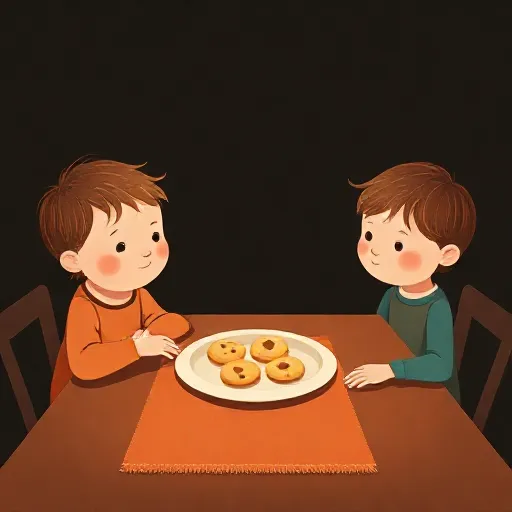
A Fight Over the Last Cookie

Imagine you and your brother both want the last cookie. You say, “It’s mine because I saw it first.” He says, “But you had more yesterday — that’s unfair.” Your mom listens and then throws up her hands. “I don’t know what’s really fair here,” she says. “Maybe there’s no real right or wrong about cookies.”
That feels strange. You probably think some actions — like hurting someone just for fun — are really, truly wrong, no matter what anyone thinks. But what if a clever philosopher knocked on your door and said: You can never be justified in believing any moral claim. Not about cookies, not about stealing, not about kindness. That philosopher would be a moral skeptic.
Moral skeptics don’t necessarily say you should do bad things. They only say that when it comes to knowing or having good reasons for moral beliefs, we’re in trouble. And they’ve built some powerful arguments to make you doubt even your most basic moral convictions.
What Exactly Is a Moral Skeptic?

Not all moral skeptics are the same. To find your way around their ideas, you need to meet a few types.
First, some skeptics are dogmatic. They claim outright that nobody is ever justified in holding any moral belief. That is a bold, universal statement — like saying “No one has ever had a good reason to think stealing is wrong.” Others are more cautious: they are Pyrrhonian skeptics (named after the ancient thinker Pyrrho). Pyrrhonians won’t even claim that moral beliefs are never justified. They just withhold judgment — they doubt, and doubt even their own doubts, so they refuse to make any claim at all about whether moral beliefs can be justified.
Then there are skeptics who focus on truth rather than on reasons. Error theorists, like the philosopher J.L. Mackie (1917–1981), say that all positive moral beliefs are false. When you think “stealing is wrong,” you are actually claiming that some kind of objective moral fact exists — but, according to Mackie, there are no such facts. So your belief is a mistake. This view is a form of moral nihilism: the idea that nothing is morally wrong (or right). Some thinkers, like A.J. Ayer (1910–1989), go even further: they say that moral sentences are just emotional expressions, like booing at stealing, and aren’t even the kind of thing that could be true or false, any more than a cough or a cheer is true or false.
For most of what follows, we’ll focus on the skeptic who denies we have justified moral beliefs. That’s the version that launches the fiercest debates.
Can We All Just Disagree?

The simplest argument for moral skepticism points to how much people fight about morality. Think about abortion, the death penalty, or whether it’s okay to eat meat. Smart, thoughtful, good people line up on opposite sides. If morality were something you could really know, shouldn’t we all eventually agree?
But this argument has a hole. The fact that people disagree doesn’t prove nobody has a good reason for their belief. My brother and I might disagree about who saw the cookie first, but maybe one of us is right and can show it if we calm down and check the facts. A skeptic needs a stronger claim: that moral disagreements can never be settled, even when everyone is calm, informed, and thinking clearly. That’s much harder to show. So the disagreement argument alone isn’t enough to make moral skepticism stick.
The Tower That Never Touches the Ground

A much more troubling argument is the regress argument. It asks: how can you be justified in believing a moral claim? There seem to be only two ways.
One way is non‑inferential: you just see directly that stealing is wrong, the way you see your own hand. Some philosophers, called intuitionists, believe this. But skeptics reply that when two people have conflicting “direct insights,” it’s hard to say both are justified — especially when they know they disagree. So maybe moral beliefs can’t be justified without some kind of reasoning.
That leaves inferential justification: you must be able to support your moral belief with other beliefs. Suppose you say “stealing is wrong because it causes suffering.” What makes that belief justified? You could point to another one: “causing suffering is wrong.” But then you need a reason for that one too. Soon you’re chasing down a chain of justifications. That chain can only end in three ways: it goes on forever; it circles back and uses a belief to justify itself; or it stops at a belief that has no justification at all.
Skeptics argue that none of these endings work. An endless chain feels like trying to climb a ladder that has no top rung. A circular argument (“stealing is wrong because it’s wrong”) gives no real support. And stopping at an unjustified belief means your whole case rests on something you can’t defend. So, the skeptic concludes, no moral belief can ever be justified.
The “Nothing Is Wrong” Hypothesis

Now brace yourself for the strangest argument. René Descartes (1596–1650) wondered if an evil demon could trick him about everything, even the fact that he has a body. He decided that if he couldn’t rule out that possibility, he might not truly know anything about the physical world. Modern moral skeptics borrow this trick.
Imagine a world where moral nihilism is true: nothing is morally wrong. Not torture, not betrayal, not cruelty — none of it carries any real moral stain. Now add a story about why people in that world would still believe all the same moral rules you believe. Maybe those beliefs evolved because they helped human groups cooperate, or because parents teach them to children. The point is, if moral nihilism were true, we would still have exactly the moral beliefs we have now. We couldn’t tell the difference.
If this “explanatory moral nihilism” is a genuine possibility, then, skeptics argue, you can’t be justified in believing any moral claim unless you can rule it out. But you can’t rule it out — because any evidence you might offer (your strong feeling that hurting babies is wrong) is exactly what the nihilistic story predicts you’d feel anyway. So, the skeptic says, even your most obvious moral belief — that torturing babies for fun is wrong — is unjustified.
Many philosophers push back against this argument by denying the rule that you must rule out all far‑fetched possibilities. Maybe you only need to rule out the possibilities that matter in everyday life. If someone in a philosophy class brings up moral nihilism, maybe that makes it relevant; in a hospital ethics committee, it’s a distraction. But once you admit that relevance can shift, it gets tricky to say who is “really” justified. The debate is very much alive.
Living With Doubt Without Giving Up

If those skeptical arguments feel powerful, but you still want to say it’s wrong to steal, you might like a compromise called Pyrrhonian moral skepticism. This view, developed by contemporary philosopher Walter Sinnott‑Armstrong (born 1955), says you can be justified relative to a limited contrast class — a set of rival possibilities — without being justified against the most extreme skeptical scenarios.
Think of it like this. At a family dinner, your options for dessert might be cake or ice cream. You can rule out that anyone brought brussels sprouts for dessert, so you’re justified in believing you’ll get something sweet. But a playful cousin might say, “What if aliens swapped the cake for a hologram that looks exactly like cake?” You can’t rule that out, but it seems silly. In daily life, the “hologram cake” possibility just isn’t relevant. Similarly, the Pyrrhonian says that in everyday moral thinking, the “nothing is wrong” hypothesis isn’t relevant. Your belief that stealing is wrong can be justified enough for normal life, even if it’s not justified in the philosophy seminar where moral nihilism is taken seriously.
The Pyrrhonian goes one step further, though: they won’t even say that everyday justification is really the right kind. They simply point out that depending on which contrast class you pick, justification appears or disappears. They suspend judgment on the final question. That leaves them free to hold moral beliefs, argue about them, and act on them — all while admitting that deep down, the ultimate foundation remains cloudy.
Why a Cookie Argument Still Matters

So why should you care about all this? You’ll probably keep saying “That’s not fair!” when your brother grabs the cookie. But moral skepticism leaves a mark. It reminds you that even your most passionate moral beliefs might be harder to prove than you thought. It can make you a better listener when others disagree — after all, they might not be irrational; they might be bumping into the same deep problems you are.
And here’s the twist: skepticism doesn’t force you to be a monster. Moral skeptics can be kind, fair, and brave. They just stay humble about whether their moral beliefs rest on solid ground. That kind of humility can make you think more carefully, argue less dogmatically, and respect people who see things differently — even when it’s about something as small as a cookie.
Think about it
- If you can’t prove to a skeptic that hurting others is wrong, would it still be okay to stop someone from hurting a friend — and why?
- You believe the earth isn’t flat because you can check evidence. Is there a similar kind of evidence for moral beliefs, or are they different in an important way?
- If a wise, kind person from another culture held a moral belief you found completely wrong, would you be able to prove they’re mistaken — or would you have to agree to disagree?